Spoilers for Minecraft credits ahead.
We all knew this post was coming, right?
Minecraft, fully released in November of 2011, is sandbox game composed entirely of cubes, and that is the basic standard of the game, regardless of if you play in Survival, Creative, or Adventure mode. In Survival Mode, however, there exists something that perfectly utilizes hidden knowledge, even if it is incredibly well known by the players: the End credits.
It is no big secret that after the player defeats the Ender Dragon and jumps back through the End Portal, they are greeted by the credits of the game, as well as the famous “End Poem” by Julian Gough. This is not, however, the only thing awaiting the player after they jump through the portal.
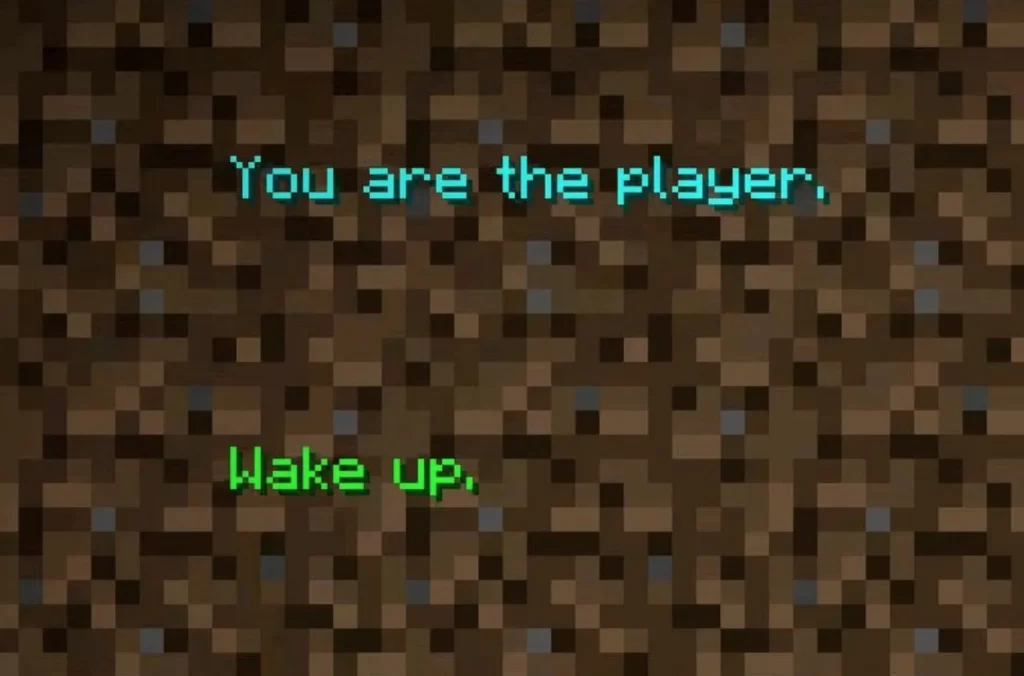
After I defeated the Ender Dragon for the first time (embarrassingly in summer of 2024), I fully expected to see the credits of who created the game, the End Poem, and nothing more. What I was greeted with, instead, was the game talking to me, and to itself, about the player experience. Up until this moment, I had never heard a single word about there being a narrative piece hidden in the game, and I haven’t heard anyone talk about it since. Almost every player of Minecraft knows about the End Poem, but why doesn’t anyone talk about the next part? It is because it adds a sense of relief, of wonder, and of surprise to every player that encounters it.
The game itself acknowledges that the player can read its thoughts, but the game also makes a distinction between the words on the screen and the game itself, even going as far as to say “[the player] thinks we are part of the game,” implying something much bigger than the game, and the player, is happening as the words scroll past. In defeating the Ender Dragon, i.e. experiencing challenges and hardship, the player is granted the truth of Minecraft, and of the world in general, all disguised as a game: the player, you, are a manifestation of the Universe’s dream.
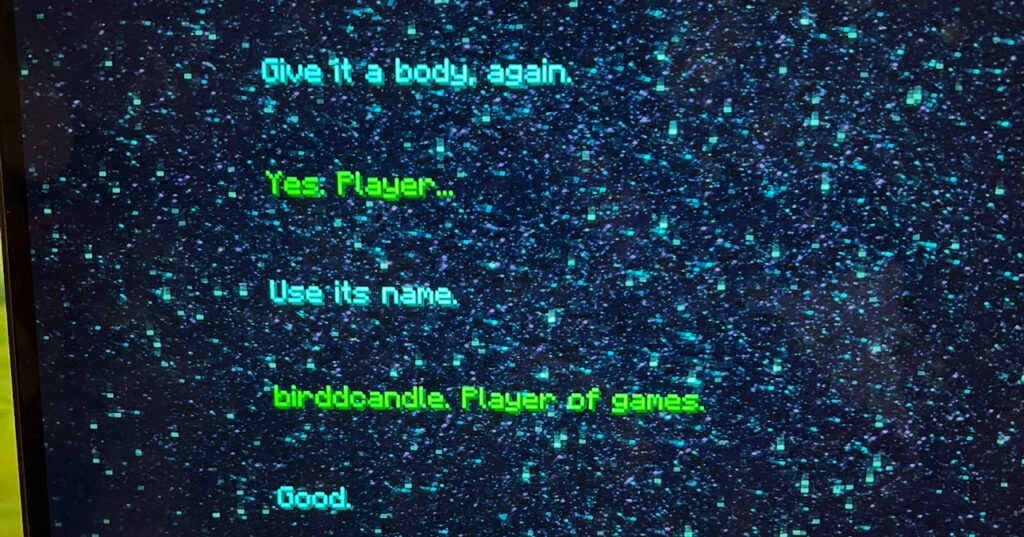
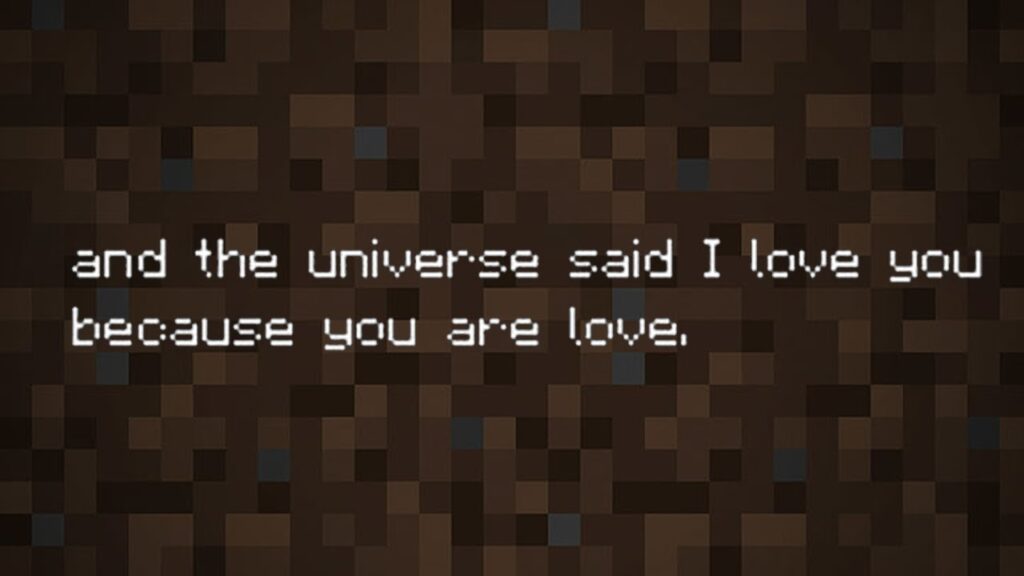
As profound a concept as this is to come out of Minecraft, it makes perfect sense as the “game,” or whoever is speaking to you throughout the credits, describes it. Everything the credits describe the player as applies to the Minecraft world they play in, yes, but also the Universe of the real-life person playing. The player is the night, is the day, is love, but so is the person playing the game. Without the player, the sun and the moon have nothing to revolve around in-game, and thus, cease to exist. But if the real-life person ceases to exist, then the same thing happens. There is no love for the person to experience, there is no day or night to experience either. This is all pointed out in the End Credits, which only the players who have gone through enough challenge and hardship can experience. And that, precisely, is why this has remained a secret in the community for so long.
Despite the End Poem being the famous “end of Minecraft,” this specific part of the game is never discussed because the community of players knows it should remain secret. Only the players that have gone through the challenges of dying in the Nether trying to collect Blaze Rods, who have killed numerous Endearment to get the Enderpearls necessary to craft Eyes of Ender, and only the players who have slain the Ender Dragon and freed the End from her grasp can get to see the full picture. In the words of the credits, those who kill the Dragon “have reached a higher level” and have in turn become worthy to see the truth of the game, and of life. It is a necessary secret for something the players to find, and they can only understand it once they have faced enough obstacles in game and probable frustration in real life.
This is my favorite game for a reason.


I liked that you were able to bring in that this is a slightly open secret in Minecraft, but also has layers to it. It is almost a secret within a secret and because of that, it also adds layers to Minecraft as a game because it enables players to discover new things about the game even after they think they know what the game has to offer them.