In every creative writing class I’ve taken, the phrase “write what you know” has come up in some shape or form.
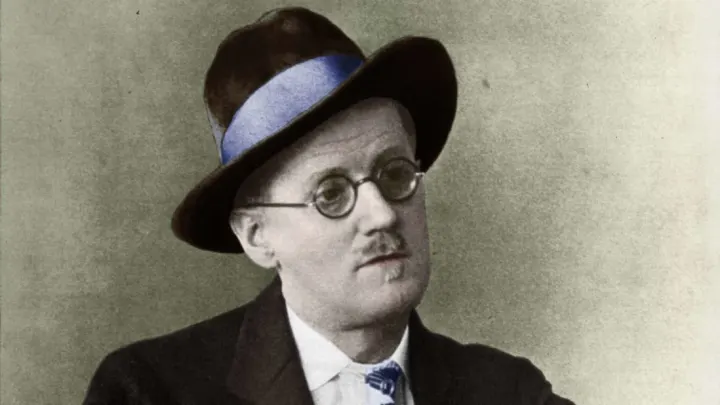
Earlier this week, while discussing James Joyce’s story “The Dead,” my professor described the protagonist of the story, Gabriel Conroy, as an almost self-insert for Joyce himself. They are both globalist academics with families who lack a higher education living in a time of strong Irish nationalism. Through Gabriel’s character, Joyce provides commentary on the social and political climate of Ireland, which is, despite his criticisms, undeniably colored by his love of his homeland. The reason Joyce’s commentary works is because his lived experiences are intertwined with the issues he addresses. He wrote what he knew. The story would not be nearly as effective if it were written by a Spaniard looking at Ireland from across the ocean or, god forbid, a British author criticizing Ireland, since their work would be a reflection of Ireland filtered through another culture’s lens. They would only be able to write what they thought they knew.
There is a certain nuance that comes with growing up in a specific culture that outsiders—despite their best efforts—can never replicate. This isn’t to say that we should never make content based on other lived experiences, rather that we should approach such projects with the desire to learn, collaborate, and take feedback from those who live what we want to replicate.
Unfortunately, some creators disregard learning, collaborating, and getting feedback in favor of taking research trips to Africa. Where in Africa? I’m not sure, and—as Mr. Narcisse described the Resident Evil 5 development team—nether are they.

Much of Mr. Narcisse’s podcast episode centered around representation, more specifically: who is represented, how are they represented, and who is doing the representing. In the case of Resident Evil 5’s trailer, West Africans are represented as zombies who white agents gun down by a Japanese development team.
Now, as mentioned before, the team tried to learn how to represent West Africans by going to Africa, but their efforts were doomed from the beginning. You can’t hope to accurately represent a demographic if you can’t even remember what country you visited. It would be like if i visited Laos to learn about South East Asia, developed an entire game around it, and then told people it was based on what I learned in Vietnam (Which I didn’t visit). This doesn’t even touch on the implications of white agents visiting a West African country and shooting its—albeit, zombified—citizens (Narcisse speaks about this issue in a much more eloquent way, and I can not recommend listening to the podcast episode enough if you want a more in-depth analysis of these issues rather than my summary—especially since I haven’t payed the game myself, I am simply building on his argument).
Earlier in the recording, Narcisse asks the questions “Who was in the room?” and “Who was behind the scenes making these decisions?” In the case of Resident Evil 5, its clear that no one in the room—at least, no one on the marketing team or with enough power to shape the story’s narrative—was West African.
Unfortunately, this means the game is the spiritual equivalent of James Joyce’s “The Dead” as told by a Spaniard. A lot of care went into the game. Countless hours from countless people were poured into this project—and it payed off financially, if my quick deep-dive on the Resident Evil 5’s wikipedia page is anything to go by—but that doesn’t save it from the clear separation the developers had from the story they were trying to tell. There is a dissonance between the story of Resident Evil 5 and the people it is supposed to represent. Rather than uplifting West Africans, it puts them down in favor of uplifting a male American protagonist.


I love this approach to cultural representation in video games, and particularly in my mind looking alongside the lens of how we analyze cultural representation in media. One quote that I found particularly relevant to this analysis would be Denzel Washington’s description of why certain films (and in this sense video games) thrive when they are made based on the feel of the culture the media is trying to portray. (As he put it, “Its not Color, its Culture”) . If no one from the community you’re representing has a voice in the process, the final product will always feel hollow, no matter how many hours of work go into it.
I don’t think this means creators should never tell stories outside their own culture. It does, however, mean those stories should come from a place of humility, learning, collaborating, and listening to people with lived experience. Otherwise, like in the case of Resident Evil 5, you get a story that looks polished on the outside but feels disconnected at its core.