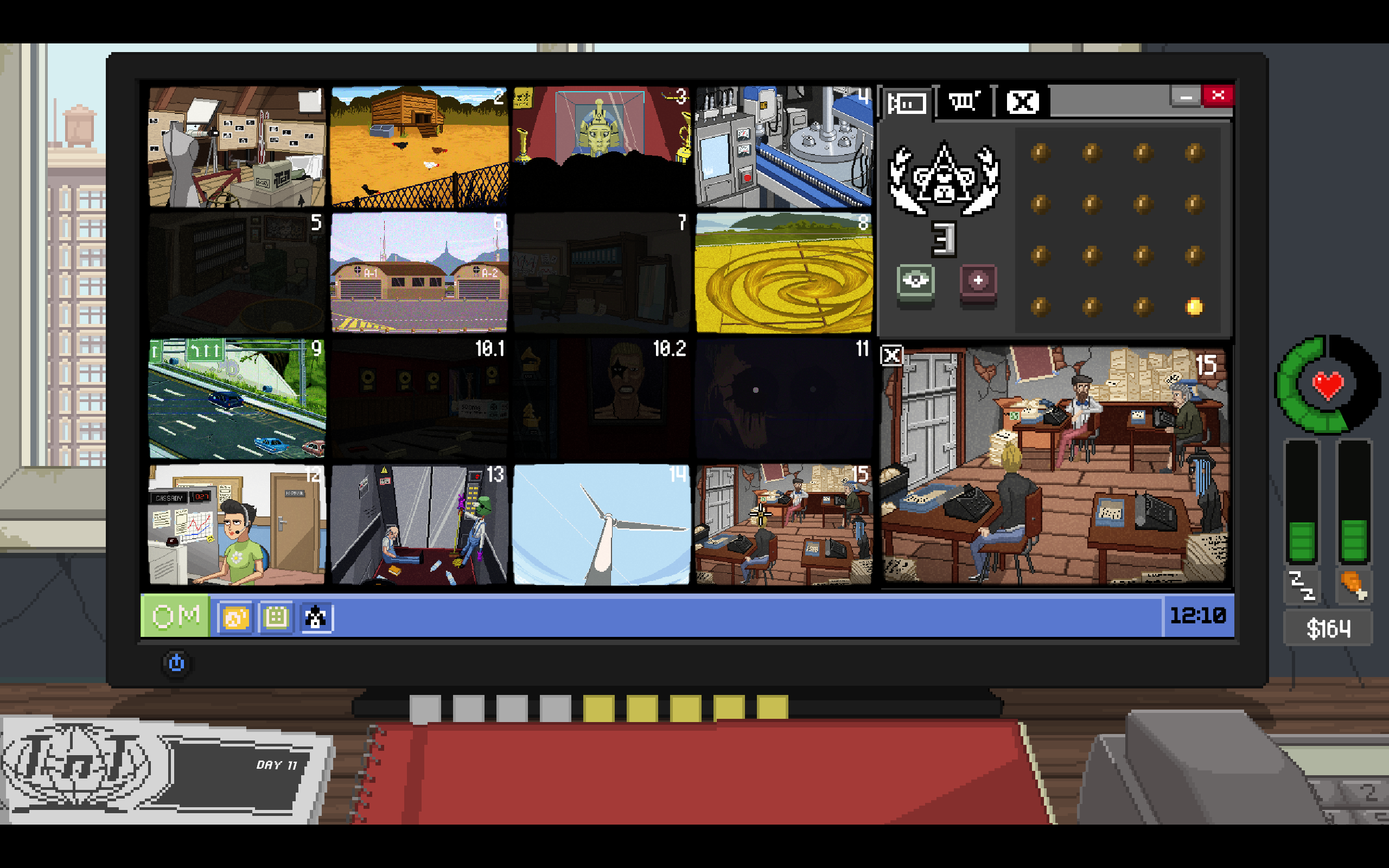
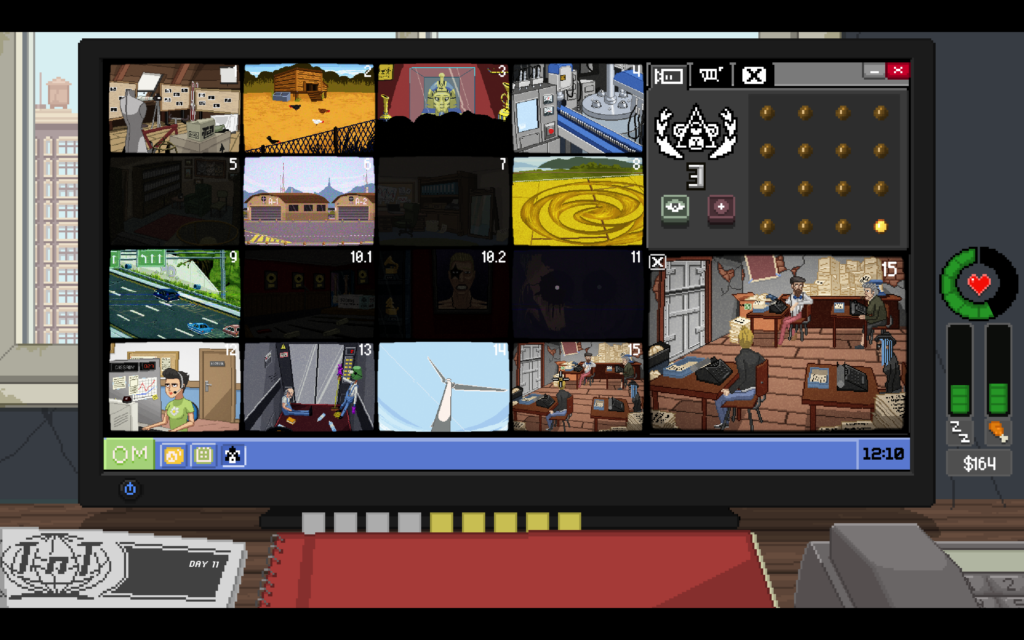
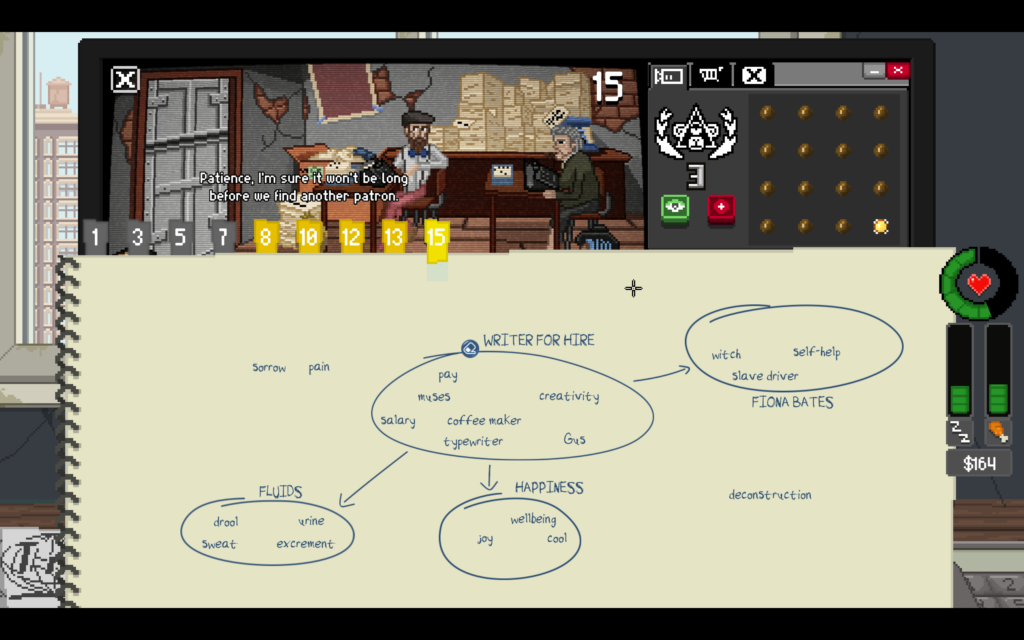
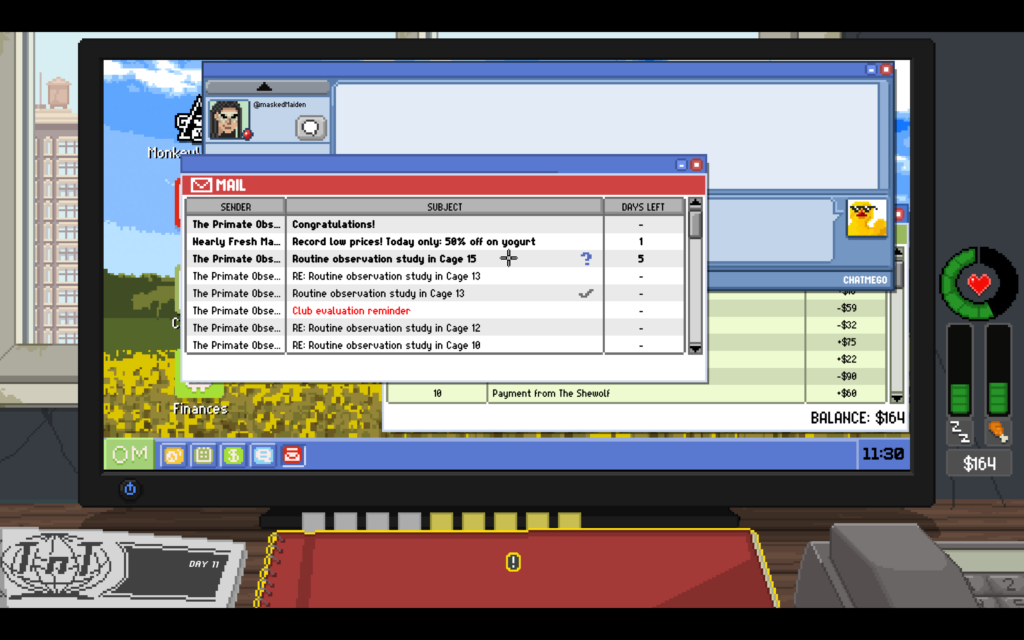
During the in-class discussion on Do Not Feed the Monkeys, one common dislike was the core act of voyeurism that the player engages in. The main part of the game revolves around watching an increasing number of video feeds, which are secretly filming and often record very private situations. The player acts as a voyeur (though not sexually) and tracks the habits of the people they are watching, taking in-game notes on their behavior. Other scenarios include watching a landscape, public property, or an area otherwise not focused around one person. These do contain smaller puzzles but are of lesser interest than the character-focused camera feeds. Beyond simply observing these people, the player is tasked with figuring out what is going on in the scene they are watching and to discover some core piece of information about it, often the address or the name of the person being watched. These are submitted to the secret society which set up this spy program and which the player character is trying to advance in. Other tasks given to the player are eating, sleeping, maintaining health through healthy foods, and earning enough money to pay rent and buy more camera feeds (or “cages” as the game refers to them).
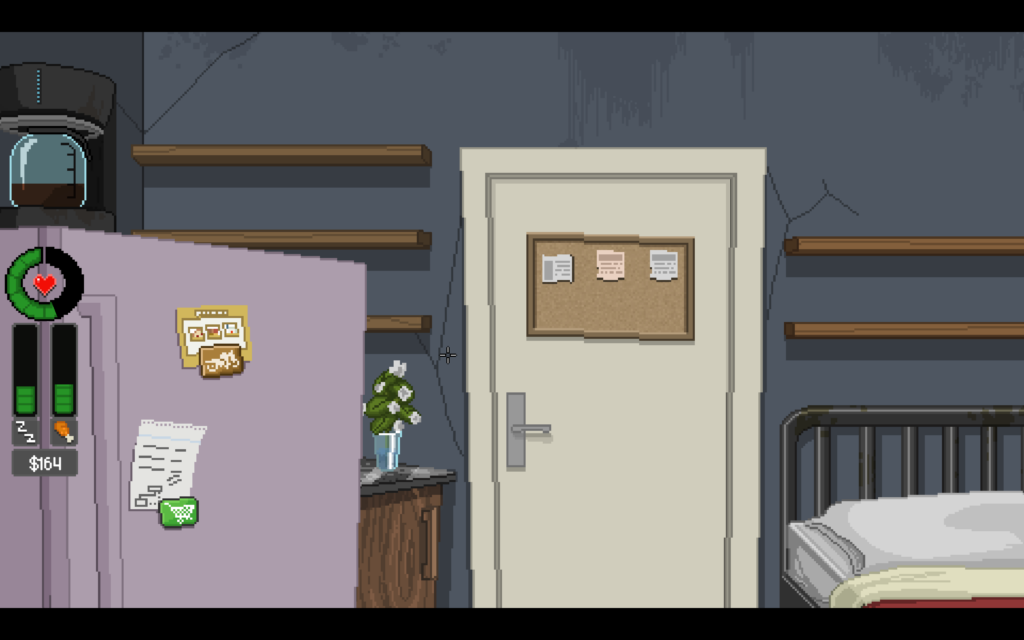
Throughout all this, the player character is practically non-existent. The player does not have any avatar, nor do hands appear on screen as in many first person games. There is no identifying information about the player character; they are referred to as “Member” in all communications and never is referred to by any pronouns. A game with a very similar interface, Telling Lies, has the player character’s reflection in the computer screen of the game, but Do Not Feed the Monkeys does not have anything like this either. This poses a very interesting question, who is the player character?
The Player as the Player Character
Perhaps the most immediate answer is that the player is the player character. The game has reduced the degree of separation to the player as much as possible. There are no physical characteristics, image, nor biographical information for the player character. Thus, the player should be able to perfectly project into the player character because they are practically non-existent. In fact, this is probably why so many students in the discussion felt uncomfortable with the voyeurism occurring in the game; they felt like they were committing the acts of voyeurism themselves. And in a way, they were. Because the player steers the game and the player character faithfully responds, the player is in full control of the voyeuristic acts. If the player chooses to commit those acts, then and only then does the player character engage in voyeurism, implicitly making the player engage in voyeurism as well.
However, some important distinctions between the player and the player character remain. First of all, the art of the game world is draw and pixelated, clearly not the real world. One reason for this artistic decision might be exactly this increased level of separation to the real world. Some distance to the game world helps the voyeurism feel less real. Secondly, the player is playing a game on a computer. They are not physically sitting in the game world and in the player character’s apartment. While playing a video game about sitting at your desk on your computer is very similar to actually sitting at your desk on your computer, fundamentally the computer and its screen function as the core container and separator from the video game. Because the game is limited in the hardware it is played on, another inescapable degree of separation arises. And finally, most importantly, the player is playing a game and knows it.
Wait, What Even Is a Player Character?
I have neglected to answer a crucial question until now. What exactly is the player character, or at the very least, what do I understand a player character to be? In my opinion, every time you begin a game (no matter what kind), you first enter the game world, which has different rules than the real world. In a game like Mafia or Borderlands (two very different games), killing is totally acceptable, as an example. To facilitate this game world, the player must create a player character, which acts on their behalf in the game world. This player character is comprised of the player projecting a warped version of themselves into the character, as well as any guidelines that the designers of the game laid out. In a game like Do Not Feed the Monkeys, where there are no guidelines for the player character, the one source for it is from the player’s projection of themselves. However, this projection is never the true player themselves and is always changed to fit into the game and the player’s expectations of the game. This also means that the player character and the player by definition cannot be the same being.
The Player Character as a Protecting, Separate Entity
Having defined what a player character is, we return to our most important separation between the player and the player character: that the player knows they are playing a game. From this knowledge, the player immediately forms up an altered player character. This is an entity separate from themselves, who lives in the game world and through which the player can engage in game actions. This separation is crucial to the player’s sanity, as it would be inconceivable to think “I am doing this immoral act” every time the game asks the player to do something immoral in the real world but moral in the game world. Instead, it is the player character who is engaging in these immoral acts, thus protecting the player’s self image and sanity. Of course, in cases like Do Not Feed the Monkeys or in my current Borderlands play-through, the player character is quite thin and exists mostly of the player’s projection into the player character. In these situations, because the player character is so similar to one’s true self and in fact contains a part of the player’s identity, that is is quite common to still feel revulsion at the actions committed in game. We saw this during our class discussion of Do Not Feed the Monkeys and I have been observing this while callously murdering nameless NPCs in Borderlands.
However, it is to avoid these exact feelings that player characters are so important. Without them, most of us would be unable to engage in game worlds with rules different from the real world. They remind us that “this is not me.” So even in games where there is no discernible player character, where the designers seem to bring the player as close to the player character as possible, there still exists a separate entity, constructed through the intersection of the game and our minds, who operates the game in our stead. Instead of dismissing the titular question and saying that Do Not Feed the Monkeys does not have a player character, it is worthwhile looking a bit deeper and uncovering the hidden entity that existed there all along.