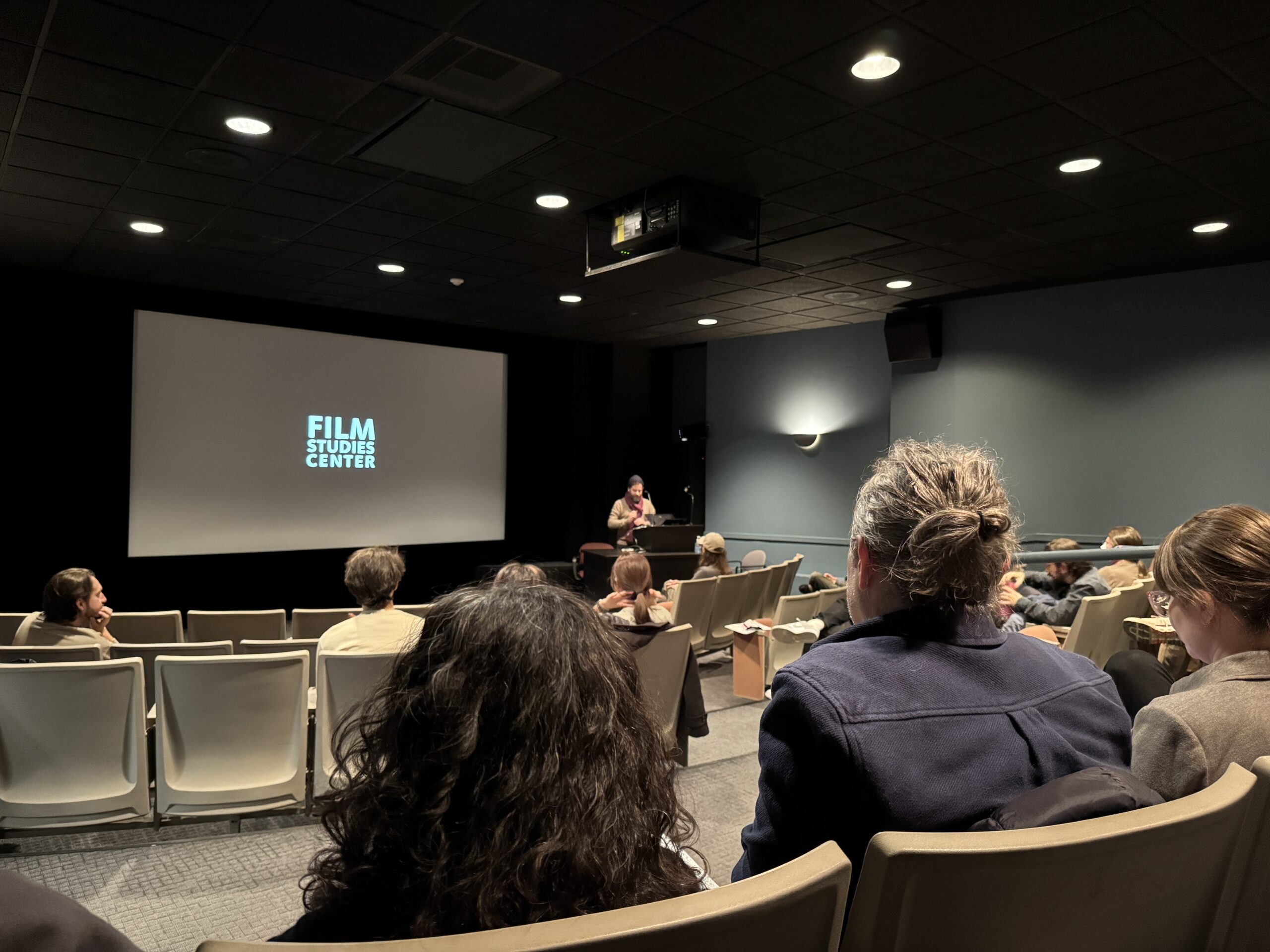
Last week, I attended the Ghosts in the Machine Machinima screening for the Film Studies Center. I had no idea what machinima was before this event, and the lecture at the beginning from a PhD student at the center was much more helpful than the googling I had done beforehand. Essentially, machinima is machine plus cinema: pre-recorded gameplay footage with a narrative overlay. It is all experimental film, or “experimental variations on play,” as the opening lecture said. The PhD student shared several examples of contemporary machinima, and what stuck with me the most was the example of the film “Minecraft but I survive in PARKOUR CIVILIZATION [FULL MOVIE]” (2023) by YouTuber Evbo (which, by the way, has over 45 million views on YouTube). I’ve heard a lot about this YouTube video before, but I’ve never watched it—which is odd, because I watch a lot of Minecraft YouTube. I would have never assigned it to the genre of machinima, and knowing that it qualifies makes it much more interesting to me.
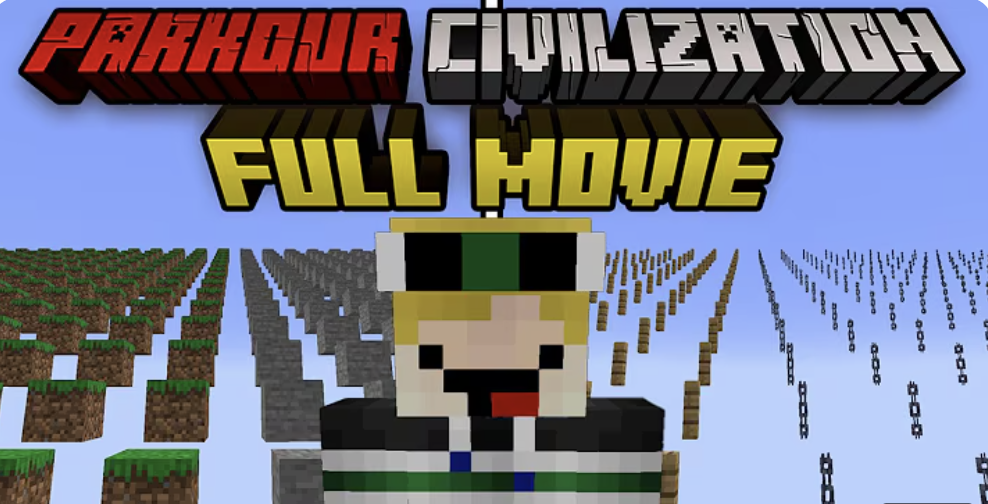
From the clip we saw in the screening and the PhD student’s explanation, the gameplay footage has the overarching narrative of trying to escape the base-level parkour civilization, where players are only given a piece of raw chicken a day to eat, to ascend to the upper civilization, where the master parkour players live. The gameplay footage included narration (added in post) that explained the setting in which our protagonist was living and his desire to ascend to the upper civilization.
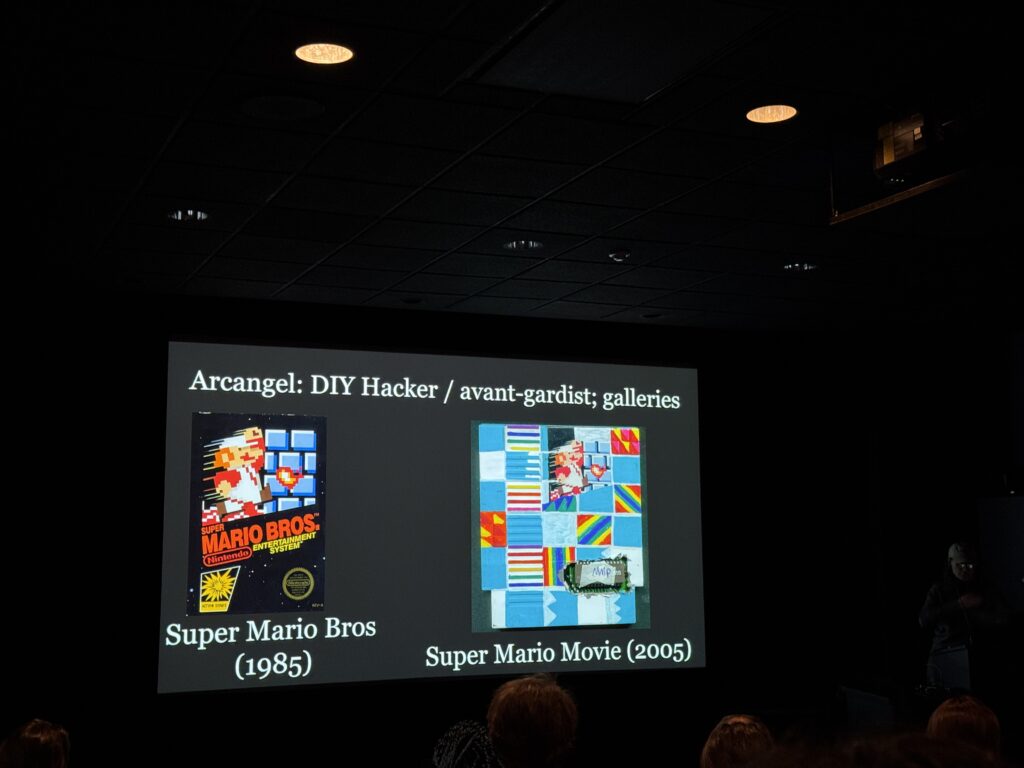
This example was followed by a viewing of the first short film, Super Mario Movie (2005) by Cory Arcangel. Something that astounded me was that the creation of this film literally involved resoldering a cartridge of the first Mario game, Super Mario Bros., (1985). The film was a violent distortion of the original game, and included corrupt-looking gameplay footage spliced with rewritten text screens to convey the narrative of the film. Watching the film definitely made my heart race, as the suspenseful music and flashing, chaotic gameplay scenes led me to believe something bad was coming. When watching this film, I could completely see the “experimental” component of machinima.
Viewing the clip of the Parkour Civilization film and the Super Mario Movie in conjunction was really fascinating and demonstrated the breadth of the machinima genre. As the genre is built on experimental filmmaking, it doesn’t surprise me that many different kinds of films can fit within machinima, and it made me question whether I had technically already seen some form of machinima before this screening. For example, when I was in elementary school, I watched the YouTube series “Amy’s Land of Love” by Amy Lee33. In the series, she played Minecraft survival and built up a world with a large house and many different kinds of builds. It began as strictly first-person gameplay footage where she would speak directly to viewers; but as the series progressed, she started incorporating narrative story elements (such as a prince who was her love interest) that would be told from a third-person perspective by an alternative narrator. Videos became a blend of first-person commentary from Amy Lee33 and third-person narrative elements.
My assumption from the information in the screenings is that this could count as machinima, but I wonder if she would ever prescribe that word to her videos, and the same question can be asked of Parkour Civilization. Can something count as machinima if it wasn’t created with the intention for it to fit into that genre?


This was a very interesting read. While the screening highlighted “artistic” uses of video game technologies, within a subgenre of Art Media, more popular forms that tell more straightforward narratives, like Parkour Society also exist. I also feel the need to mention that Skibidi Toilet was created using Source Filmmaker, from the same engine used to make Team Fortress 2 and Half-life 2, but is that enough to be considered Machinima? As with trying to classify most things, your question raises a whole host of questions and confusions. Must the entirety of production exist within a video game, or is simplify utilizing technologies made for video games sufficient? The Mandalorian used Unreal Engine, a popular game creation tool, to digitally render some of its environments, but it feels like a stretch to call that Machinima.