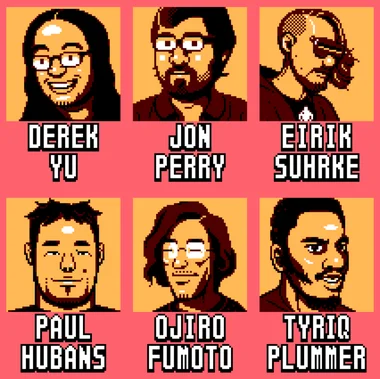
As we’ve discussed previously in this course, an auteur is someone whose influence over a project is large enough to consider them the author, and the work as their unique vision. I’ve mostly heard the term used in film discussion, but it definitely makes sense when applied to games. Other mediums, such as literature, may only involve one person in the process, at which point they are kind of automatically an auteur of the work, (auteur means author after all). Film, as well as interactive media, typically involves a lot more moving parts in the final product than a book may have: artists, writers, directors, composers, and more depending on the medium.
Whether or not a developer is an auteur is mostly vibes-based. Some common examples are Hideo Kojima and Suda51, where they each have a certain je ne sais quoi that can be felt in their games, even if you’re unaware of their involvement. Though, speaking from the broader theory of auterism, one does not need to be a known figure with a trademark style to have a game be the culmination of their unique vision. (As much as I hate to admit, Jonathan Blow does indeed count as an auteur.)
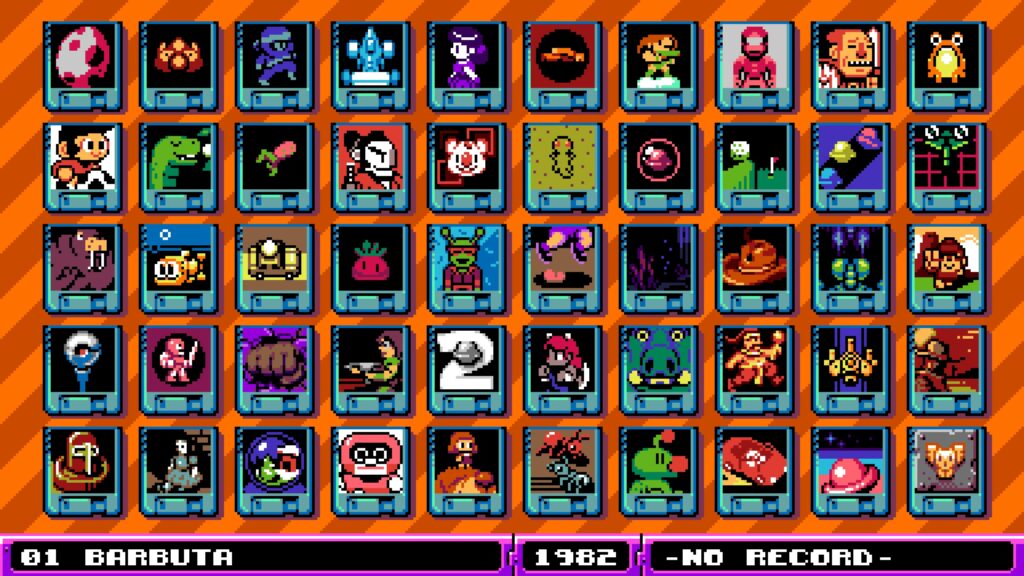
The panel at the Year of Games Symposium, “How Games Get Made: UFO 50,” got me thinking about games and auteurism because of how Jon Perry and Tyriq Plummer described development on the game, or rather, collection of games. The largest point of collaboration was at the beginning of development, with concepts and prototypes of the 50 games; past that point, the process was “inherently modular.” A dev on the team would take one of the games and work on it for some time, even years at points. There were also discrete “hand-offs,” where one would pass a game along to another, and only see it again years later after a slew of changes.
That portioned off kind of development clashes with a lot of my ideas about games and authorship; I thought most games were around the two poles of being led by an auteur with a defined vision, and being led by committee, as I feel like most AAA games are nowadays. The way Jon and Tyriq described it, any individual game was not the result of a team’s effort, but of very specific elements and decisions that can be traced back to their author. While not as simple as each one being made by an individual, many of the games had long stretches of time where only one person was working on it, where their idea of what the game should be was the main creative drive. I’m not sure how many people would work on any particular game until it was considered “finished,” but it still brings up a strange relationship with each developer’s authorship of the game. After a hand-off, how much does a game need to change before the subsequent dev is more of an auteur for that game? Does that even matter in the end, for the developers or the players? Perhaps each thumb in the pie of a game was an auteur for as long as they were working on it, and the final product cannot be considered as a combination of those spans of time, but rather a unique product that nevertheless pulled from the mind of each individual person.
I can’t help but compare that kind of development with my own work in video games (btw, check out Hotel Infinity, releasing Nov 13). The only work I’ve done at a “real studio” was defined by daily development meetings, making sure that everyone was on the same page at all times. Elements in one level would be shifted between being worked on by different people on a weekly basis, with many tasks being labelled as blockers: those that must be finished before another person can start their work. Because of this, ideas would be discussed, either in the dev meeting or in smaller, more focused meetings, but would shift as the rest of the team sees it and has other comments and ideas on direction. Even I, as a lowly QA person, had some influence on aspects of the game, beyond pointing out bugs. Because of how ideas build on each other as time goes on, drawing from different sources, it’s impossible to describe some creative aspects of the game as being from one particular person. Of course, the actual content of this game is nowhere near as discrete as a game like UFO 50, but I still feel that it’s still interesting to see how authorship can guide different kinds of games. I don’t have a meaningful conclusion to this thought, but I can’t help but keep thinking about auteurship after that panel. I hope to continue further down this path in the future, and come to a greater understanding of auteurism and its effects in games.