For the sake of full transparency, I feel the need to disclose a few things before the rest of this post proceeds. Firstly, I have never played UFO 50. In fact, I had never heard of UFO 50 until this class, and while the name was thrown around many times in the Discord introductions (6 times to be exact… yes, I went back and counted), I didn’t take the time to look into it since I assumed that I would learn about it when I had to play it. Well… the universe works in mysterious way… which leads me to my second disclaimer: I wasn’t intending on going to the panel on making UFO 50, a game I have never played. Due to some scheduling conflicts, this panel ended up being the only one that I could attend. Because of this, I went into this session completely blind and will write this post with my only knowledge of the game coming from the time I spent in the audience. Read accordingly.
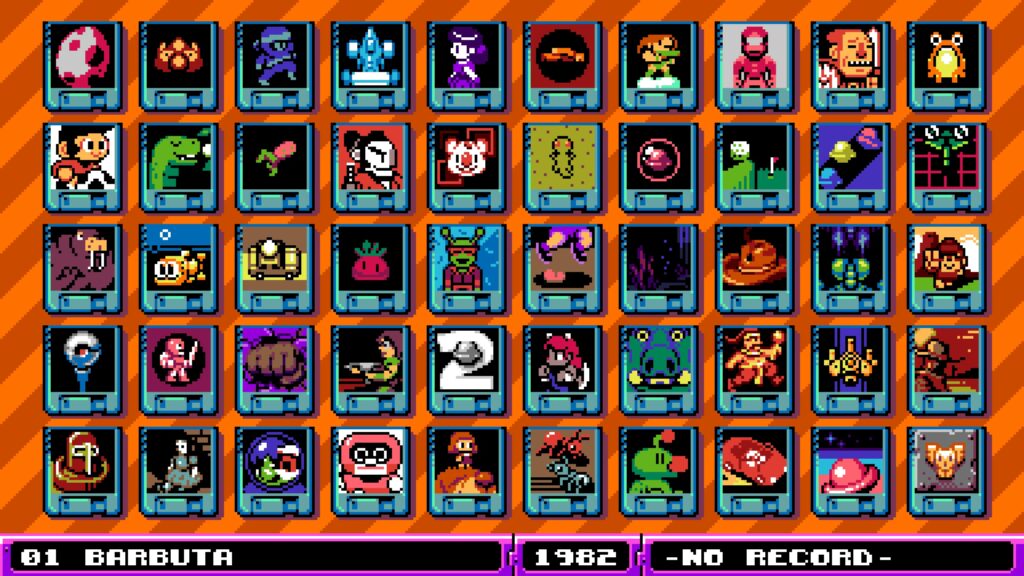
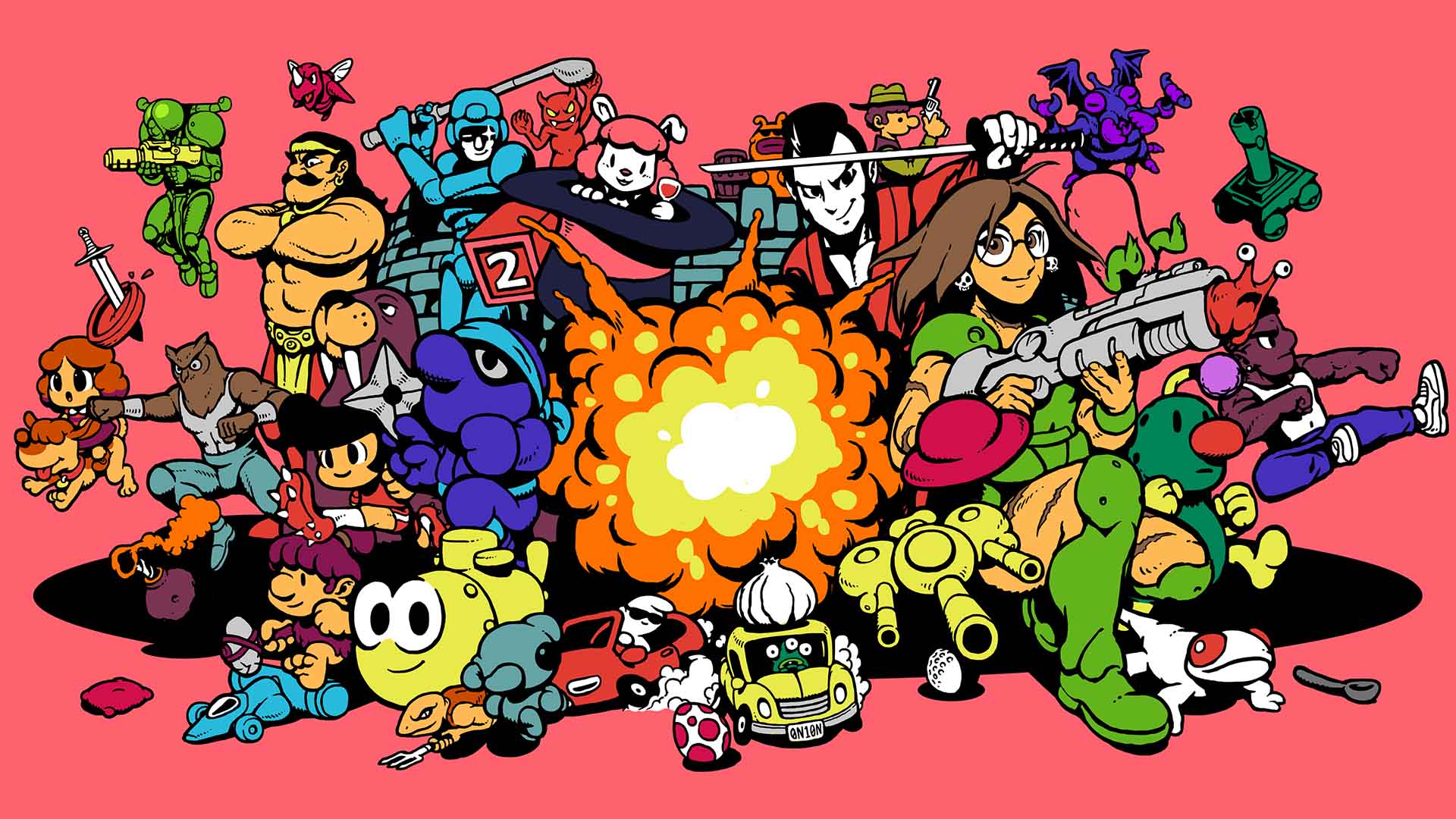
For those of you who don’t know UFO 50, just like me before the panel, here is a quick summary: UFO 50 is a genre-spanning anthology of 50 unique games created by a fictional company from the 80s. While some of the games build on each other (Campanella 2 is a sequel of Campanella, for example), many are stand-alones. As a unit, the games offer a history of UFO Soft and the products it released from 1982 to 1989.
When I heard the name UFO 50, my first question was about the number of games: why 50? Luckily, this question was answered quite quickly by developer Jon Perry who said that, according to co-developer Derek Yu, the idea of 50 games (or 50 of anything) is both powerful enough and audacious enough to grab peoples attention. 50 has an aura to it that 20 or even 45 doesn’t. However, 50 games did have a side effect: the game took them around 9 years to develop. And honestly? I get it. There is something so large and unexpected about the number 50 that it makes you want to know more. How does a team of people design 50 unique games? What overlap is there between them visually/ mechanically, if any?
For me, the most fascinating part of the discussion was about the development process of the games. Both Perry and developer Tyriq Plummer cited the balance between independent and collaborative work that proved critical to the success of the games creation. Developers would begin projects they were interested in, pass them off once they ran out of ideas, and receive them back months (or years) later with fresh eyes. This allowed the developers to not only receive and give inspiration to others, but also to refine their old work as well. To me, this process makes sense. In fact, as a chemistry major, this is exactly how the research communities I have been in function: you work on a project until you have discovered something and then you bring it to others to push it further/ identify its pitfalls. However, as was mentioned in class yesterday, this collaborative model also means that the project took way longer than it technically had to. But if they hadn’t developed the project as a group, I highly doubt that it would have been as successful. It is in the diverse backgrounds, interests, and experiences of the developers that the diversity of the game originates.
Another fascinating point that was brought up was about the purpose of the “UFO Soft” company narrative in the game. For the developers, it served two purposes. Firstly, it helped build the universe of the game by providing the landscape with character. Secondly, it provided the team with limitations regarding the look/ feel of the games (these are games from the eighties after all) that fostered creativity. I think this is pretty interesting because it shows the difference between a narrative game and a game with a narrative. This train of thought also led to another interesting admission: to the panelists, this game is less about nostalgia for the eighties and more a period piece set in the eighties. It isn’t idealizing a time, but instead using a time as a source of inspiration.
Overall, while I have never played UFO 50, it was fascinating to hear from the developers about the project as a creative and experimental endeavor. Plus, it made me super excited to get my hands on the game in a few weeks!