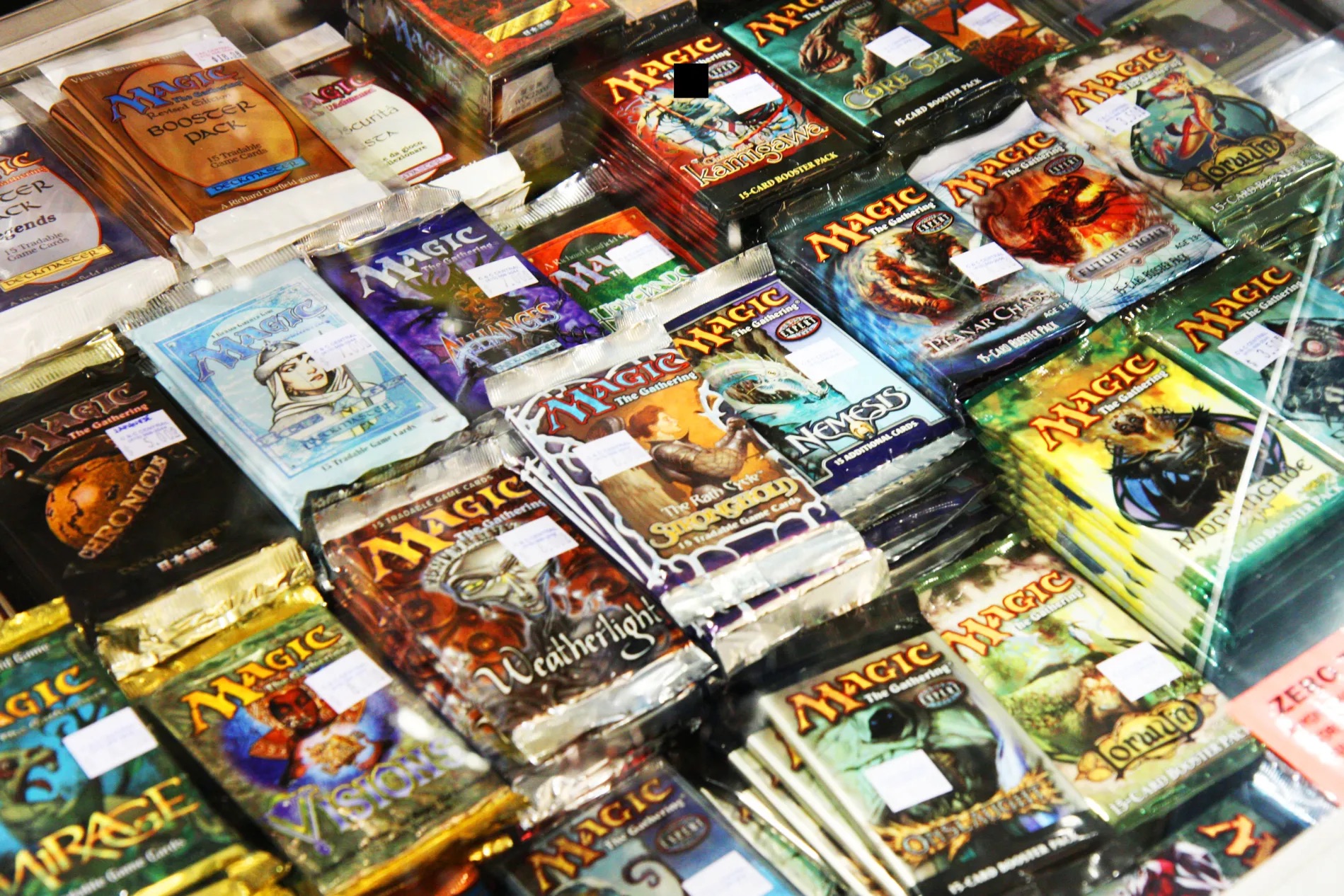
In class when we discussed what it means to study difficult games, I observed that one of the challenging things about studying difficult games is that the conversation, no matter how well-intentioned, always becomes about the difficulty of the game. What it means, what we can learn from it, etc.
So in this blog post, I’m going to introduce The Most Difficult Game in the Whole Entire World, give some evidence as to why this game in particular deserves the title, and then I’m not going to mention difficulty again. I’m going to talk about why I love the game so much and how someone I love has changed how I play it forever.
The game I’m referring to, perhaps unsurprisingly, is Magic: The Gathering. It’s been 6 years since a paper (https://arxiv.org/pdf/1904.09828) was published by Alex Churchill, Stella Biderman, and Austin Herrick proving that Magic is Turing Complete, making it not only the most complex game in the world, but also orders of magnitude more complex than “trivially complex” games such as Chess, Go, and the like. Perhaps the most compelling line from the paper is as follows: “recognising who will win a game in which neither player has a non-trivial decision to make for the rest of the game is undecidable.”
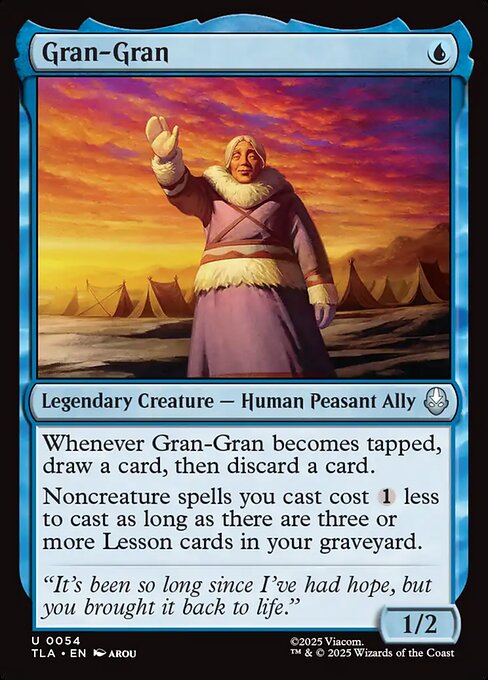
The best card in Magic right now (no, I’m not joking)
But complexity, from a mathematical standpoint, and difficulty are not exactly the same. Sure, things that are complex often require time and effort to understand (and are thus difficult), but things can be complex without being difficult, and simple yet challenging. Magic is not one of these examples. The comprehensive rules for Magic total an impressive 307 pages, and include every possible ruling on every possible interaction between cards. Except, of course, when they don’t:
- CR 101.1. Whenever a card’s text directly contradicts these rules, the card takes precedence. The card overrides only the rule that applies to that specific situation. The only exception is that a player can concede the game at any time (see rule 104.3a).
I’ve introduced the game, I’ve presented evidence, and now, I’m not going to bring up difficulty any more.
I’ve been playing Magic since 2011 when my dad, who played as a kid, got me a box of cards for Christmas. I was immediately enraptured, and have been playing and thinking about the game ever since. Now, 14 years later, it is my longest practiced, most beloved hobby. I’ve made some of my most cherished friends playing Magic, and it’s been the hobby I most consistently build community around.
Earlier this year, I decided to introduce my partner, who claims not to be a gamer, to Magic, and they, too, quickly took the bait. But the way they play Magic is very different to the way I play Magic. Rather than building decks to efficiently crush opposition and swiftly end the game, they prefer building decks where all the cards have art of beautiful women on them. Or all the cards have dinosaurs. Or where the point of the deck is to drive a big robot.
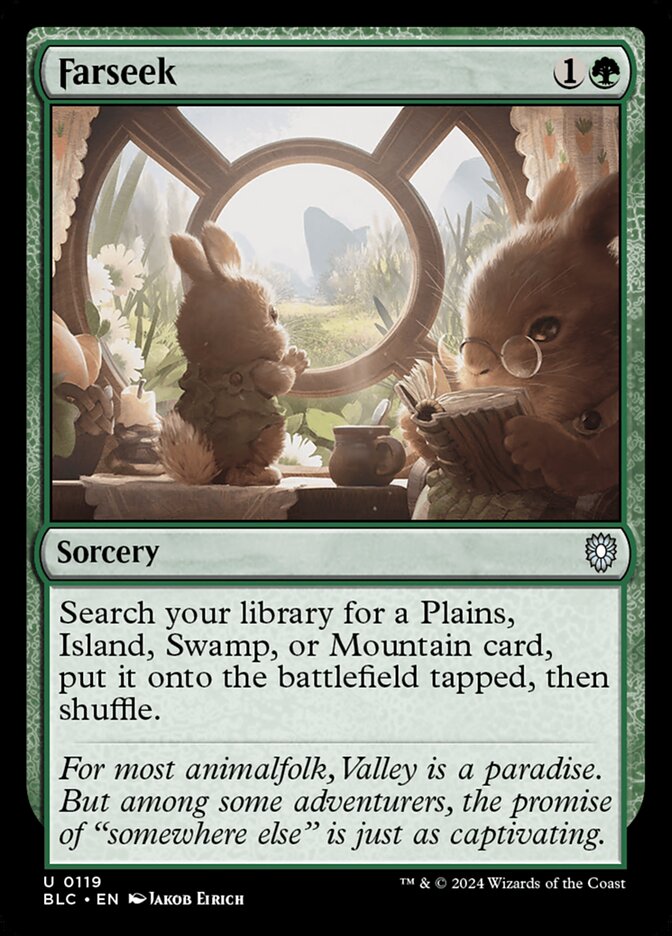
Watching them learn to play Magic has made me fall in love with the game all over again, and now, one of my most prized decks is one where all the cards are pirates and the way to win the game is to plunder the most booty. There is something to be said for mastery. For having the tools and the knowledge to deliver a swift kick in the teeth to someone who’s being a shade too arrogant. But the real magic of the game has always been in connection. With my dad when I was little and with my friends throughout elementary school, middle school, high school, and college.
And it’s nice to build a deck and watch it fly rather than arming it to the teeth. It’s nice to take the gloves off and just .. enjoy playing. I dunno, maybe I’m just getting old.