Speedrunning has been a typical phenomenon in most video games. It is the culmination of hundreds, or even thousands of hours of work poured into a single task. Speedrunning relies on consistent and deliberate practice, breaking a complex performance into small, repeatable components. People will grind specific sections, mechanics, and glitches, just to get a slight edge over their competition. This is the exact same in many real life sports. To get to a top professional level, competitors have to be better than the rest and are etched into the history books because of it. I believe that the skills speedrunners train and their mentality about the game is a digital equivalent to sports.
In sports, players will train hundreds of hours in a single skill and run drills to get a set play down. If we look at a specific game, we can see how this applies to speedrunning. In Minecraft, speedrunning has evolved ever since it was released. At the moment, the most competitive version is 1.16 and it is split up into these five sections: Overworld, Bastion, Fortress, Stronghold Navigation, then the End Fight. In each of these sections there are many different ways that they can play out, but there is always a set strategy that you can commit to. For example, a bastion has 4 different structures that can generate. Each of these structures has its own route that can be drilled and perfected into a sort of a set play. A top runner will use their muscle memory to execute their play, even if not all the circumstances are the exact same from their practice – just like how two moments in any game of a sport can never be the exact same, but will have similar enough circumstances that a practiced play will work.

In a sport like tennis, games can get very tense. At the Wimbledon Final in 2008, Federer and Nadal competed in what is considered to be one of the greatest tennis matches ever played; the game went on for 5 sets and ended with a score of 9-7 in the last one. There were many moments in this match where winning a single point would be the difference between losing the whole match and having another chance to clutch. Arguably, even more important than this is for the opposing player to be able to mentally reset and not crumble after losing a match-point. The same could be said with nearly all speedruns. At the final legs of a speedrun, the player is usually faced with a final challenge – let’s take Mario Odyssey as an example. At the end of this hour-long speedrun, the player would have to complete a sequence of mechanically difficult combat and parkour where any mess up could cost them a record. The time intensity and fragility topped with the immense amount of pressure of these moments makes perfection necessary. In both of these scenarios, the players would have to perform near perfectly to achieve their goal, something only the highest level of competition would take from you.
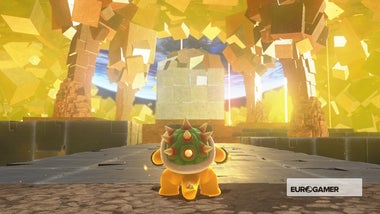
Speedrunners’ mindset on their craft and extreme mechanical ability make them a parallel to professional sports players.