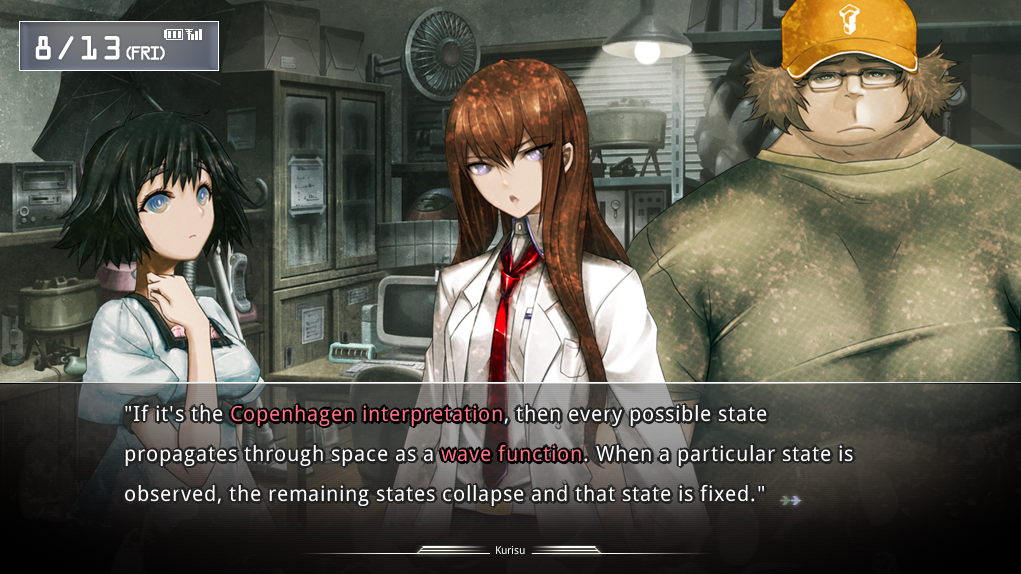
Visual novels (VN) are an odd genre of games. If you’ve played VNs before and have tried explaining what they are to others, they will inevitably ask: “How is that a game?” And in many respects, they are right. VNs do not have many of the things which most people would describe as core to video games. Even walking simulators have more “agency” than VNs because you, the player, is walking and looking and usually interacting with the world in some way. But VNs (at least, most VNs) have one point of interaction, and that’s dialogue choices.
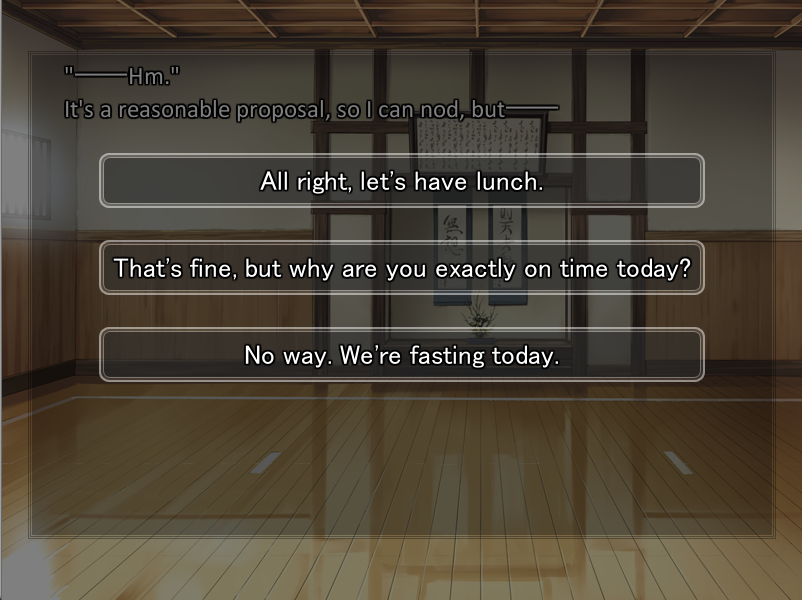
Randomly during a conversation, you will be given a few dialogue options; this is in spite of the fact that your player character is usually a fully fleshed out, voice acted protagonist who has been making decisions all game on your behalf. The funny thing about these dialogue choices, is that most of them do not do anything. They might lead to a unique conversation, but in terms of changing the story they are unimportant. However, there are a few times where the game will present a dialogue option, and it will drastically affect the story. Maybe your character will die, maybe you get a joke ending, or maybe you enter into a completely different storyline. These are called “routes” in VNs, and they will quite literally be gateways into alternative realities with completely different events and characters. The kicker: you will never know when a dialogue option is meaningless or actually impactful.
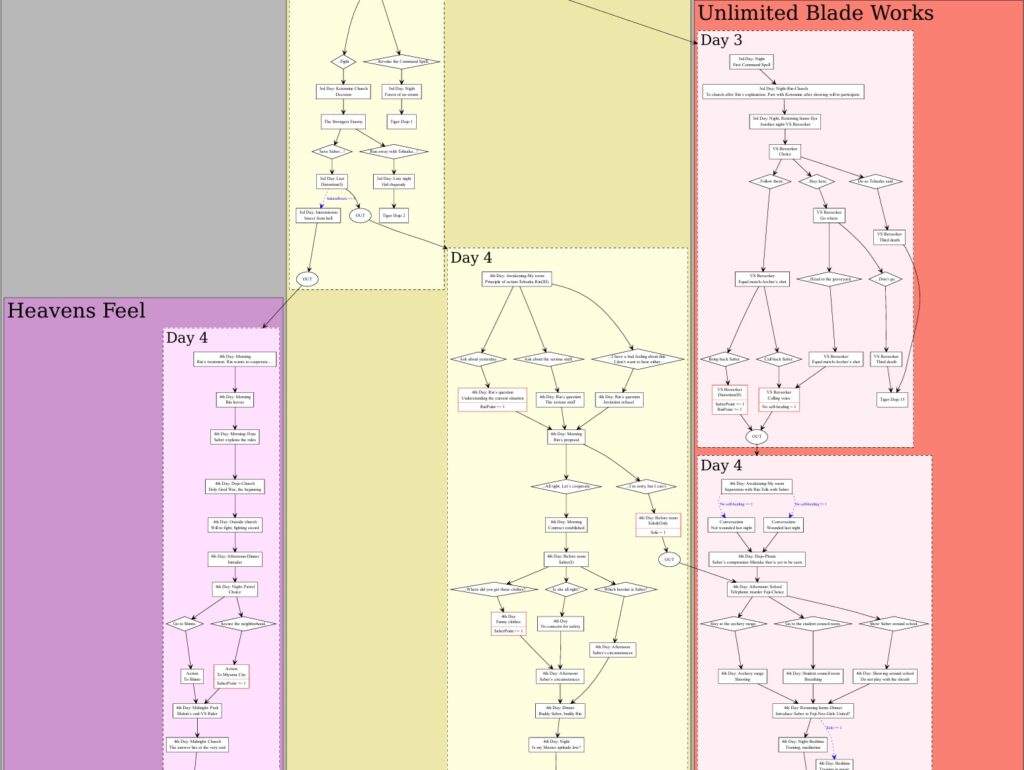
Inevitably, the player will reach a “bad end”, and in order to understand how they got there, they will have to randomly guess as to what dialogue choice led them there. The above image is a guide for one of the most famous visual novels, Fate Stay/Night, and its many routes and choices. Say you wanted to go through the Unlimited Blade Works route, but accidentally end up dead on day 3 or end up on the Fate route. How did you end up there? Well, you will simply have to backtrack your choices on the chart. What if you don’t have a guide? Good luck! Hope you enjoy reloading saves and randomly selecting dialogue options in the hopes of finding the correct route 🙂
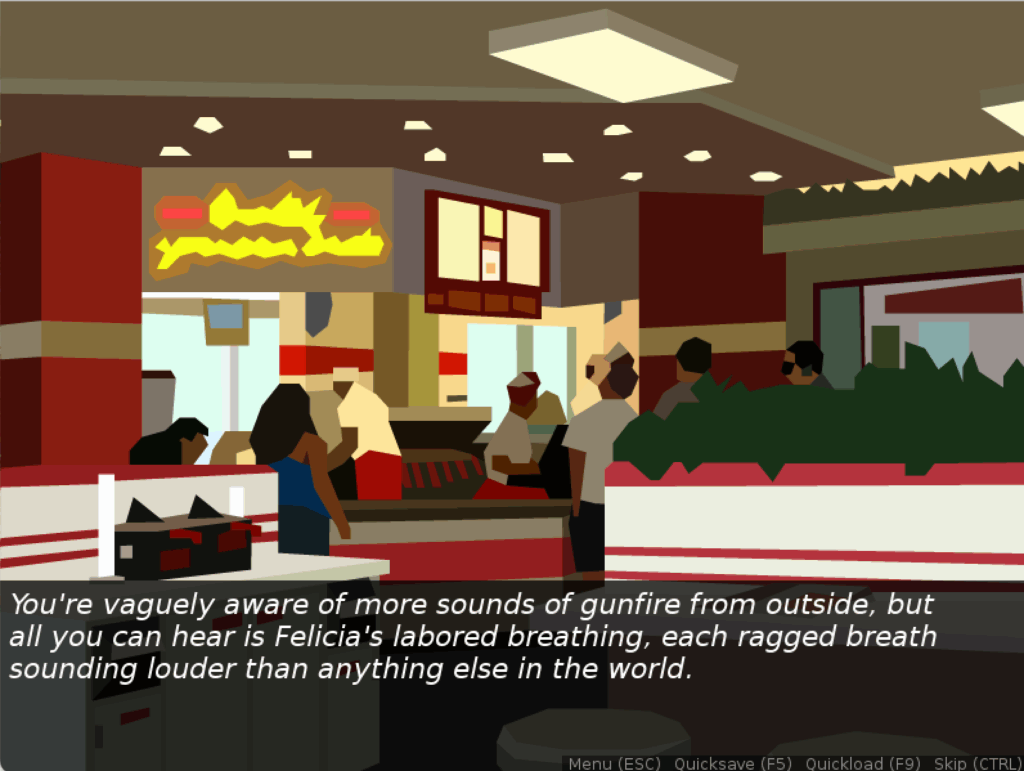
This is what I feel Save the Date is really about. Anyone who has played VNs will immediately recognize Save the Date as a true VN. Everything from it’s soundtrack to it’s UI to the right click bringing up the menu is incredibly faithful to the genre. So it was quite funny to me when I realized the gimmick of the date dying in every route, and how it mimics many people’s experiences playing VNs. I can imagine the creator of Save the Date being inspired to make the game after one too many failed routes of whatever VN they were playing and being frustrated at how stupid the choices were. The metagame, if we choose to view Save the Date as one, would then be a commentary on VN mechanics and their redundancy.


I haven’t interacted with any visual novels, other than Save The Date, if it can be classified as much. I did also notice how this game mirrors a kind of narrative experience where the player, or the reader, is thwarted in their expectations that they might be able to change the outcome though. I think you’re absolutely right in classifying this as a satire of that narrative experience where we expect to come to some sort of satisfying outcome despite whatever route we take in the game/novel. So much of our expectations for media in general are focused on coming away feeling maybe not good about what happened, but at least with some closure or acceptance of how it ended. Save the Date is a direct response to those expectations, forcing the player to accept that there is no closure or satisfaction with how this narrative ends.
I like how you connect Save the Date back to classic visual novels. The choices are seemingly important but they are actually totally meaningless, since the endings are always tragic. I see it now, the game really does feel like a parody made by someone who suffered through too many bad endings playing visual novels.