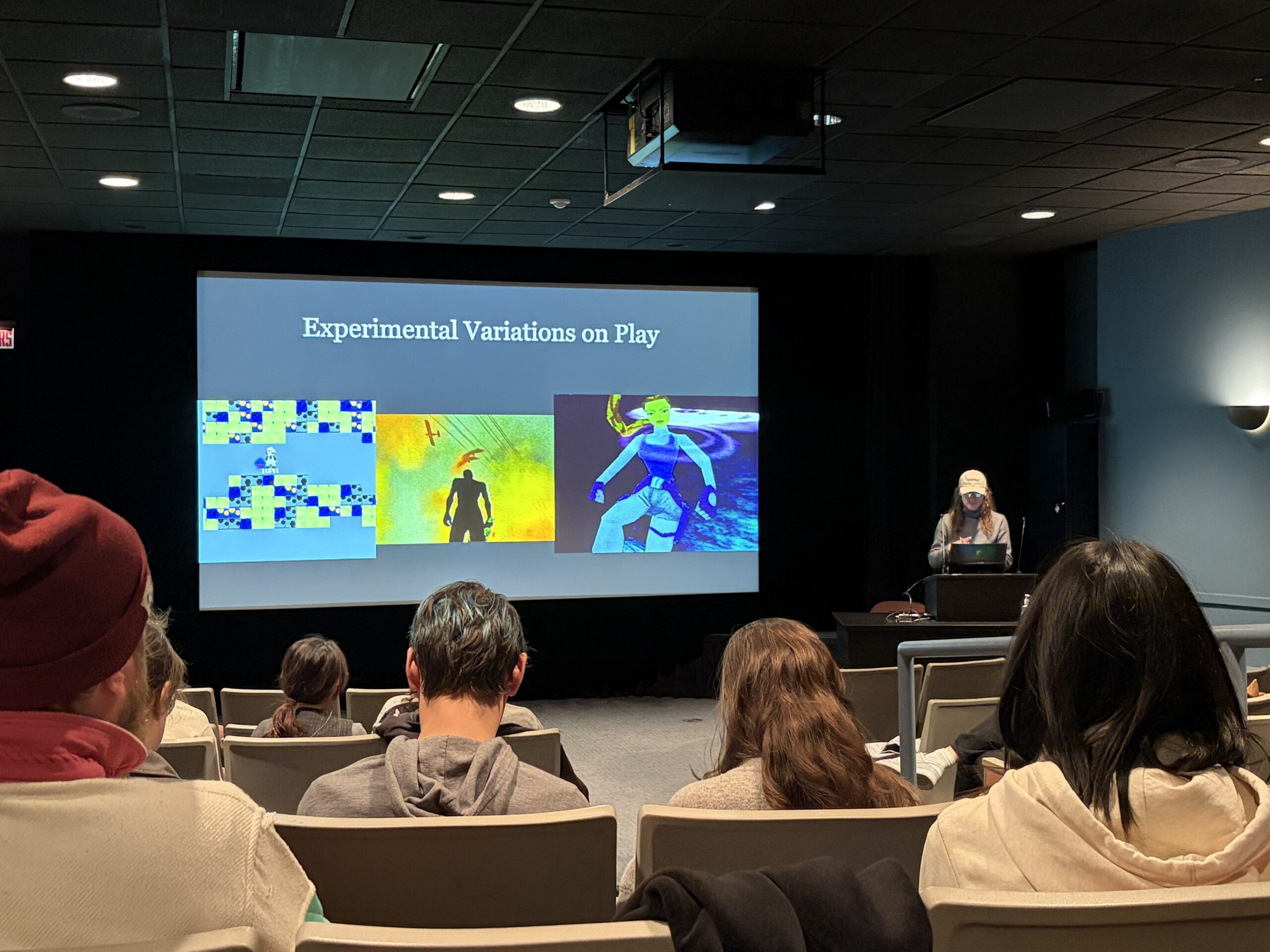
If the machinima screening has taught me anything, it’s that I’m probably not the target audience for experimental films. If it has taught me anything else, it’s the capacity of artists and their creativity to turn anything into a workable medium.
My gut reaction to many of the short films was a general sense of unease. As much as I wanted to enjoy the transformation of video games into a film experience, I couldn’t seem to get myself past the disquieting feelings they brought on. Perhaps it was because we started with Super Mario Movie (2005), which, while extremely interesting in its conception and execution, became to me just a bunch of overstimulating flashing lights and sounds. The following films permeated the same strange, unsettling vibes, just in different fonts. Rehearsals for Retirement (2007) had me feeling a similar way, though it was much darker and subdued. Reckoning 3 (2013) mixed media of in-game footage and real actors, and yet still I felt uncomfortable. I felt very conflicted while watching; I could appreciate the filmography and poeticism in the visual metaphors, but couldn’t find it in myself to enjoy it. And yet that’s kind of the point of these experimental films – eliciting a strong emotion within the audience in a vague, unplaceable manner. Most commercial films actively tell a story, leading viewers down a set narrative. The intentional ambiguity of experimental films instead leads viewers down an emotional narrative, focusing strongly on the affective experience rather than a purely narrative one.
Ultimately, even if I can’t find affective enjoyment and ease in watching machinima and other such experimental film mediums, I can still appreciate the artistic form and the efforts that artists go through for expression. As a visual artist, I challenged myself in my IB art exhibition to create a series of work centered around confinement. It was a product of being stuck at home for two years during the pandemic, but it also became an experiment that I found myself in while working under and through confinement. In a medium-specific way of representing this, I made a piece completely out of technical pen (save for the separating layers of acrylic plastic). By confining myself to only one medium – and one that I was generally unfamiliar with – I found myself pushing through past boundaries I had set myself, perceptions of what I could or could not do, etc. The machinima screening reminded me of this experience. By confining oneself to the game medium – one arguably not made for the purpose of creating films – artists simultaneously map out the boundaries of what is acceptable and what can exist, and break through them.

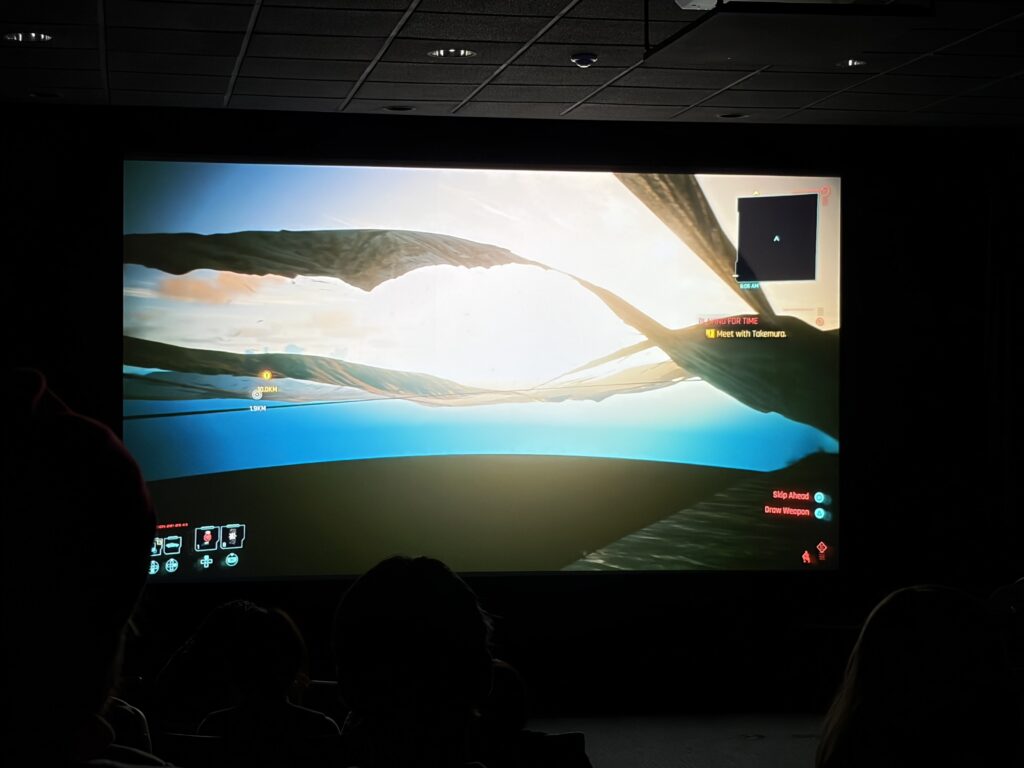
Interestingly, this boundary-breaking can occur just as effectively if you work with the grain of the medium and if you work against it. For example, the Super Mario Movie (2005) was made by hacking into the original game itself, changing the code, and altering the inner workings of the medium. It begs a question not unlike the paradox of the Ship of Theseus. Is it still the original game? Is the artist working within the game medium or against it by altering it? Regardless of what your stance on this is, it effectively establishes and breaks through the constraints of a preconceived medium – placing the artist in the forefront. Another film from the screening that does this exceedingly well is The Edge of the World (2021), unlike the Super Mario Movie (2005), it works with the functions of the game – its mechanics and its bugs. By filming aspects of the game environment as the character clips through the map and reveals large empty expanses under mountains, the film embraces these medium-specific imperfections and reforms them as an intentional artistic statement.
In all of these films, the artists utilize a preestablished game medium and art in its own right, reshaping them as expressions of their own experiences. The importance of intention in artistic works is made apparent through machinima, and the transformation of a medium across individuals becomes paramount to the game’s experience.


This reminds me a bit of my “What is Animation” class I took last year. Along with some classic animations important to the industry (Mickey Mouse Cartoons, Astro Boy, and Toy Story), we watched many short experimental animations that most people outside the animation academia community have never heard of. I definitely enjoyed the more commercial animations rather than experimental, though I feel like experimental film (per its name) gets to experiment more and push boundaries, potentially finding new ways to convey messages that may become common industry practice or at least inspiration to more commercial art. Additionally, experimental film more often gets to preserve the creator’s touch since there isn’t an assembly line of people who all work on the film. So while I don’t necessarily enjoy experimental film, I (like you mentioned) understand it can be important to study to understand different mediums and perspectives better.
I share your opinion on experimental films most of the time. I actually really enjoyed She-Puppet for its strangeness and uneasiness. I try and engage with at least one experimental film every three-ish months so I can be sure that I’m giving it a fair shot, and I think there’s a lot of value in engaging with art that we don’t fully understand. For example, I really like learning about art that involves manipulation of the tools used to make the art, so I really liked the Super Mario Movie for the physical manipulation of the cartridge, and abstract art that involves manipulating the paint.
I also realized experimental films might not be my cup of tea after the Machinima screening. It was my first real exposure to this type of art form, so it was definitely eye-opening. Like what you said about media that’s built around creating an affective experience and media that focuses on narrative, the screening helped me see the the difference between the two. The difference also explains why experimental films don’t appeal to me as much as traditional movies. I prefer structured storytelling. Still, the screening taught me a lot about what it means to intentionally make the audience experience certain affects.
I really like how you framed machinima through the idea of creative constraint. Even though the films didn’t resonate with you emotionally, you make a strong case that discomfort is part of their design—an affective experience rather than a narrative one. Your comparison to your IB art project works well, especially the idea that limitation can force new forms of expression. I also thought your point about “working with the grain” versus “against the grain” of the engine was spot on; Super Mario Movie and The Edge of the World really do demonstrate opposite but equally valid approaches to pushing a medium’s boundaries. Even if machinima isn’t your preferred form, your reflection shows a deep understanding of how artists reshape game worlds into spaces for experimentation.