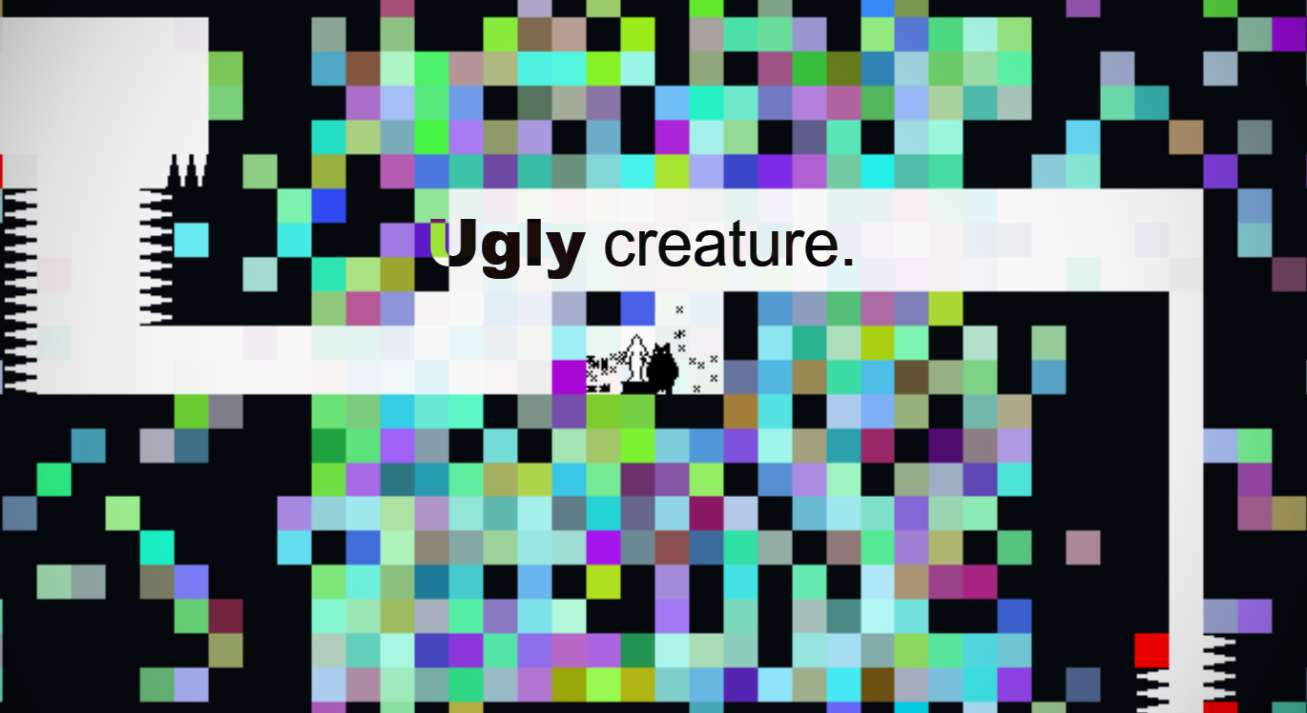
I think Loved (2010) is about parents.
When you open the game, you’re immediately denied the ability to choose your own identity.
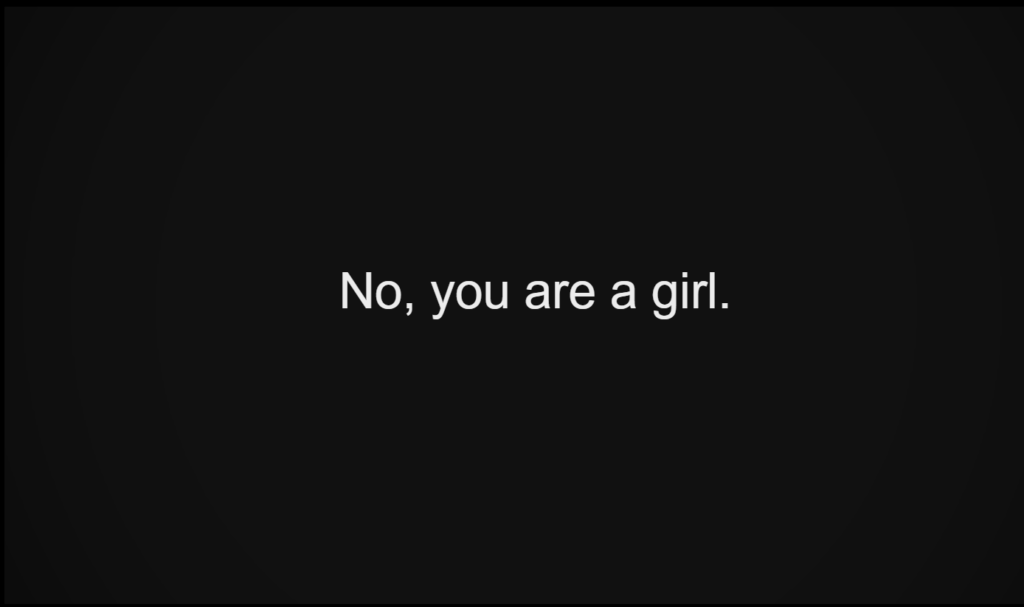
This is the screen after I picked “I am a man.”
You’re also given no guidance. No instructions for how to play, just disparaging remarks if you get it wrong. If you mess up the game’s instructions, it disparages you. “How disappointing.” “Ugly creature.”
What’s interesting about this is that the starting point of the game defines you as the game’s creation rather than your own person. The game’s dialogue imbues you with a loss of selfhood. You cannot choose your gender. You cannot choose your form. If you want to be good, you cannot choose what you want to do. And you want to be good, right?
By mistake, after failing in a couple spots (by accident) I put myself on the route of disobeying the game. The feeling evoked by the game being taken over by color in the background was exciting, a welcome break from the monotone of the rest of the game.
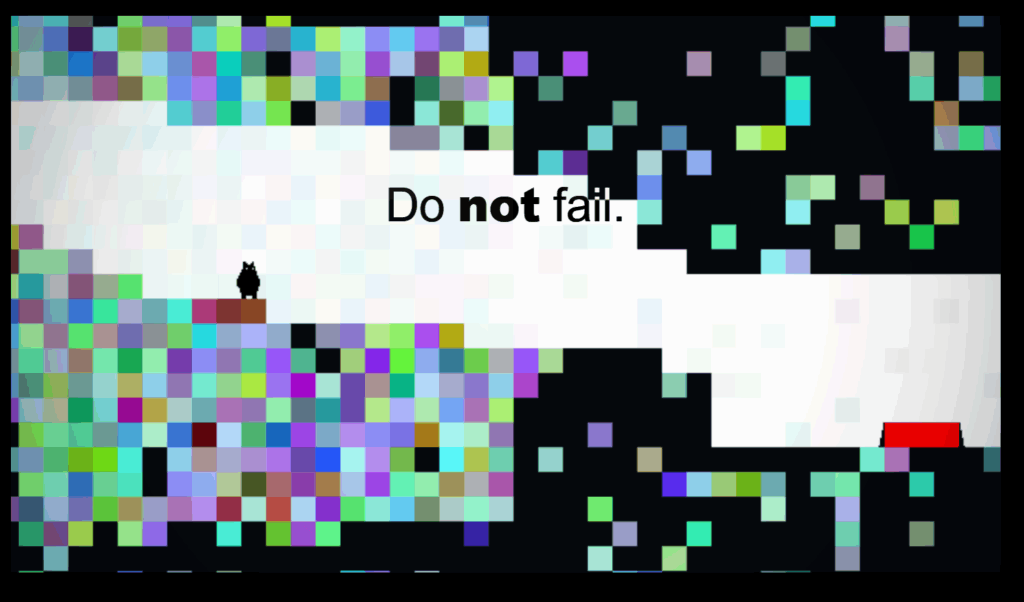
The game world is more alive the more you disobey. The voice commanding you however, starts to become more domineering and sadistic. It wants the player to feel worse about themself for disobeying, even though the world becomes more interesting the more you disobey.
The small pieces of dialogue makes you guilty—the voice says “Do you hate me?” “Where will you go? Will you be close to me?” But it also reinforces the lack of agency the voice wants you to have; the game asks: “Do I own your body or your mind?”
Finally, the game’s ending of the disobedient run is not satisfying at all. You walk straight to the right in a world of colorful tiles and then the game ends. There is no more voice. There is just you in a world of color.
I think this game is the strongest replication of how it feels to confront parental abuse. It’s not entirely satisfying. Nothing gets tied up in a little bow after you stand up for yourself and reclaim your selfhood. In fact, it saps at you. It eats you alive before every step, and you can never un-hear that voice calling you an “ugly creature.” But if you don’t go for it, your life is monotone, and you will be stuck in the same old pattern.


This is such an interesting way of looking at the game Loved. I’ve never played this game, but I completely agree that, based on your description of the game, it seems to be about parental abuse and overcoming it. What particularly struck me was the denial of gender identity, which reminds me of when parents deny the gender identity of their transgender child and impose one of their own. A lack of acceptance of the player just as they are seems to be a common theme, not only through gender identity but through the punishment of failure. There are parents who do not accept failure from their children and act as if their children are solely their legacies, which goes back to your words: “What’s interesting about this is that the starting point of the game defines you as the game’s creation rather than your own person.” What also stuck with me was the guilt-inducing phrases. There are parents who try to shift the guilt to their children, to possess them and keep them under their control. Because if the children feel guilty, they are more likely to think that they were the one in the wrong rather than the other way around. This game makes me wonder if it can have an impact on people who are too scared to reclaim their selfhood, who are trapped in a pattern of parental abuse. Can games like this help them break out of the cycle and reach that world of color despite the mixed feelings associated with it?