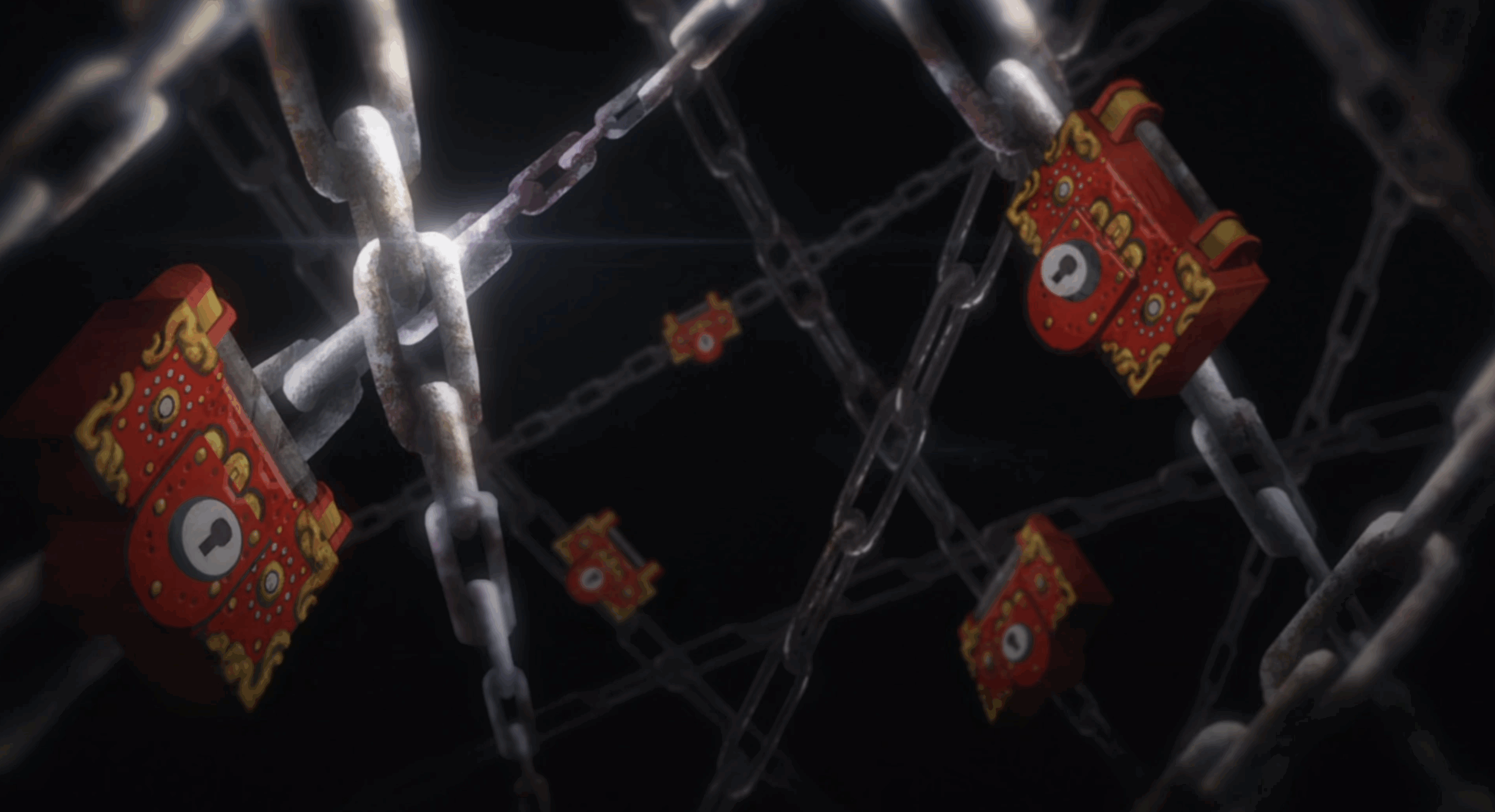
What does secrecy truly look like in video games? I can’t say. It’s a secret.
So instead, this post will just address how secrecy affects the relationship between a player and player-character. It references Ace Attorney, Persona 5, Nier Replicant, Persona 4, and Doki Doki Literature Club — including spoilers for Persona 5, Nier Replicant, and Persona 4.
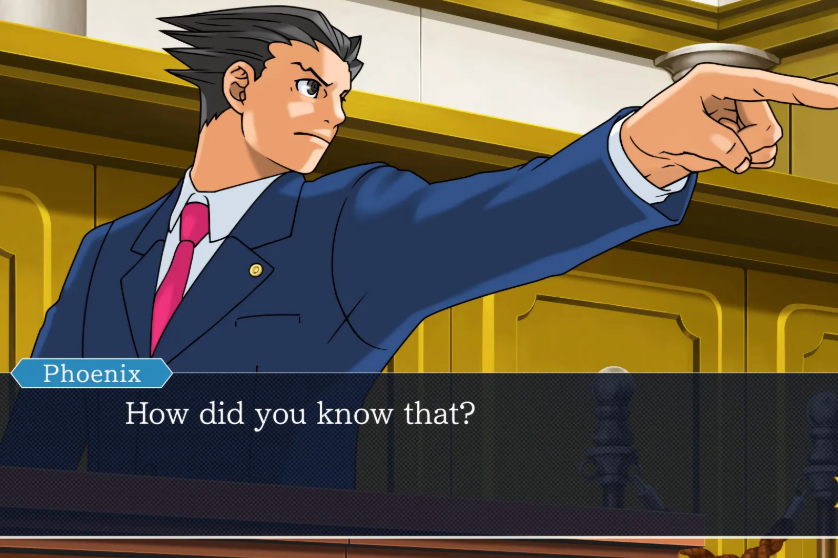
Usually, when video games involve elements of secrecy, the secret is something that the player and their character are both unaware of. The Ace Attorney series is a prime example of a mystery game. In Ace Attorney, a player plays as defense attorney Phoenix Wright (or Apollo Justice) as they attempt to uncover the truth behind a murder. As the game progresses, finding and uncovering pieces of information slowly help both the player and Phoenix/Apollo piece together answers like when the murder occurred and how it was carried out, which eventually allow you to ascertain who did it and why. In Ace Attorney, when a player becomes cognizant of a new fact, that is also when Phoenix/Apollo becomes aware of those details. There is no informational disconnect between the player and their character, allowing a player to embody the character.
However, there can also be informational gaps between the player and player-character, where the character knows something before the player. Take for example Persona 5 — the player is unaware of the fact that Goro Akechi is going to betray the party. Thus, when Akechi imprisons and executes the main character Joker, the player is left shocked by this development. Only afterwards is it revealed to the player that Joker knew all along that Akechi was a traitor, and had set up an elaborate counter plan without the player’s action or knowledge. While the player typically decides how Joker acts, there exists some level of detachment since Joker was able to act “autonomously”.
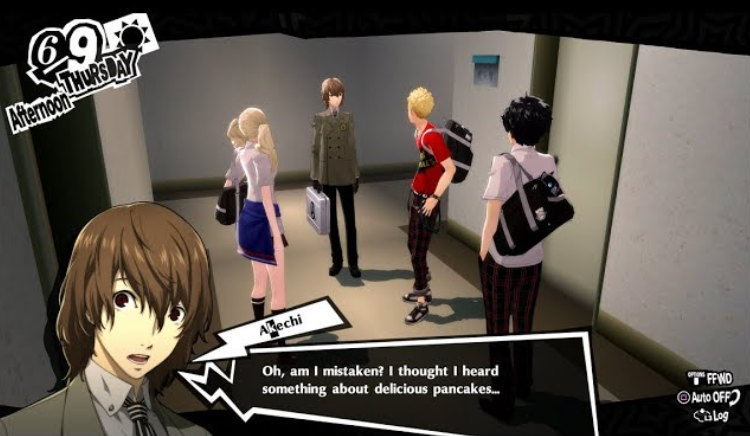
This type of secrecy can seem unsettling for a player in two ways. The first is that it causes the player to question their role in the story. Supposedly, the player is following every moment of the game while playing as Joker. The game wants the player to believe that he somehow was able to speak to and plan this whole elaborate scheme with the other characters without the player’s involvement. The second is that games that allow a character to know more than the player challenge the concept of a “fair” mystery. Essentially, in a “fair” mystery, the player should be able to solve the puzzle or problem on their own. People often feel cheated when critical information is hidden from them, especially when they were not given the opportunity to have a hand in solving the mystery. Interestingly then, this type of secrecy that leaves the player out of the loop questions why the player was not allowed to partake in the plan.
While there is an informational disconnect between the player and their character in this instance, the overall effect is the same as if there was not one. This is because the difference between how these two games use secrecy is the character’s perspective, not the players. These instances of secrecy use a player’s lack of knowledge and subsequent desire to know to motivate them to keep playing a game. If a player is engaging with a story because of suspense and desperately wants to know what happens next, they will likely be equally involved in Ace Attorney’s and Persona 5’s mysteries.
But what happens when an informational disconnect goes the other way? What happens when a player knows more than the character?
In the first playthrough of Nier Replicant, the player discovers story elements at the same time as the main character, Nier. However, the “truths” they uncover are one-sided, and show only half of the story — Nier’s half. It is only by playing the game again does a player learn about the other perspective, of the enemy shades they were fighting. Throughout the game, the player (as Nier) slays shades in order to protect the characters and save Nier’s sister. During the first part of the game, some especially powerful shades serve as “mini bosses” in each level. They are given no background or relevance besides being creatures that stand in the way. However, in a second playthrough, the player can now understand what the shades are saying through translated dialogue. The player is let in on the sentience of the shades, and particularly the fact that many of them were nonviolent until they were provoked by Nier. Essentially, the second playthrough of Nier Replicant reframes the gameplay — instead of having Nier’s violence seem triumphant and heroic, Nier’s slaughter is redefined as reprehensible and despicable.
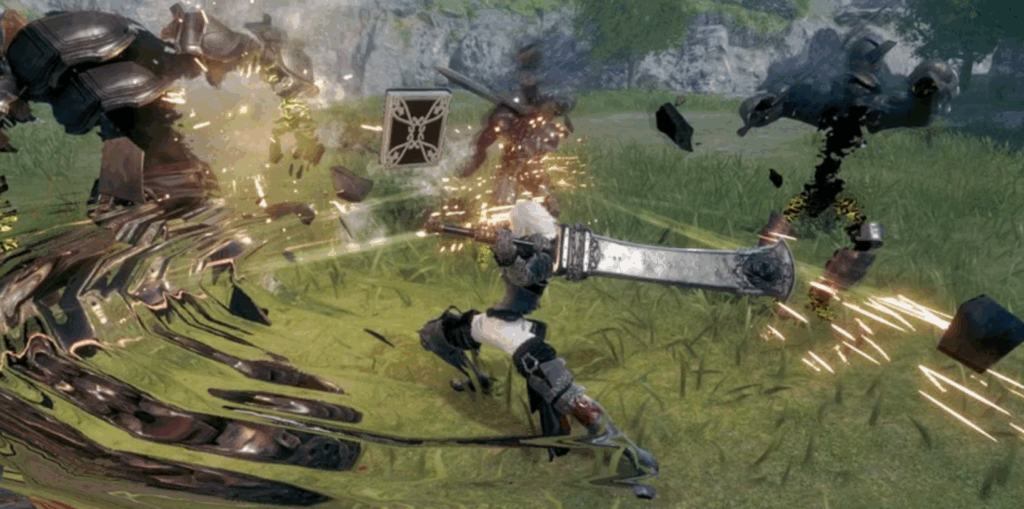
While there are still elements of mystery that can keep a player engaged (for example, learning more about the story of each shade), mystery is no longer the central driving force behind a player’s continuing with the game. Instead, mystery transforms into something more akin to realization — forcing a player to engage with what that recontextualization means. Games that give players more knowledge than their character ask them to engage in thought-providing experiences around what it means to be aware and still choose to play. Notably, in Nier Replicant, a player must intentionally be evil in order to progress. What does it mean to know Nier is wrong, and still choose to enact violence? What does it mean to choose to only recognize Nier’s perspective?
Finally, there is also the category of a player unintentionally knowing more than the characters. Especially for older games, spoilers on plot twists are more than common. While Persona 4 is a murder mystery, practically everyone in the target audience knows that Adachi did it. While Doki Doki Literature Club is a unique game because it subverts the expectations of the dating sim genre, practically everyone knows that. How does this change how people engage with the game? Does it change how people play a game? Does it matter that people know about parts of a game that are supposed to be a secret?

Additionally, secrets in games cannot be entirely unpredictable. So, what happens if a plot is foreseen or anticipated in some way? What does it mean that people are able to guess secrets and have to play as if they hadn’t?
But in the end, I can’t say. It’s a secret.


What a mysterious and secretive post…
I think your experience with a game when you know how a game plays out depends on the player. I don’t have much experience being spoiled for video games, so I’ll use movies as an example. While spoilers can ruin certain movies/shows, it can also be what draws you into that media in the first place. For example, a few years ago, I was recommended by YouTube a video essay on La La Land. I had never watched La La Land before, but I still watched the video essay, which was so engaging and mentioned the ending of the movie many times to the point that it compelled me to search up the movie’s ending scene despite having never watched the movie. I found the ending scene so moving (I cried even though I had no idea what was going on), and that spoiler was what compelled me to watch La La Land in the first place, and it ended up becoming my favorite movie. For games, I think getting spoiled isn’t as impactful as getting a movie spoiled because of the difference in interactivity. Even if you get spoiled about a video game, your individual game experience is still going to be different from others, and you’re still the one personally controlling and navigating the narrative.