Earlier this week, I was watching a video about beating Zenless Zone Zero (ZZZ) with Level 1 characters. Unleveled characters are unable to do much damage and have little health and defense, so they die with just a few hits. This made the game much, much more difficult than it normally is, where the story mode is basically a push over.
In the specific video I watched (the third one in the series, in case anyone is interested), the specific challenge was beating the Miasma Priest in Notorious Hunt, which notably doesn’t have a time limit. This meant that the fight was about endurance more than anything else. As long as he was able to stay alive, he could eventually do enough damage to beat the boss. Failure, then, meant losing all progress, but there was also a tangible goal.
This “test of endurance” mode of playing is not uncommon: in ZZZ, the Battle Tower is a perfect example of this, where players must continually beat challenges while their health carries over between fights. I’ve seen Cuphead described like this, where, because the player is always dealing damage to the boss, winning feels more like “surviving” rather than “beating” the boss. Perhaps my favorite example of endurance testing, though, is arcade games.
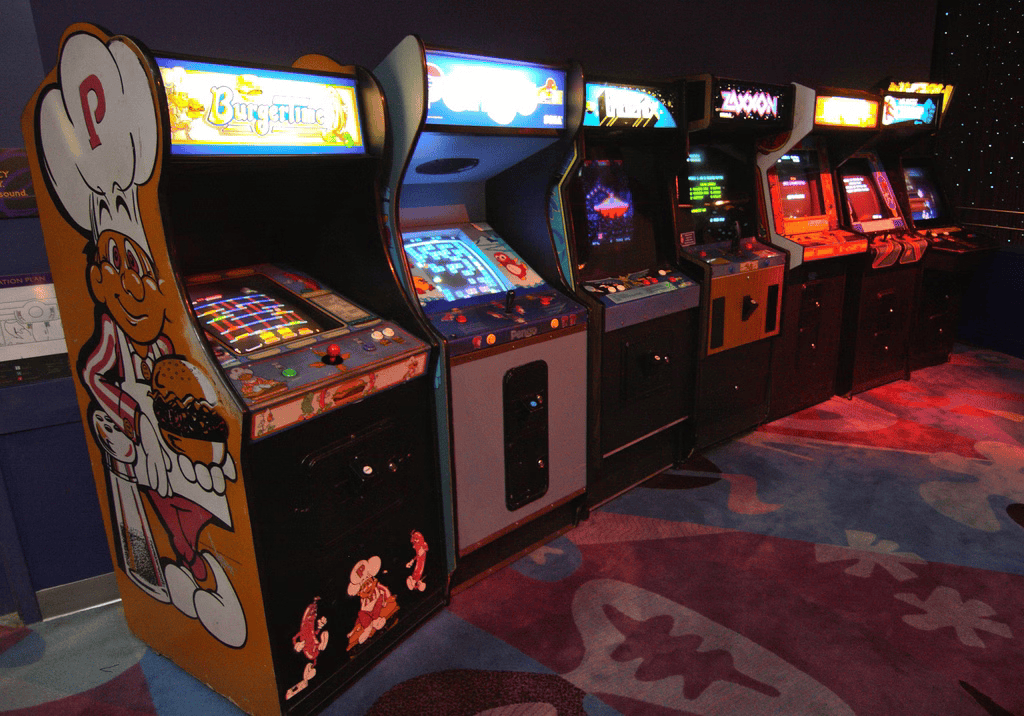
I love arcade games; in fact, I’m planning to do my thesis on the arcade. One of the curious things about arcade games, in comparison to many modern games and both examples I brought up, is that a player generally can’t “beat” them. There is no win-state. The player just plays until he loses. Failure is an inevitability, not a possibility.
This is something Greg Costikyan brought up in his book Uncertainy in Games: “The outcome of Space Invaders (Nishikado, 1978) for example, is certain: The player will lose. Sooner or later, the player will be overwhelmed by the serried ranks of invading aliens, and the game will end in a loss” (Costikyan 10-11). Costikyan’s point, then, is that the uncertainty in the game is not about “winning” or “losing,” but about achieving as high a score as possible.
I agree with his reading from a procedural perspective, but this doesn’t cover the player affect. When playing an arcade game like Space Invaders, my score is very rarely directly on my mind; rather, I am just trying to beat the current stage. The game itself may not be beatable, but each individual level therewithin is. It structures the game as a form of delaying failure: while I know I am going to lose eventually, it is not going to be this level. Failure may be an inevitabilily, but it is not an option.
Furthermore, while the levels themselves give players a tangible goal to complete, the transition between stages gives the player a breather, a moment to rest even when incredibly short. I often find myself taking a step away from the machine and pumping myself up before grabbing the joystick again, particularly in games with longer level transitions like Ms. Pac-Man with its story cutscenes. This discontinuity of levels gives a small reward for the player and allows the endurance to not be as continuous.
Most arcade games are also fairly similar from level to level. Difficulty will ramp up between levels: for example, in Galaga, the Galaga aliens will start to fire at you during the start of the stage and later start to dive at you. In Pac-Man, the power pellet will make the ghosts vulnerable for a shorter and shorter window before eventually just repelling them for a moment. While there are increases in difficulty, the game is still essentially the same from level to level. If the player could beat the previous level, he can theoretically beat this one. Each level then feels achievable, even knowing that mistakes will eventually lead to a failure. There are exceptions to this—Donkey Kong has four substantially different stages the player faces—but I have found this iterative difficulty to generally hold true.

Finally, arcade cabinets don’t allow the player to just reset when he makes a mistake. In Cuphead, for example, I had a horrible habit of just restarting the boss whenever I took a hit. Instead of just trying to play it out and practice the boss, I’d reset under the assumption that I couldn’t beat it now. This affordance is not really available with arcade games. There is no “restart” button for when the player makes a mistake; at most, he could just intentionally die, which is no fun. This incentives the player to continue playing no matter the odds. I can say from experience that many of my best runs have been long stretches with just one life left, where one mistake meant death. And this is assuming a freeplay model, where playing any individual machine doesn’t cost any money. In a coin-op environment, there is even more at stake since the player has put money on the line. Dying means sacrificing this money, so playing is a must.
The entire structure of arcade games push players toward this model. Affectively, they give players a challenge that slowly but surely increases while still largely being the same, so the player knows he can beat it. The games are about beating the odds, surviving as long as possible. The score is just a representation of this achievement, a quantification of it, rather than what the player is aiming for directly. When the player does die, it becomes all too easy to put in another quarter and start all over again.
However, there is an assumption underlying this entire argument: arcade games can’t be beaten. But this isn’t necessarily true; Pac-Man, of all games, can be beaten.
While it would initially seem that the game does not have an ending, at Level 256, the game glitches out, and the level becomes unbeatable. For all intents and purposes, this is the end of the game, and 3,333,360 is the highest score possible.
Most players, even hardcore Pac-Man fans like myself, will never get remotely close to the kill screen. This takes hours to complete and game skills that most do not have. Despite this, Pac-Man’s accidental end has become a part of the franchise’s canon. This is most obvious in Pac-Man 256, an endless runner adaptation of the arcade game which features the glitch chasing the player. There was also an arcade in the Chicago suburbs called Level 257 which was officially themed around Pac-Man. While still relatively minor, Level 256 has become a part of the Pac-Man franchise.
This calls the whole framework into question: we assume arcade games can’t be beaten, but Pac-Man shows that is not necessarily the case. Is failing to beat Pac-Man, then, a standard arcade game failure like Costikyan describes, or is it more akin to not beating a roguelike? Both seem to be reasonable options and further show how failure is not just decided by game designers but player’s interactions with the game.
Citation: Costikyan, Greg. Uncertainty in Games. MIT Press, 2015.
P.S. This has nothing to really do with the meat of the article, but this is a really cool video explaining how the kill screen comes about: Pac-Man Kill Screen Explained. There is also a great video on how the ghosts work in ‘Pac-Man.’ Pac-Man Ghost AI Explained – YouTube. Also, if you haven’t checked out Galloping Ghost yet and like arcade games, I cannot recommend it enough.


This was a very interesting blog post, especially as I don’t play arcade games and (perhaps foolishly) dismissed them exactly because they had no endings. I was especially intrigued how the use of levels seems to increase the motivation in players to continue, as there are discrete checkpoints to mark your progress instead of only the continuous metrics of time and score. I also appreciate the breaks in the game as they allow the player to rest and reset, even if just for a little bit. This prevents negative outcomes in most players, such as becoming overwhelmed or having their fingers cramp, and is part of what I would call “humane” game design. This type of game design looks to avoid exploiting or addicting the player, as well as to protect the player from harm, especially physical (An example would be playing a very engaging game for so long that you forget to eat all day, on accident). Given that most arcade games theoretically go on endlessly, these micro breaks are important to protect the player’s hands.
I also wanted to discuss your comparison of arcade games to Cuphead. You hit the nail on the head when you describe how un-fun it is to restart a boss after the smallest mistake (the generalized term for this behavior that I’ve seen is “save-scumming”). Arcade games and others like them have an inbuilt protection against this behavior, which makes the game easier but less fun. Soren Johnson is typically attributed with this quote: “Given the opportunity, players will optimize the fun out of a game,” which fits very well here. Also, I wonder if the heightened pressure of having only one life left and knowing that you cannot reset will make the player play better, because they know that there is no more room for mistakes. My end conclusion, however, is I should probably check out an arcade!
I thought this was a very interesting perspective on the art of arcade games! I just want to add that arcades also provided a very unique cultural space for gamers. For the fighting game community, arcades were the birthplace not only for the games themselves but also for building friendships and competition. The act of putting a quarter into the machine became itself a symbolic act of challenging whoever was at the machine, and no matter how famous or infamous the person, anyone was allowed to challenge them as long as they were willing to put their quarter on the line. The arcade represented a third space which I feel is sorely missing these days.