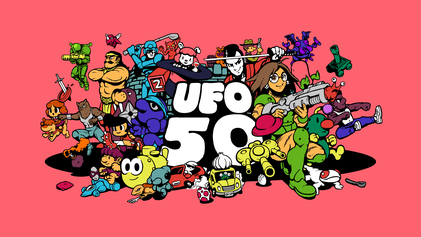
The second I saw the syllabus for this class, there was one game I knew I was incredibly excited to play: UFO 50. Since then, I’ve managed to log 4.4 hours in the game on Steam, though I have played it elsewhere as well. I quickly fell in love with the game, which meant that out of all the panels set up for the Year of Games kickoff symposium, the one on UFO 50 was the one I was most excited for.
For those unaware, UFO 50 is a collection of 50 completely different games charting the journey of fictional corporation UFOsoft. In the story of the game, each of these games were developed in the 1980s, starting in 1982 and moving to 1989.
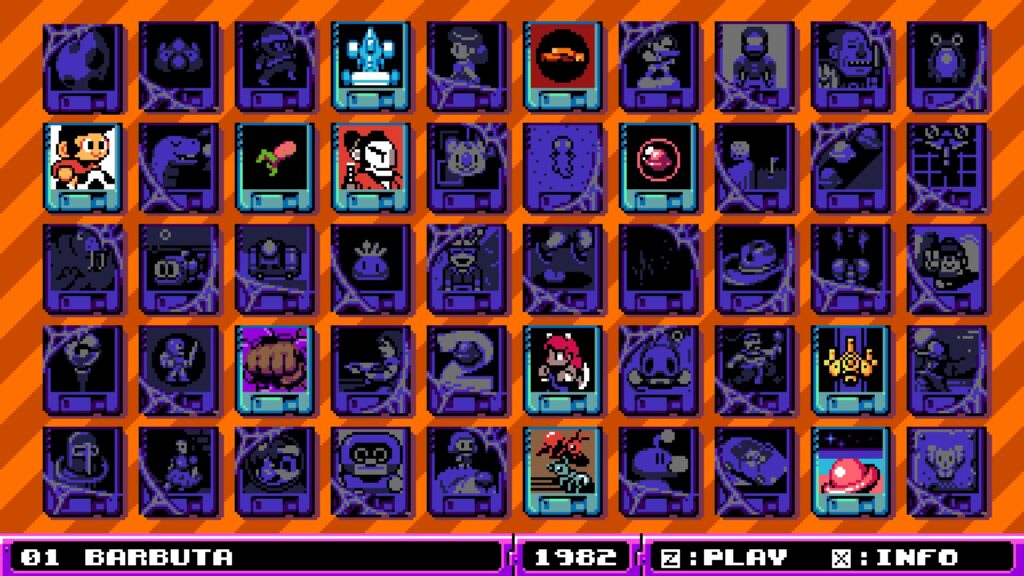
The most fascinating thing about this panel was how they approached that alternate history aspect of the game. During the panel, one of the developers, Tyriq Plummer, had said “I don’t care for nostalgia”. In a time when so many elements of pop culture like Stranger Things, the recent Ghostbusters movies, another failed Tron sequel, and more that I could possibly list, have been dominated by a sort of reverence for the 1980s, it is refreshing to see something more akin to a regular period piece, attempting to represent the era for both good and the bad.
The dedication to being a period piece places many limitations on the collection, and the player can tell how it makes them both more difficult to make and how those difficulties allow the creators’ creativity to thrive. This period piece aspect is part of what makes UFO 50 such a wonderful breeding ground for creativity.
One amazing case of this is the game called Hyper Contender.
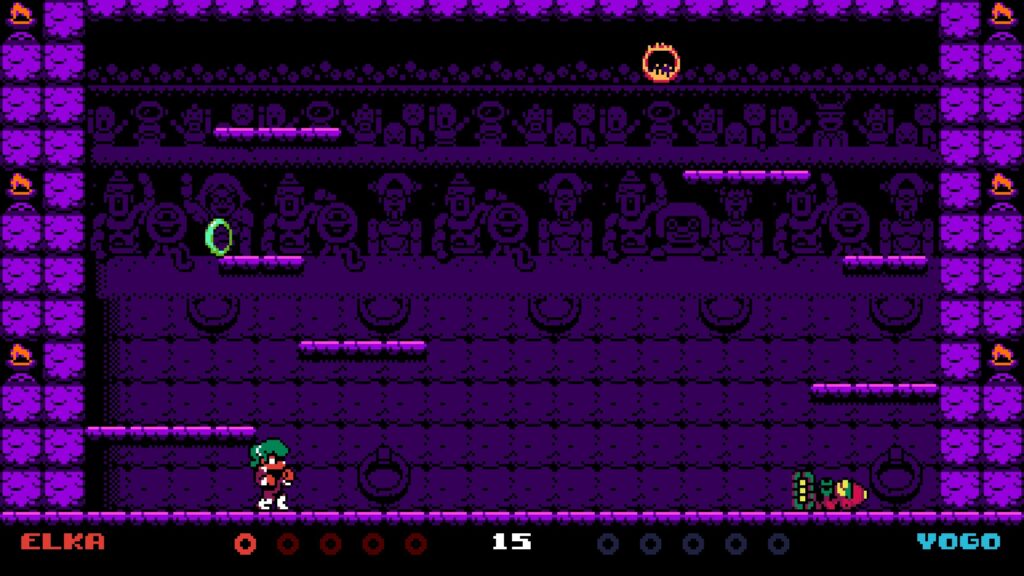
According to the game select screen, Hyper Contender was developed in 1988. That would be a few months after the first Street Fighter in the real world. The reason for the comparison is just how few cues Hyper Contender takes from Street Fighter considering how Street Fighter inspired systems included in almost every modern fighting game. I dare you to think of any that don’t have some kind of combo system. Hyper Contender, then, asks the player to imagine a reality contrary to our own where fighting games as a concept are radically different, because Hyper Contender takes its place as the first real fighting game.
This reinvention had been fascinating to me ever since I first played the game at a party. After taking a moment to get used to the controls, I was positively entranced, even as I kept getting my butt kicked. It was fascinating enough that when I got the chance to talk to Jon Perry and Tyriq Plummer after the panel, it was the game I had to single out to ask about.
It turned out that the game had not started life as a fighting game. In fact, it had started out more similar to Mario Bros, though more competitive and based around different movement options. It was only as they continued to develop the game that they realized they had accidentally made a fighting game.
This actually parallels the beginning of the fighting game genre in real life. While Street Fighter was the first game that modern gamers would call a fighting game, there were precursors in the form of versus modes in other games. For example, Double Dragon had a two player versus mode where players would fight against each other.
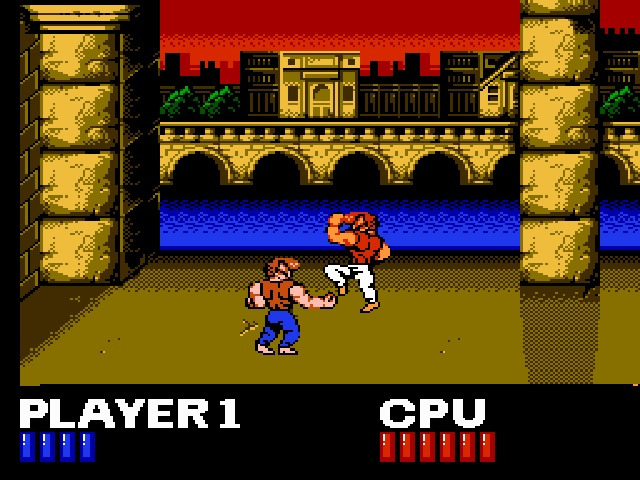
It appeared as what feels like little more than an experiment, a test of what else the gameplay mechanics could be used for. This experimentation is at the heart of UFO 50. It is the combined effort of a few developers experimenting with self-imposed limitations that make an amazing final product. This experimentation with genre goes across many of UFO 50’s games, which feels natural considering the totality of the project. Fifty games is a lot of games, and it would naturally get boring from a designer’s standpoint if they were all the same.
So we have wonderful reinventions like a deckbuilder with the cards replaced with people in Party House, a driving game reminiscent of Nintendo’s Splatoon in its mechanics, Pong mixed with ninjas and samurai in the form of Bushido Blade, and so much more. And it was learning about the process of that experimentation that made this panel so enjoyable.


I appreciate your Hyper Contender story because it captures UFO 50’s magic—how accidental genre experiments within tight historical constraints birth creativity that feels both fresh and deeply rooted. Exactly why this collection turns nostalgia into something vital: not about the past, but about what we can imagine when we stop fearing limitations.