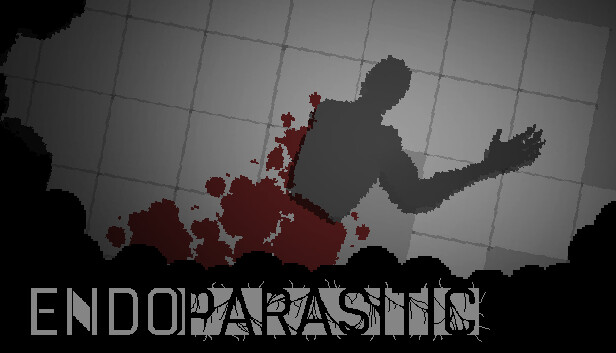
I first found Endoparasitic during the same week we were playing QWOP, which felt almost accidental at the time because I was simply trying to get the runner to move more than a few feet and, when I got frustrated with that, I started searching for other games that captured that same feeling of fighting against my own controls. I was not looking for something that was just punishing or “hard” in the traditional sense, I was starting to realize that there is something uniquely interesting about games that build their meaning out of awkwardness and resistance. Eventually I came across Endoparasitic when I watched a YouTube video showing off all of the boss fights. When I saw the premise of the game and the fact that it had boss encounters, I was genuinely confused, because I could not imagine how you could induce combat in a game where you do not even have control of your legs, since you do not have any, and you do not even have both arms. But when I realized that the game wanted me to manually reload every single bullet, while also injecting morphine to slow down a parasite that was literally crawling toward my brain, I knew there was something particular about this game.
Once I actually started playing, the thing that surprised me most was how quickly the game convinced me that the frustration I felt was worthwhile. There were moments where I completely lost control of the situation, not because the game suddenly became unfair, but because the mechanics demanded a level of attention that I was not ready to give. I would be dragging a single bullet into the chamber, only to realize that an enemy had crawled up behind me, or that I had forgotten to take morphine and now the parasite was gnawing its way a little farther into my head. It really reminded me of playing DayZ or Unturned, where I would be attacked by zombies while reorganizing my inventory because I really really needed to pick up that can of rotting beans despite me having 500 MRIs, or get shot in the back of the head with a shotgun because I was too absorbed watching a Nexpo video or something on my other monitor. The point was that these mistakes never felt cheap, they felt like the natural consequence of me not paying attention, and the game was almost telling me that, if I wanted to survive as a character who had three quarters of his limbs torn off in the opening seconds, I needed to actually focus. (crazy, i know)
That distinction became clearer when I compared Endoparasitic to games that are designed more as jokes at the player’s expense. Stuff like Cat Mario rely on surprise traps and sudden deaths that you cannot predict or prepare for, which makes them funny and chaotic for a couple of tries, but also makes it hard to take them seriously in the long run. They want you to feel frustrated because frustration is the product, and the laughter comes from watching someone else fail.
Endoparasitic did not feel like that at all. Every time I failed, I knew why. I had forgotten to reload, or hesitated, or panicked at the wrong moment. Because of that, the moments where I succeeded were incredibly satisfying, not in a triumphant or heroic way, but in a way that felt like relief. After every encounter I felt like I had barely survived, which was exactly how the character was meant to feel in the game.
The more I thought about it, the more I started to compare the experience to games like Dark Souls, a personal favorite of mine (Ds2 the best one btw), not because Endoparasitic looks anything like a Souls game or shares the same gameplay, but because both games have a similar relationship with difficulty.
People who have never really played Dark Souls sometimes talk about it as if the only point is to die over and over again, as if the game exists simply to punish players, but that has never been true for me. What makes Dark Souls compelling is that it never wastes your time on cheap tricks (most of the time atleast).
When you die, you almost always know why, and even if the reason is something simple like getting greedy with your attacks or failing to watch your stamina, it feels like a mistake you can correct. Endoparasitic felt like a quieter, more claustrophobic version of that idea. Instead of exploring a large world and learning enemy patterns, I was dragging bullets into a weapon while something horrible crept toward me, but the underlying rhythm was similar. I had to focus, I had to stay patient, and I had to accept that the game was not going to bend itself around my mistakes. The learning curve felt steep at first, but it was never impossible and wasn’t supposed to be. Once I understood how to move correctly, when to reload, and when to back off, everything clicked, and suddenly the difficulty stopped feeling like a wall and started feeling like part of the experience. In Dark Souls, this is the moment when you stop panicking every time something swings at you, when you take a deep breath, time your dodge correctly, and the game becomes something else entirely, still hard, but fair.
Both games reward what I liked to call, “locking tf in,” that moment when you enter a zen flow state where it seems like anything in the game is possible. Endoparasitic is not graceful and Dark Souls is not gentle and kind
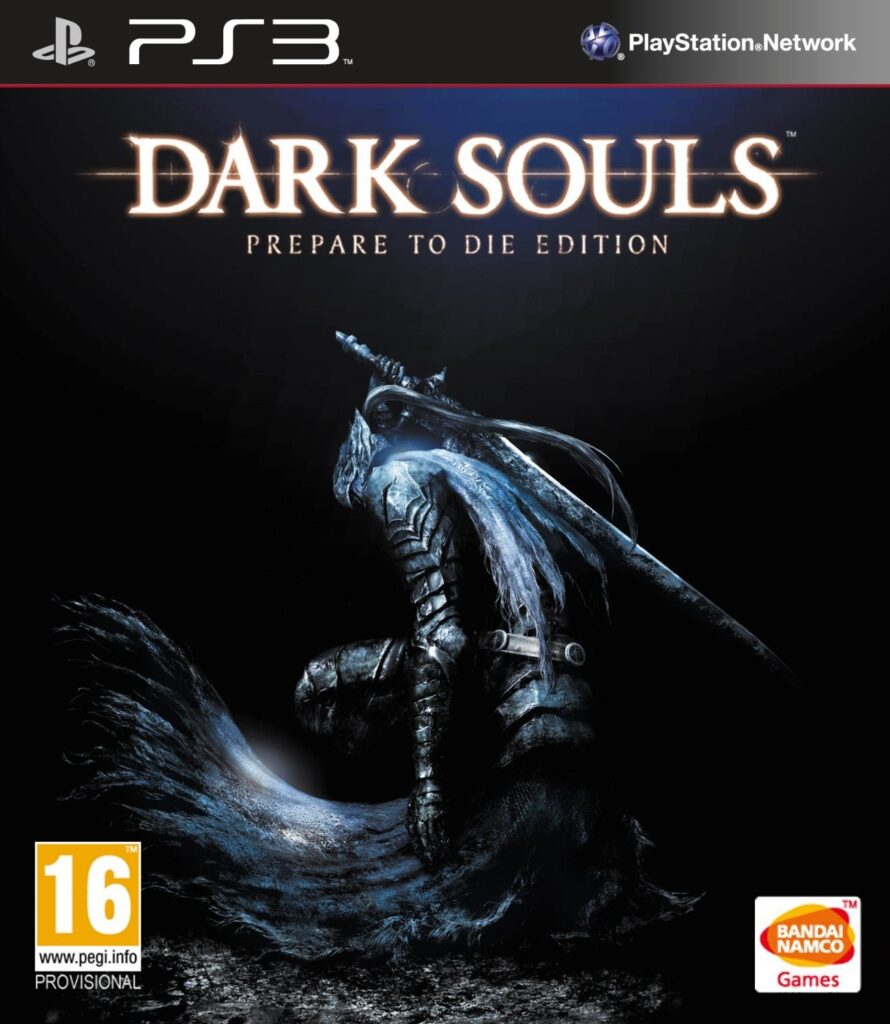
but they both create a feeling that the player is being asked to grow rather than simply endure. The difficulty teaches you how to play, and when you listen, the frustration turns into satisfaction. The payoff is the feeling of having done something that required attention, patience, and understanding. They leave a different impression compared to games that are difficult just because they want to see you suffer. Endoparasitic and Dark Souls both take difficulty seriously. They trust the player to rise to the challenge and they offer something meaningful in return. The punishment is real, but so is the reward, and once everything clicks, once you lock tf in. In that case, I guess you can call Endoparasitic The Dark Souls of Sci-Fi One Arm Survival Antibodies-promoting 2D Bird-Eye Horror Shooters.