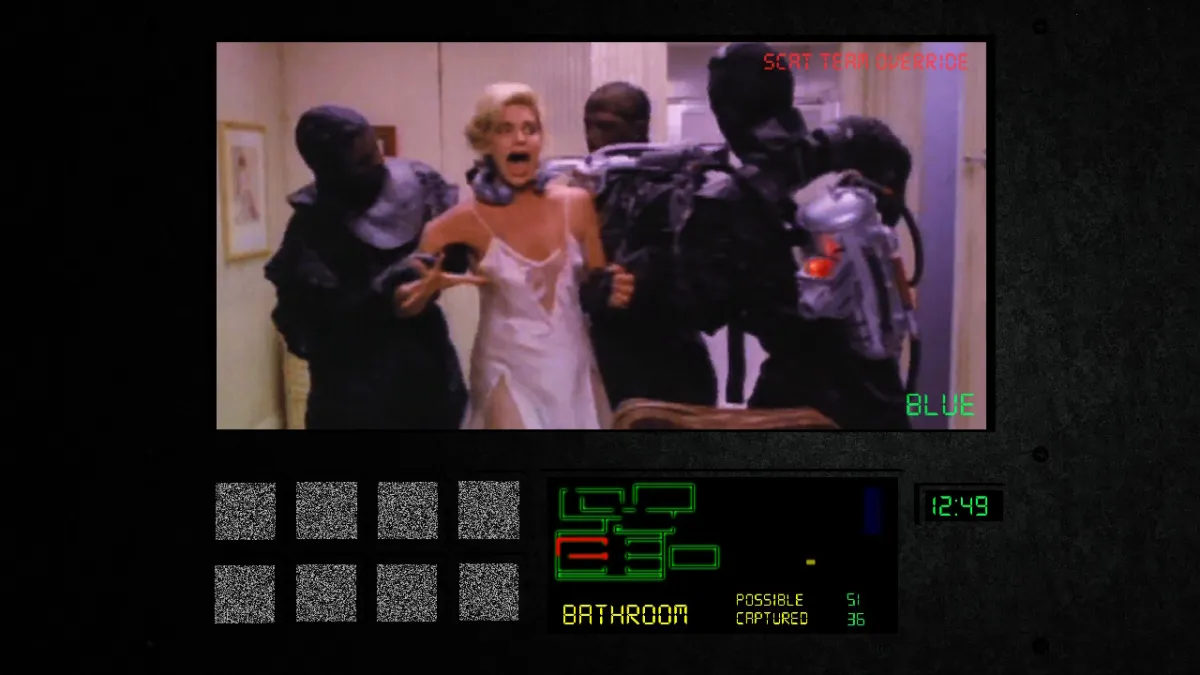
As a spooky precursor to Halloween, I attended the live play-through of Night Trap and the brief screening of ‘I’m your Man‘ (1992). As a film major, I have been exposed to a wide variety of film techniques and styles, but have somehow never been exposed to these game/movie hybrids, where we have what I consider to be a middle ground of agency, complicity, and control compared to a typical film and video game.
First, ‘I’m your man‘ created this communal storytelling experience in which we, the audience, essentially serve as information managers, deciding how much of each character’s story we want to hear. Very frequently, the audience is presented with the following image and given a certain amount of time to vote.
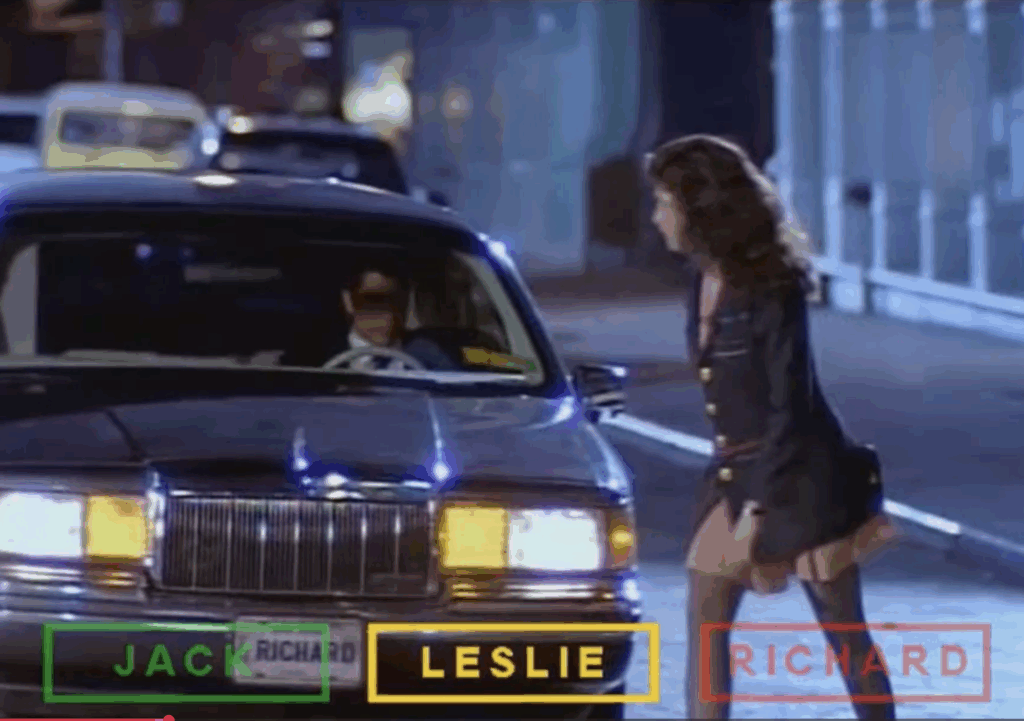
I found myself particularly disappointed with the choices that my peers were making during the film, with the group consensus differing from what I wanted to see most of the time. For me, it represented this weird middle space between a traditional film, where you are shown what the filmmakers want you to see, and a game where you normally have the agency to explore whatever you want. But in the middle falls this strange and almost uncanny feeling experience where you might not get to see what you want if you are watching the film in a group setting. Going along with this point is the fact that, despite its short length, the film really makes no sense if you go in the “wrong” order. It leaves me wondering if there is a “correct” sequence to switch between characters, which begs the question of if we actually have agency with this type of media.
Second at this event was the live play-through of Night Trap. I first want to compare Night Trap to the film shown just before. I find it interesting how these two experiences are classified (in some places) to be the same form of media, with both being classified under this ambiguous “interactive movie” genre.
After spending some more time thinking about Night Trap (and not thinking about the film), there seems to be a greater weight placed on you as the player/viewer than in the interactive film. This point is very clearly emphasized by the scary military man at the beginning of the game, essentially placing the fate of the characters in your hands.
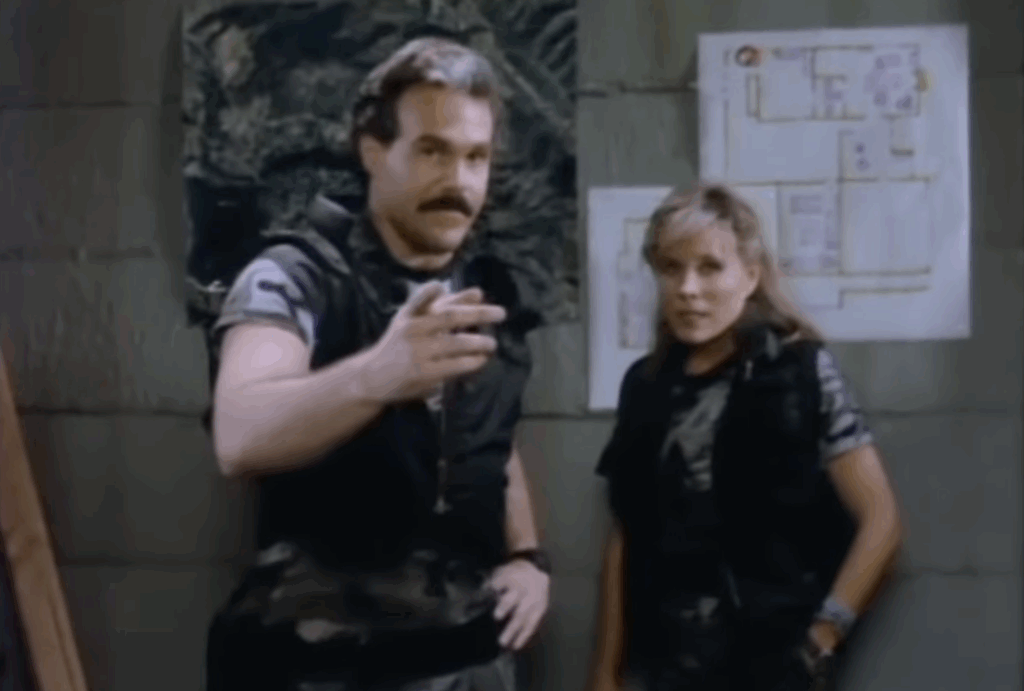
What this game succeeds in doing is making you complicit in the fate of the characters. It creates a sense of responsibility for the well-being of the characters, and if you don’t succeed in the game’s mechanics, the characters die. This, to me, is the line that can be drawn between interactive film and a game, with the primary difference being the amount of agency that we are given. I will point out, however, that this distinction is still ambiguous. I found it to be really dependent on where you were looking for how Night Trap is categorized, with some places calling it a video game, and some calling it an interactive film.
Putting these distinctions behind, I do think both Night Trap and ‘I’m You’re Man‘ proved an interesting framework for considering complicity and agency in media. The communal viewing experience of ‘I’m You’re Man‘, paired with the voting, creates this sense of a group complicity, where the viewing experience of the film is a result of democratic participation. In this way, the responsibility for whatever happens in the film is placed on the group as a whole, which might not lend itself to any real emotional impact. Night Trap, on the other hand, was much more impactful for me because of that direct complicity. Even though I wasn’t the one playing, you could feel the weight of the decisions being made both through the results in the game and the group reaction. So, even though these two experiences might be classified as the same form of interactive cinema, Night Trap certainly did more in its immersive and agential aspects.


I didn’t get to attend the Night Trap event, so it is cool to read about your experience there. For starters, I totally agree with the weird “middle ground” caused by interactive media. Film gives you no choice in that a director decides what you get to see and games give you “full choice” over what your character is doing (dictated by the setting and mechanics, of course), but interactive media gives you only as much choice as the designers want you to have, which can feel almost like no real choice at all. It makes me think a bit about Stanley Parable where you have lots of binary choices but the paths are already determined, or visual novel games like Episode where no matter what outfit you pick, you will seduce the love interest at the party (even if you wear your PJs) but might get less compliments while doing it. There is also something weird about the group setting of it all that further limits your ability to choose through the concept of consensus: if you don’t agree with the group, you don’t get to choose what happens. Overall, it is interesting to think about choice and agency within different types of media and how intersectional media puts this into question.