
Cover Photo by Enrique Guzmán Egas on Unsplash
Why do people play games? Why do they finish them? Is it for the story? The achievements? The thrill of escapism? For many, it’s a combination of these things, and of course, bragging rights. At UChicago’s Year of Games Symposium, the Challenging Play: Puzzles, Performance, and Practice panel explained what goes on behind the scenes to make a challenging game. Games themselves as a medium inherently owe a level of difficulty to the player. As Billy Basso said on the panel, someone playing a game doesn’t merely “finish” it, they “beat” it. Hence, we want a challenge and the bragging rights that come with it. Only if something is sufficiently difficult is there a sense of pride in completion. What becomes enticing about such a game is its difficulty.
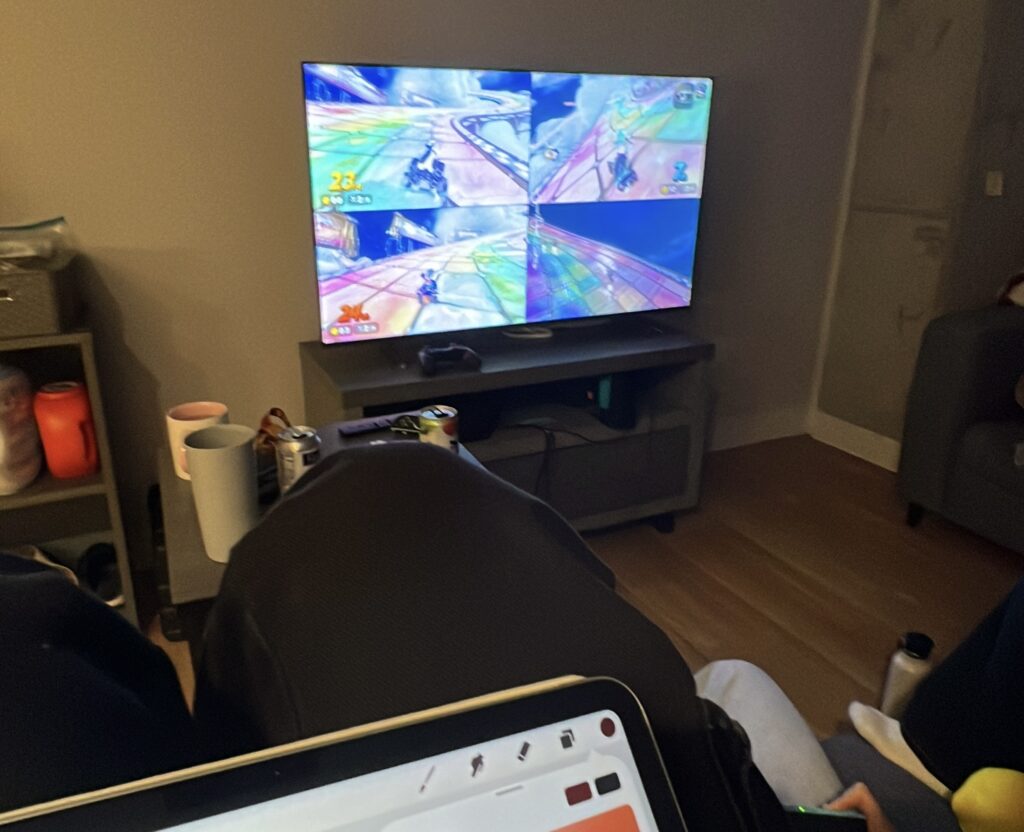
The beauty that I found in this conversation was how the panelists continuously went back to the intrinsic want for difficulty. If a game isn’t hard enough, there’s no reason for a player to want to engage more than the surface level. In a budding age of AI where everyone seems to have turned off their brains, the desire for challenge and friction is inspirational on various levels. Games are deeply intertwined with the human experience; it is how we learn and interact with others. There’s something so exciting about the fact that, deep down, we are still seeking ways to challenge ourselves. Why we want to play games then reveals much about the human experience; in the same way that movies about AI takeovers juxtapose robots and humanity to highlight what makes humans special, games reveal our capacity to learn, change, and adapt. We grow with the games in a way that has become less apparent with the rise of large language models like ChatGPT. Easy games aren’t as fun or rewarding – so why have we decided to take the fun challenges out of our lives?

Conventional design – as Celia Pearce mentioned on the panel – exists to reduce friction and make things easier. Game design becomes the opposite. There is an aspect of pleasant friction that makes solving and beating a game difficult. What’s important about game design is understanding what kind of friction you want to create. There is a balance struck between streamlining conventional design aspects of the game and creating enough friction to keep the player engaged. While humans seem to seek difficulty and challenges by playing games, we still continuously search for the easiest path through. As a developer, the panelists mentioned their role in forcing and directing attention. Difficulty then becomes valuable and pushes the player to pay attention and care about what they’re doing. It becomes more of a conscious consumption as opposed to a passive completion.
Games that don’t challenge how we play challenge us in other ways, too. If not a mechanical difficulty, what I have found compelling are always the games that challenge how I think as well. Games that rely heavily on narrative may not have overly difficult gameplay, but the pleasant friction is found in the narrative, challenging views and preconceptions the player may have, or posing difficult questions relating to how we view the world.

Games like the ones the Challenging Play panelists design help facilitate this base urge for challenge and stimulation. Why we play games can be as simple as wanting to distract ourselves from the horrors of the world, but it can also reveal a deeper connection to the innate human experience. That is why it is important for games that challenge how we play and how we consume media – so we don’t give up what makes us human.