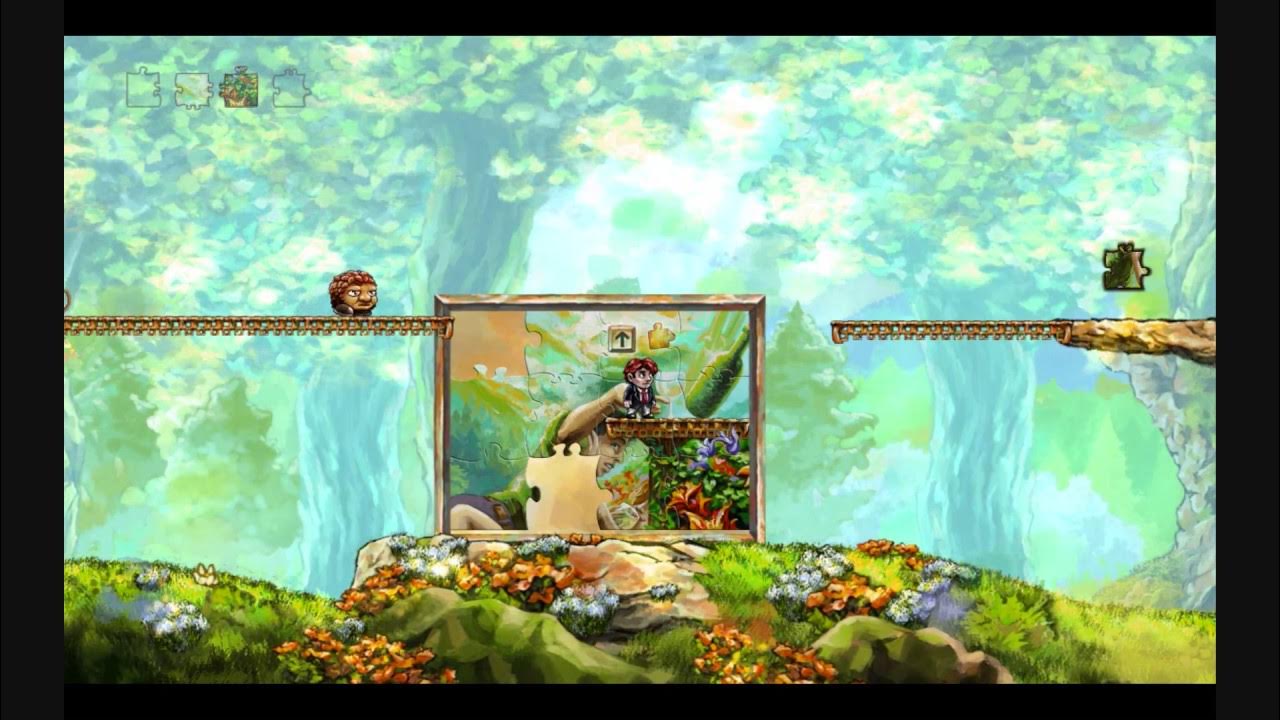
From the panels I attended, the Challenging Play panel was definitely my favorite. I felt that it was the best moderated and had a very good selection of people that wasn’t too wide in their professions without being too narrow. One of the questions the panel answered, and the one I wish to talk about, was: how do you make challenge enjoyable without feeling unfair or obtuse?
All of the panelists seemed to agree on two points:
- Failure should be rewarding in some manner
- Obstacles should have multiple manners of approach
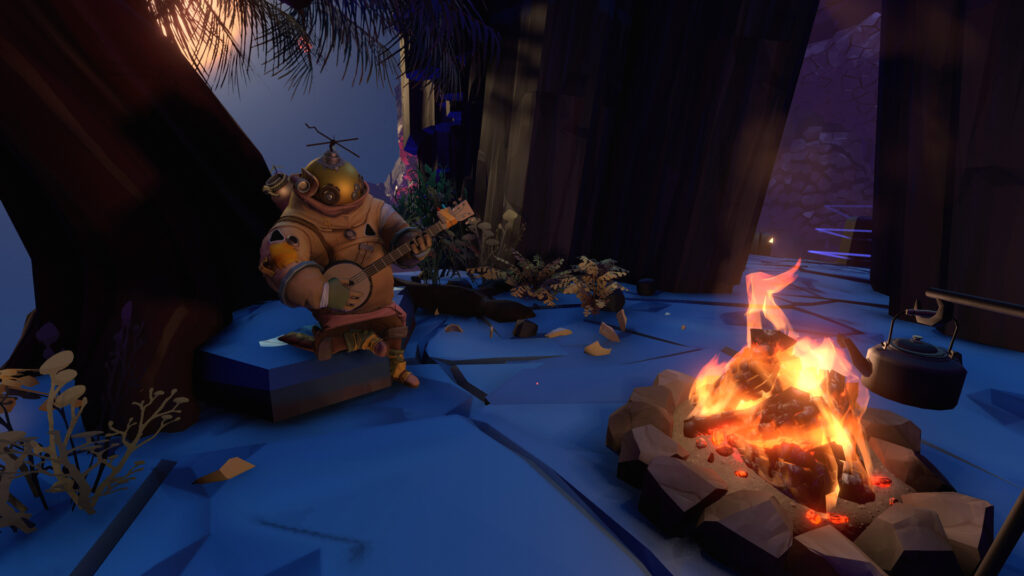
I don’t think it’s a coincidence that many universally acclaimed games follow these two guidelines. Outer Wilds (the goat) is perhaps the greatest example of synthesizing both of these. It’s usage of the time loop makes failure so much more than just a reset state; every “failure” is rewarding for the knowledge gained. Obstacles, or puzzles, are also incredibly fluid with their requirements. The player will almost certainly stumble across something they are not supposed to see or know yet. The lack of linearity, although risky from the game designer’s perspective, rewards the player’s intelligence and gives agency.
OK. Let’s talk about Braid.
From the people I’ve talked to and other blog posts, it seems quite apparent that Braid has a tendency to frustrate players and leave them with an impression of anger. Why is this? I believe that it has to do with its relation to the two points above.
Braid is unique in that its main mechanic, time rewinding, fits the first point of rewarding failure incredibly well. Unlike Outer Wilds, where every failure requires backtracking and time wasting, failing in Braid simply requires a click of a button to rewind. Puzzles also use failure as a direct mechanic, elaborating on it in each world. This creates a situation in which there truly is no “fail state” while playing Braid, only being stuck on a puzzle. One might say that this is the same in all puzzle games, but this is certainly unique to platformers. I find Braid’s time rewind gimmick as a very novel and fun puzzle mechanic, and Blow’s iterations on this mechanic further add to its enjoyability without overstaying its welcome.
So why does this puzzle exist?
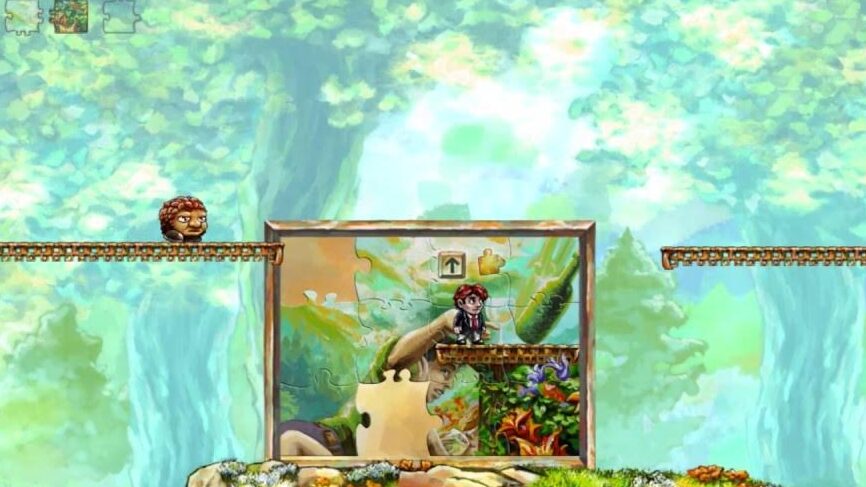
I’ve only ever watched videos on The Witness, but it seems like Blow has a habit of putting these types of puzzles into his games. Ones that do not fit with the overall theme, but are “cool” and break the meta in some way. The “puzzle puzzle” in the first world of Braid fits with this: neither the game nor the genres it takes inspiration from has used this type of mechanic. So it is only natural that, for many people, this puzzle is the one which stumped them the most. And when they inevitably looked up the solution online, they found that they were in fact not crazy, and that the solution to this did not require any time rewind knowledge or platformer knowledge. This “puzzle puzzle” is simply a random thing Blow decided to put in, probably because he thought it was cool or to simply fuck with the player (something he is infamous for). But this puzzle does not fulfill either of the two points from earlier. It does not make failure rewarding, because the player has no idea what the puzzle is and if they are failing it. It also does not have multiple manners of approach, because no part of the game indicates that interacting with the puzzle’s pictures is a thing that you should expect. It is simply one solution, one way of getting across to the puzzle piece that lies waiting on the other side.
This is ultimately why I believe Braid leaves many with frustration instead of enjoyment. It’s because of its implementation of an amazing mechanic which rewards failure and which allows for thinking of multiple avenues of approach, and then it throws random, one off puzzles that utilize mechanics which never appear again. The game comes so close to fulfilling the criteria for what the panelists of Challenging Play aspire to be, and then randomly decides to abandon it.


Adding to your point about failure not being rewarding, I would take it a step further and say that because Braid trivialises failure, the player has a lack of determination when trying to solve levels. There is no pressure to ‘survive’; just the low-level pressure to solve the puzzle before you get bored enough to quit the game.
I really like how you connected the “rewarding failure” idea to Braid’s time rewind mechanic. It’s such a perfect example of what good design should do. I also agree that the “puzzle puzzle” completely breaks that rhythm. What’s interesting, though, is that the frustration almost feels intentional, like Blow wanted players to confront the limits of their own logic rather than the game’s rules. Maybe that tension is part of what makes Braid so memorable, even if it isn’t exactly fun.
I really liked what you said about the lack of a fail state in Braid that causes frustration within the player. I also noticed that and I think it’s really interesting that the game forces you to rewind if you get hit–there are no lives to go through or game over screen. The game won’t ever close you out of a level by itself, that’s always a choice that the player has to intentionally choose. Tim just stays frozen in time until the player rewinds and they can try again. I will say though, my main complaint with Braid is that I hated the way the jump mechanic worked so much. I’m curious about what you thought, but for me it felt weirdly sluggish and the reaction wasn’t as sharp as a game like Hollow Knight. Considering that some puzzles required tight maneuvers, it was beyond frustrating that such a basic function that I couldn’t alter wasn’t working the way I expected to. Like you said in your post, I wouldn’t be surprised if Blow did that just to fuck with the player.