So this post was inspired by the Year of Games Symposium Panel on fair play, featuring a lot of cool people, but mostly Billy Basso, creator of Animal Well, which is really peak. During the course of this panel, the question about what constitutes “fair” in a game came up, and it’s actually a rather interesting question that I want to dig into a bit deeper.
So the first definition of ways that a game can challenge its player was that a game challenges its player by first introducing rules and then breaking those rules in specific ways to create the challenge for the player. And while I can certainly come up with a great many examples of games that do this, most notably puzzle games, not every game does this. In fact, many games instead choose to lay out an ironclad set of rules, and then test the player on their ability to adapt to that framework in high-adrenaline or high-stress environments.
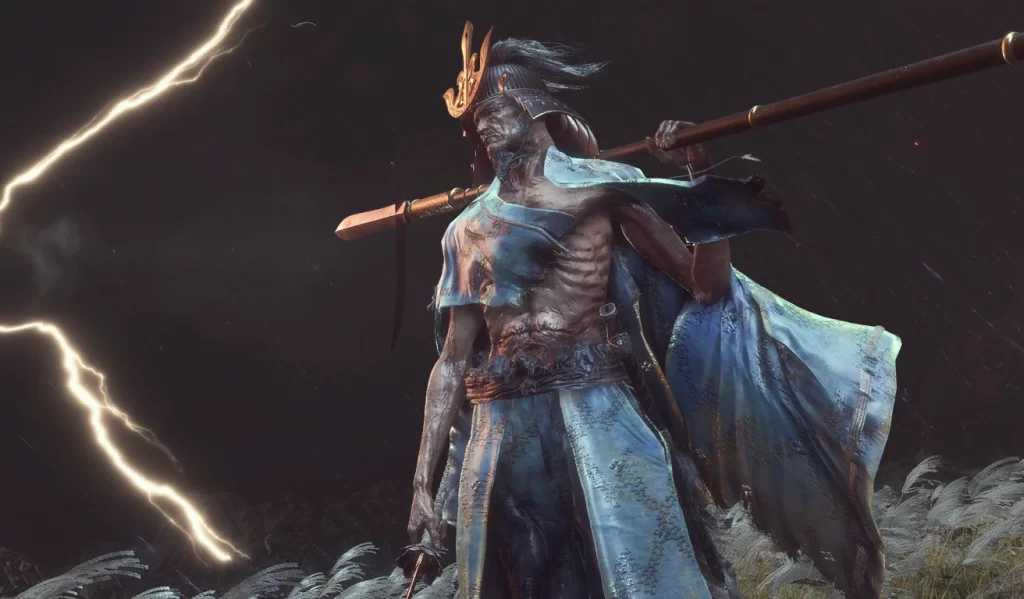
The game I want to highlight is my personal pick for best game ever made, Sekiro: Shadows Die Twice, which has a very simple set of rules and interactions for the player, and chooses to challenge the player’s ability to use those rules to succeed. Sekiro is all about parrying, and practically any attack in the game can be parried. The ones which cannot are clearly telegraphed to the player, so you always have advance warning when a mix-up is coming. This never changes, throughout the entire game. Where Sekiro gets its challenge from is that it asks the player to react quickly and adaptively to the enemies’ attacks, which are varied not only from moment to moment, but also from enemy to enemy.
What’s interesting to me about this kind of difficulty is that it seems far more restrictive than the former definition we had, that of introducing and then breaking rules. If say, you have a bad reaction time, then it’s pretty much a guarantee that you won’t make it very far in a game like Sekiro. Is that a bad thing? I don’t think so, since I think that this kind of difficulty is something that’s incredibly rewarding, and it also works in a totally different way. I don’t have to think ahead very far or strategically plan out my next steps. Instead, what I’m being asked to do is to act on pure instinct, reacting to each attack the moment it comes out, while only being guided slightly by past experience as a hunch for what to do next. It’s a lightning fast and visceral experience, which is entirely unable to be achieved in the former context.
Does that make it better? Worse? I still don’t exactly know, but I’m still thinking about it and trying to piece it together.