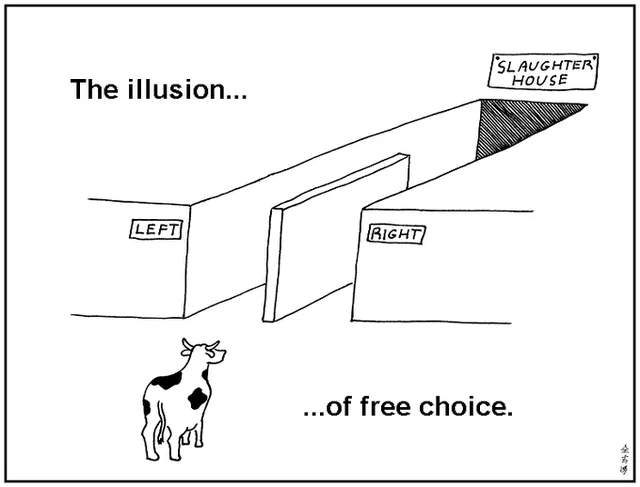
Source: 2009 edition of web comic ‘The Abstruse Goose’
What is the difference between “free will” and “free choice”? I would argue that free will is the ability to make your own decisions, and free choice is the ability to select among a range of options.
In video games, there has been a widely debated topic about whether players can truly have “free will” because games are limited in what they can do by their own code. Anything outside of the code’s ability is unable to be performed, limiting the player’s ability to do anything they want.
But I think it is hasty to immediately dismiss a game’s ability to have free will because it is “limited” by the bounds of its code when in real life, people’s “free will” is limited by circumstances in their lives. People have a limited amount of things they can do based on what they are physically capable of doing at the time: for example, a person cannot simply fly just because they decide they are going to, for a person is physically incapable of flight.
People are, however, capable of freely choosing what they want to do based on the currently available options they have.
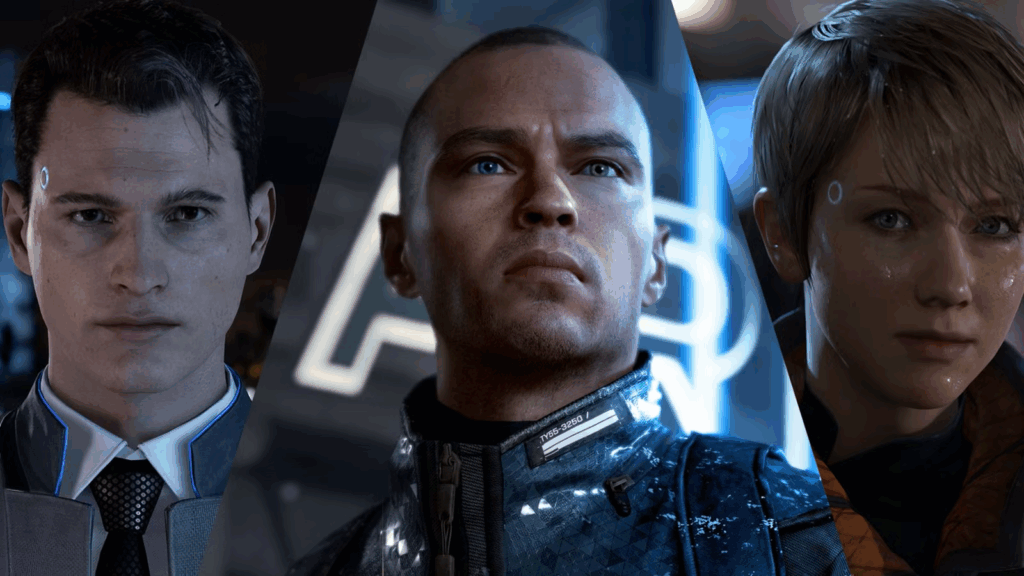
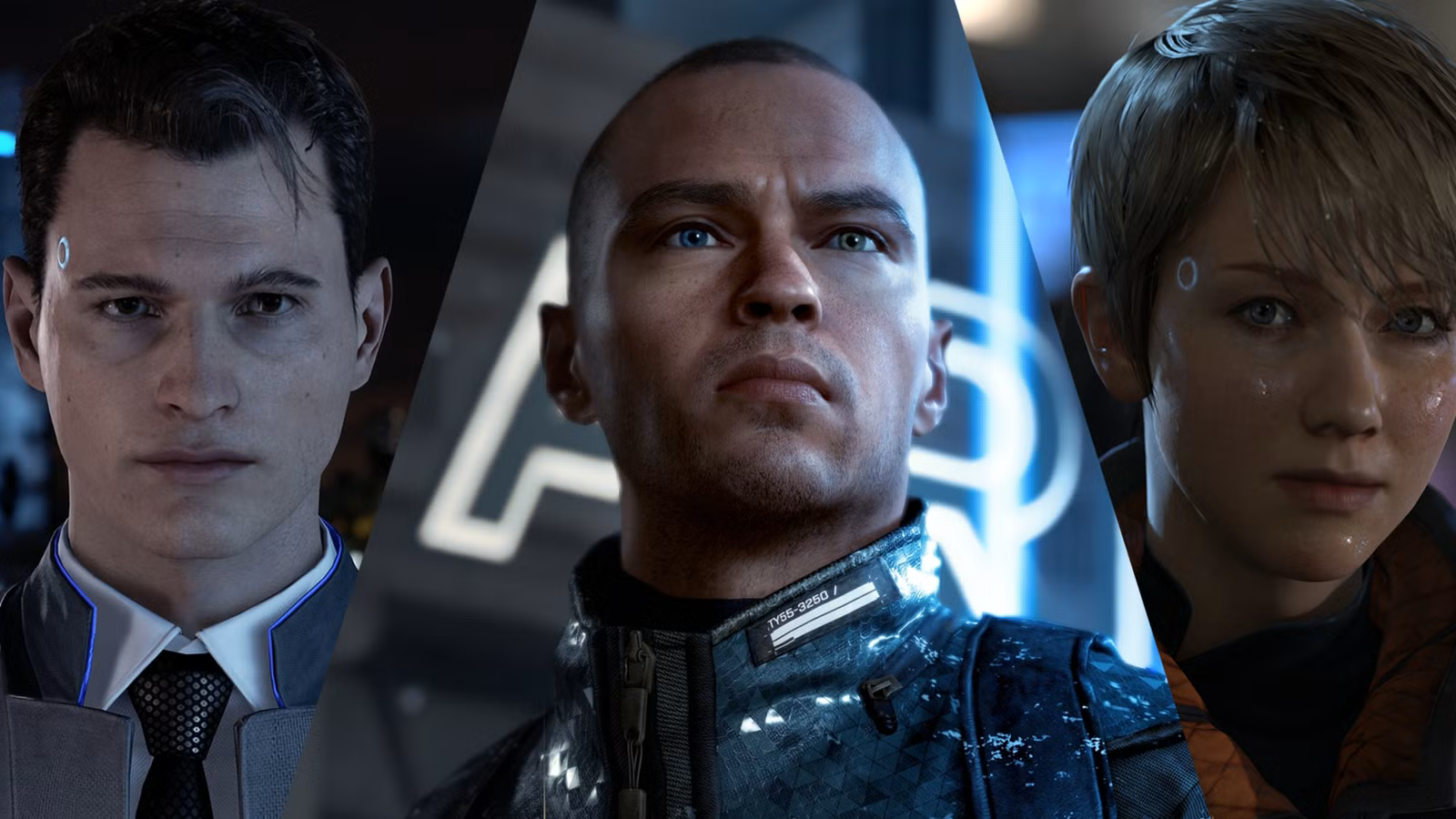
Which brings us to the topic of today’s post. Detroit: Become Human (DBH) is a video game that both mechanically and thematically reflects the choices and agency a person in real life has.
DBH is a story-driven “choose your own adventure” game that takes place in a Detroit in 2038 where androids are mass-produced and are now a part of everyday life in America. However, by the time the game begins, there have been incidents where these androids called Deviants have gained sentience and are rebelling against the servitude the humans have forced them into. The player follows the stories of three androids, Markus, Kara, and Connor, and based on the decisions the player makes, the story drastically changes.
Markus is the leader of an android rebellion, Kara is an android who is trying to ensure the safety of a little girl named Alice, and Connor is the android sent by Cyberlife (the company that created the androids) to hunt down the rebelling androids.
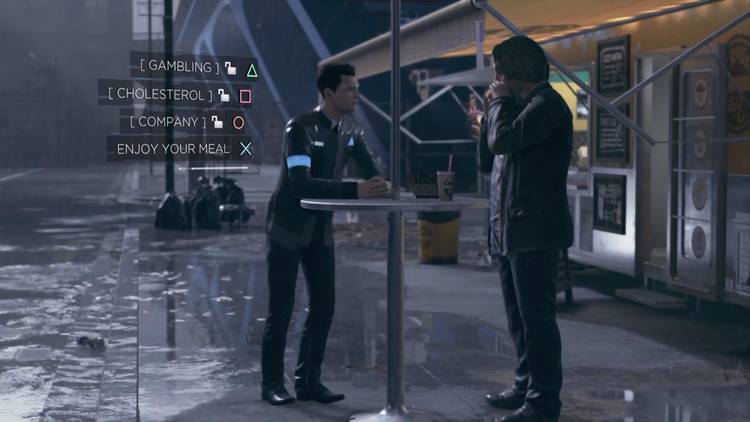
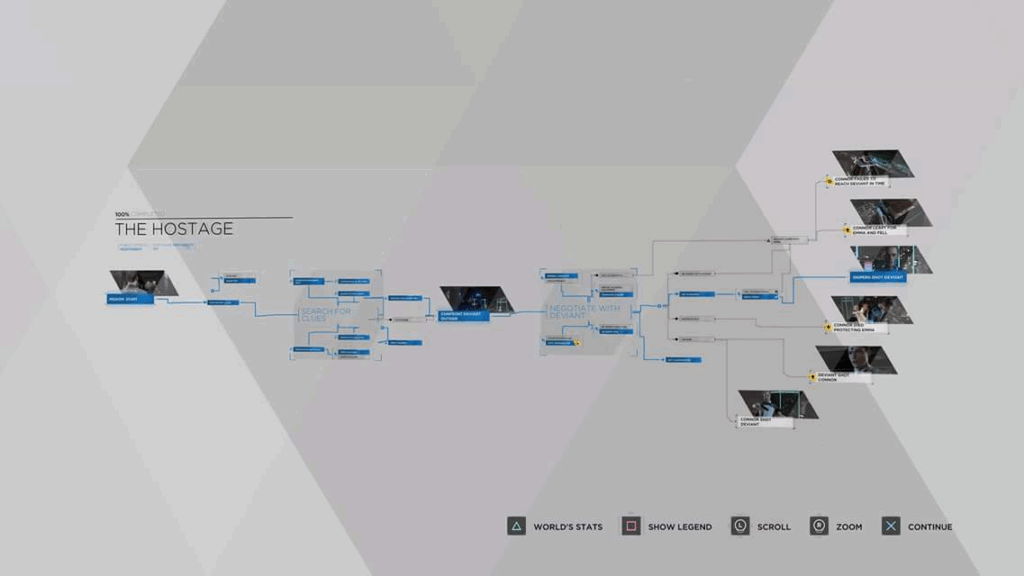
While controlling one of the characters, the player is given a choice between many different dialogue options. These dialogue options changes the story depending on which ones you are given.
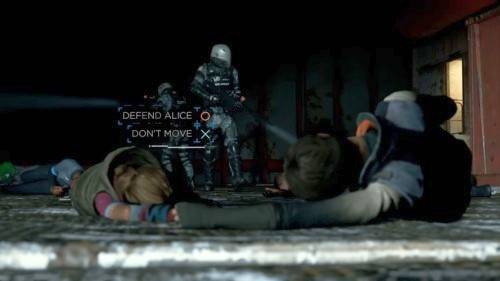
For Kara, they change what kind of route she takes as she tries to escape America.
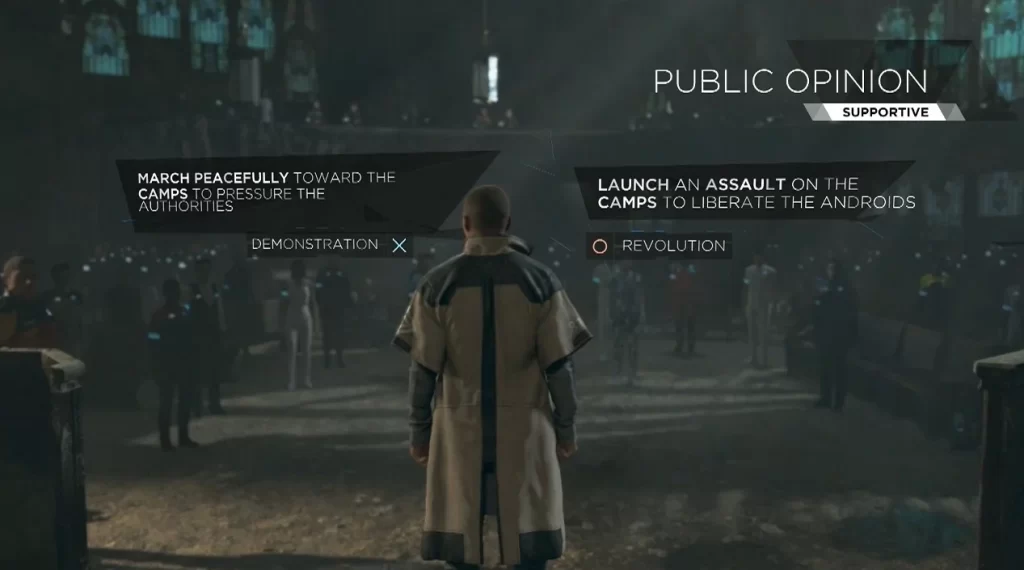
For Markus, they change what kind of rebellion you lead, such as a violent one or a peaceful one.
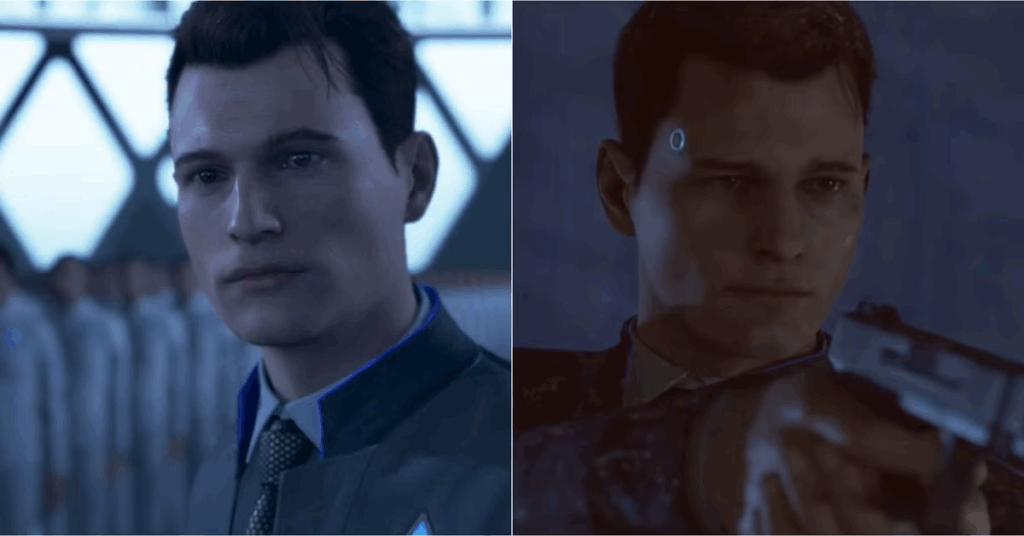
For Connor, they change what kind of person he decides to become: either he chooses to remain a tool to be used and discarded by humans, or he chooses to becomes his own person.
Though there is not an infinite amount of choices, these different choices and outcomes the player can choose reflect the real life “free choice” people have. The player has the agency to choose the routes, the lives, these androids decide to take, just like how the player has the agency to choose how they go about their own life.


I think your comment about the limitations of humans’ “free will,” and comparing it to limitations in games, is very apt. I’ve never heard it discussed precisely that way before in games, but it’s true: we can’t just fly because we want to, but that isn’t evidence for or against “free will,” just as not being able to act outside of the rules of a game doesn’t mean there are no choices. A discussion I once had with a friend around this topic was that humans can’t think of a random number (and for that matter, neither can machines). He posited this as evidence against free will, but I refuted that for the same reasons.
Also, in contrast to games like ‘Detroit: Become Human’ that have more specific choices, a lot of games technically have infinite choices if considered as sequences. In a platformer like ‘Braid,’ where you can freely move around, there are technically infinite different paths leading from the start to the end of the game. Granted, in order to create these infinite paths stalling would have to be included, but still. Even with a finite amount of singular choices in any moment (move, jump, turn back time), these compound exponentially into a much larger set of choice sequences.
I really enjoyed your analysis of free will in DBH, and I think it’s especially interesting that free will is explored through androids specifically. The fact that androids are supposed to be coded to do a certain action and listen to orders makes it so that the aspect of free will here is so much more stark, and makes you wonder about the agency of AI and computers. The game puts you in a perspective where you, the human player, put human emotions and connections into Connor or the other androids you can play as. It adds another layer to the mental gymnastics that one has to go through to reconcile what free will means in a game and in the real world.