Queers in Love at the End of the World is a creative form of hypertext/interactive fiction. I enjoyed playing this over and over again, trying to read all the paths. I was intrigued by how the time constraint felt different across the paths.
“Tell” to “Don’t let go of me” to any of the four options is one of the shortest paths I found (3 links). On this route, you can comfortably read all of the text without rushing excessively.
The “Kiss” to “Slowly” path is actively working against any attempt at “speed running.” The text after slowly is the longest out of all the paths I did, and you have to scroll down to see the blue hyperlink “kiss her again,” which takes up precious time.
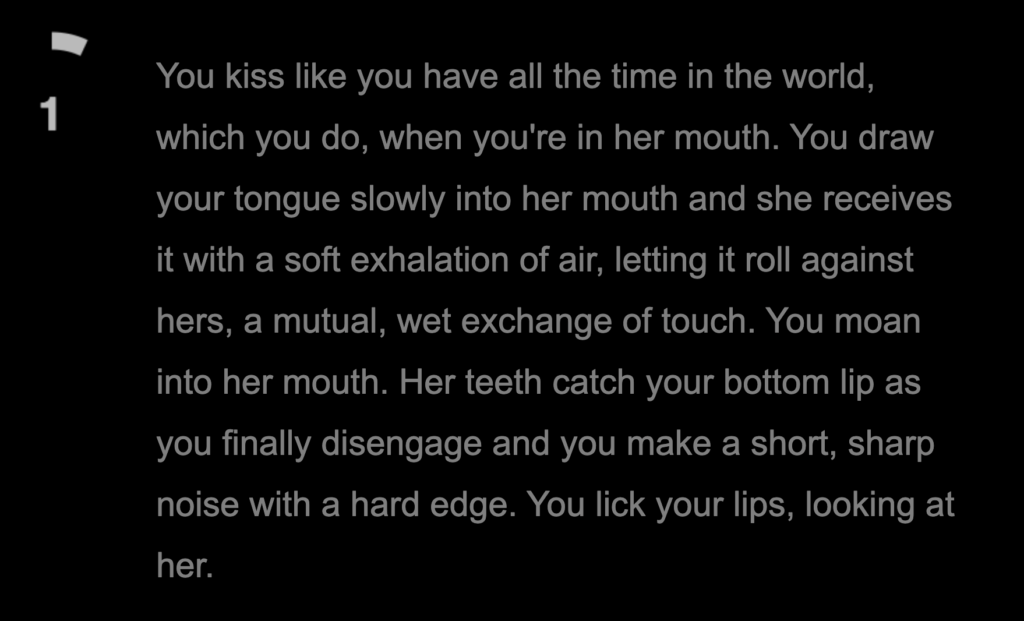
The text in the following frame is also very long, but the hyperlink is at least visible right away.
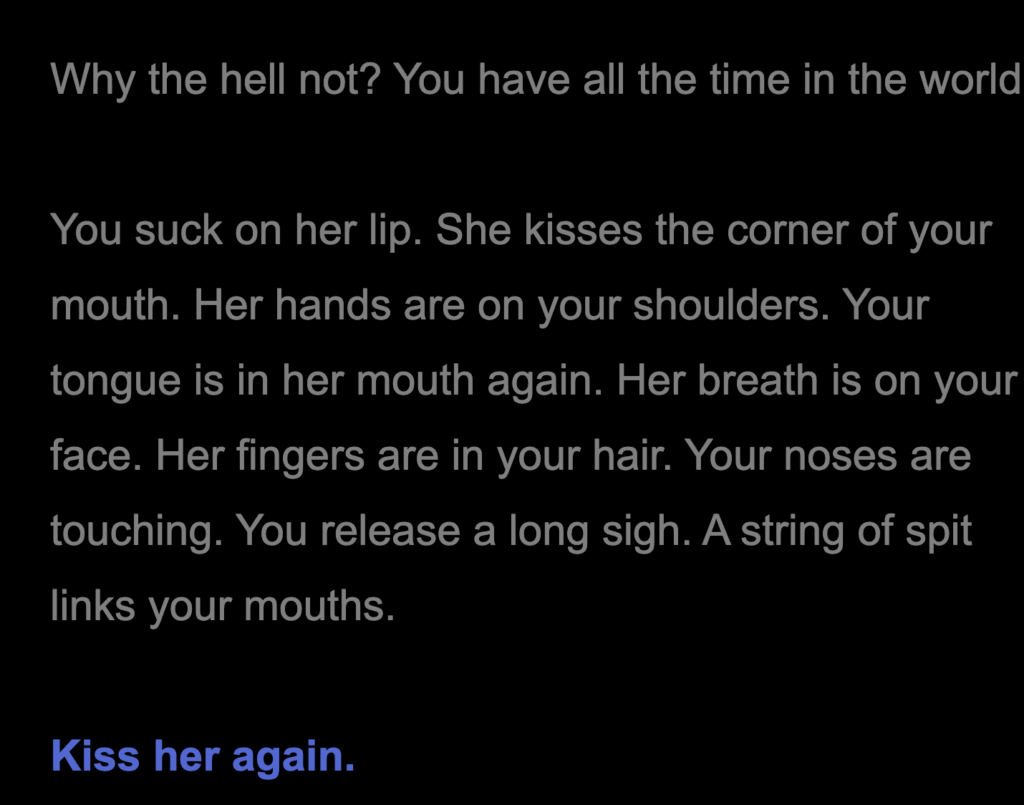
The final frame of this path repeats, “Why the hell not? You have all the time in the world.”
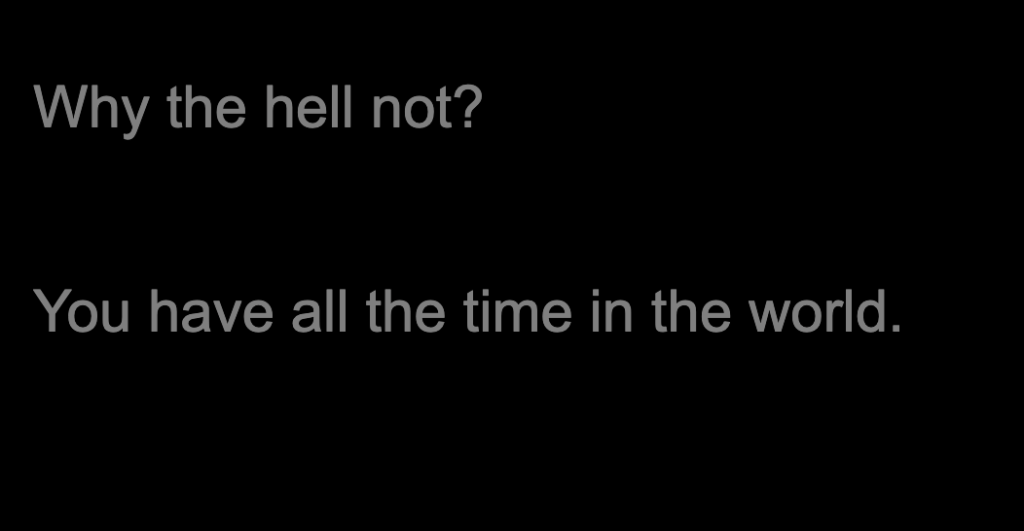
This repetition makes rushing to this frame pointless, as no new information is learned. You get to the end without much to read as the final seconds pass by, making you wonder the point of skipping the intimate prose. If you actively read the text on this path, you will not finish before the world ends. That’s the point: you want the final moments to be full of love, not just optimization.
The game also glitches if you press the back button while the timer is still running, resulting in two timers running simultaneously. This glitch is likely unintentional, but it ultimately reinforces the fact that you can’t backtrack or undo your decisions. The original timer (the consequences you were trying to avoid) will still run, and the world ends exactly as intended. You can’t escape this fate unless you close the game completely, which is its own form of death.
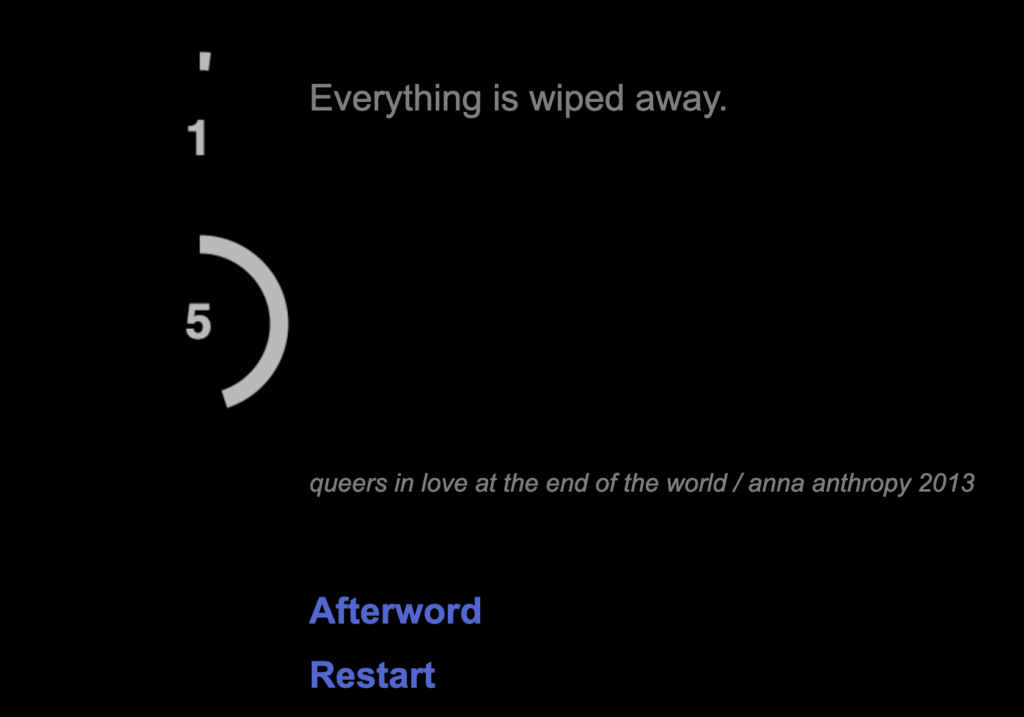
The game is fundamentally queer not only in its subjects but in its form; it resists any win condition, narrative closure, or sense of mastery or power. The timer complicates expectations of the interactive fiction genre by resisting a leisurely pace. It keeps the player on edge and hyperaware, reflecting the precarity of many queer relationships. The player is left helpless as the world ends and is forced to “fail,” which is incongruous with a neoliberal culture obsessed with optimization, self-improvement, and success.


I really liked this interpretation of the game. I especially enjoyed the distinction established between love and optimization. If the point of life is to complete as many things as possible before your timer runs out, what’s the point of anything? This is just my own feeling, but life shouldn’t just be a checklist through which you go through the motions for the sake of completion. I thought this analysis was very touching and made the gameplay experience that was frustrating to me the first time around much more enjoyable and thoughtful.