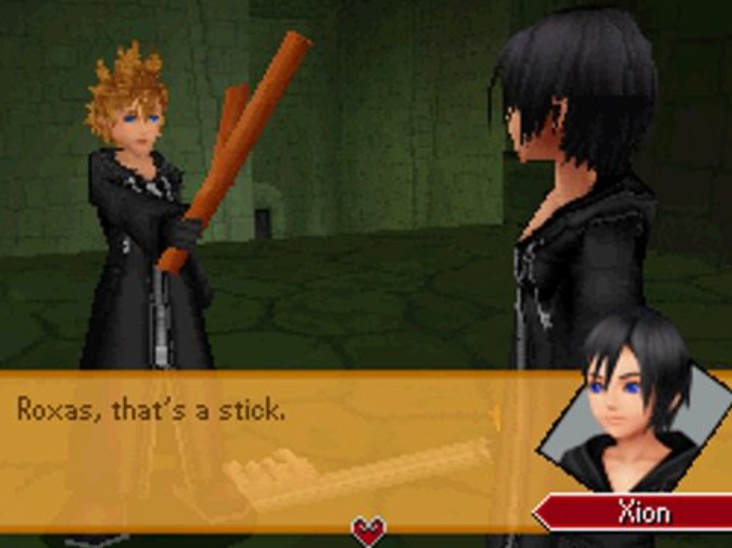
Kingdom Hearts 358/2, notoriously known for having perhaps the series’ most confusing title (I’m a fan of it, however), poses an interesting take on agency through its design — both on the mechanical and narrative level.
While the Kingdom Hearts series generally features the player-character Sora, Kingdom Hearts 2 and Kingdom Hearts 358/2 are the first games to have the player control character — namely, Roxas. 358/2 begins with Xemnas, the leader of Organization 13, welcoming Roxas into their ranks as their eponymous 13th member. The game proceeds in a calendar sequence, where each successive day, Roxas must accomplish missions for the organization in the game’s various Disney-inspired worlds.
When Roxas arrives in Disney Worlds, however, he does not engage with the story of those worlds. For example, when Roxas travels to Beauty and the Beast, he doesn’t help Belle reconcile with the Beast to lift the curse. Instead, Roxas collects some emblems, takes down mini heartless in challenges, or attacks larger heartless in boss battles. He acts in a disconnected routine, completely divorced from any narrative context.
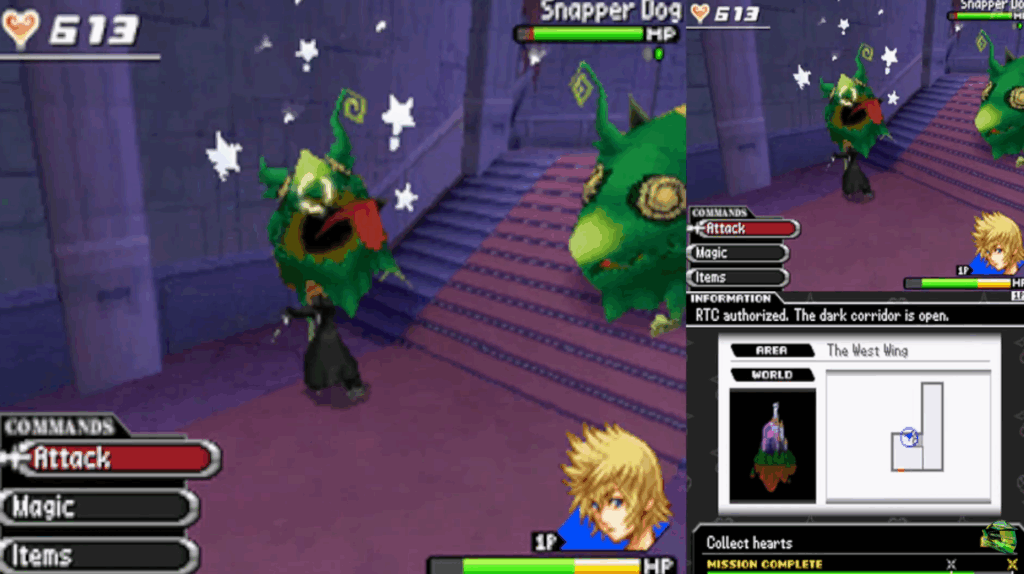
This contrasts heavily to how the Disney Worlds are used in every other game — in particular, Kingdom Hearts 2, which features the exact same selection of levels. While the Disney worlds are simply a background (the literal space) in which missions are assigned to Roxas, Sora gets to actually engage with the narratives, characters, and themes of the Disney worlds. Both Roxas and Sora are accomplishing goals as they progress through these worlds, but the level of investment is completely different — collecting de-contextualized tokens compared to helping Mulan save China, for example, fosters a different degree of stakes.
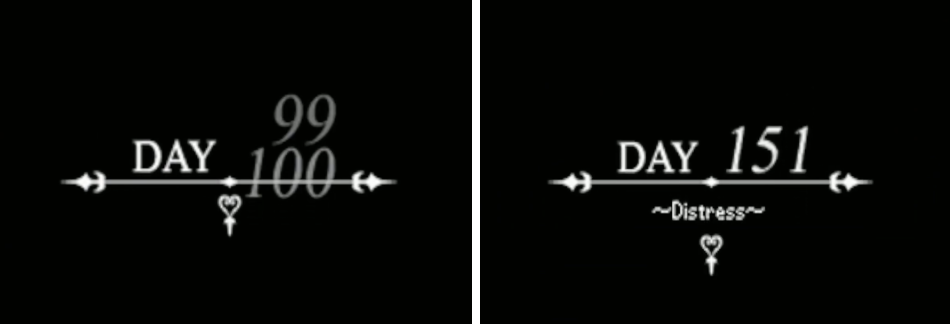
This distinction is exemplified by the fact that 358/2 uses the passage of time in a unique way. In Kingdom Hearts games, time obviously passes during the narrative, but it isn’t remarked upon or noted. In 358/2, there is a literal counter telling the player how many days it has been since the game began. The entire game occurs on a daily cycle. Roxas wakes up, receives a mission, goes on that mission, and then hangs around at the end of the day. This process repeats over and over again over the course of roughly 358 days. Since the missions themselves keep repeating, there is no real sense of forward momentum.
(Notably, this sense of stalled progression is furthered by Roxas’ lack of engagement with the story at times. Unlike Sora and Ventus, who enter comas in cutscenes in the conclusion of their games, there are multiple moments mid-game when Roxas (and therefore the player) are unable to experience some days. Roxas loses weeks at a time during the game, having to catch up with events that occur. Roxas’ bodily autonomy is already somewhat limited, being used as a weapon for the Organization and therefore only being able to perform missions. However, this forced separation from experiencing the narrative emphasizes his lack of bodily autonomy.)
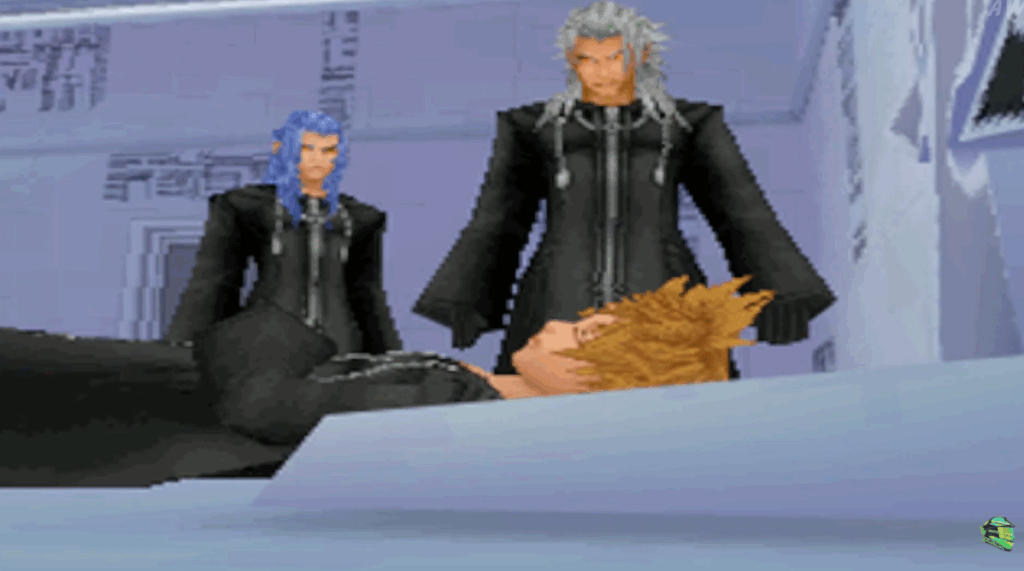
The design of the Disney worlds and this limiting gameplay cycle convey a feeling of monotony and a lack of a sense of purpose. The Disney worlds in 358/2 are meant to feel empty. The missions themselves are supposed to feel tedious and repetitive. So, what’s the point?
The fact that the player and Roxas are unable to escape the repetitiveness of the calendar system show how little agency is afforded to Roxas. Each day is extremely structured, giving the player and Roxas no choice on what they do or where they go. Roxas can’t just sit somewhere, or run around outside spaces aimlessly. Even in the Disney worlds where the player can run around, there is no benefit or point to exploration. There is nothing to do except the mission. This stringent, pre-determined structure removes a lot of agency from the player and Roxas.
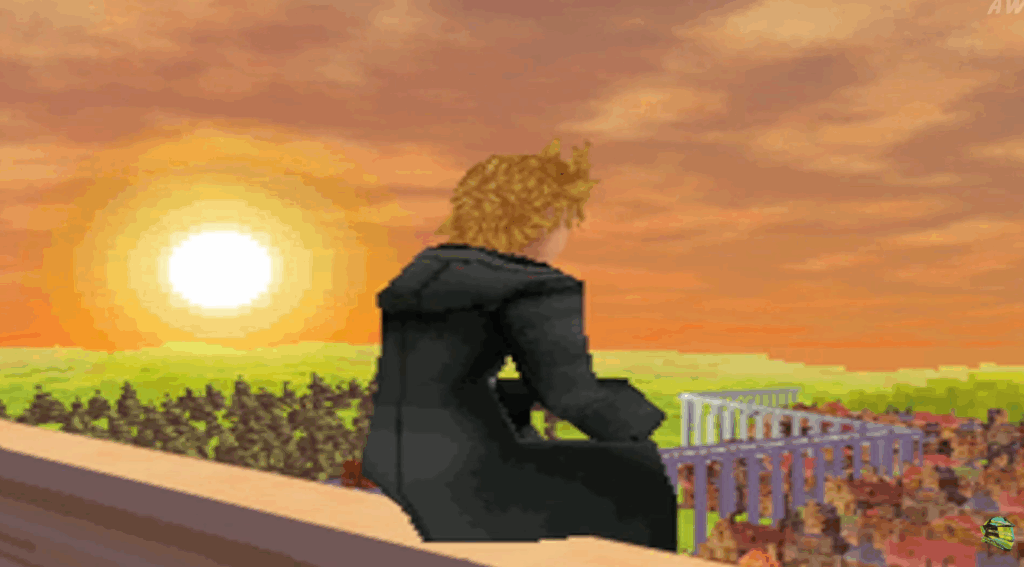
But the decontextualization of the Disney worlds further impacts a player’s sense of agency. The gameplay (the missions within the Disney worlds) and story (Roxas’ relationship with Organization 13) are completely divorced. Unlike an action game, where the game would not occur without the player engaging in combat, Roxas going to the Disney worlds isn’t what helps him discover himself. Irrespective of what Disney world a player goes to, or what mission the player carries out, specific cutscenes meant for specific days will play at the end of each day. The gameplay’s purpose is to simply create a sentiment of pointlessness, so much so that when 358/2 was remade, it was remade into a movie.
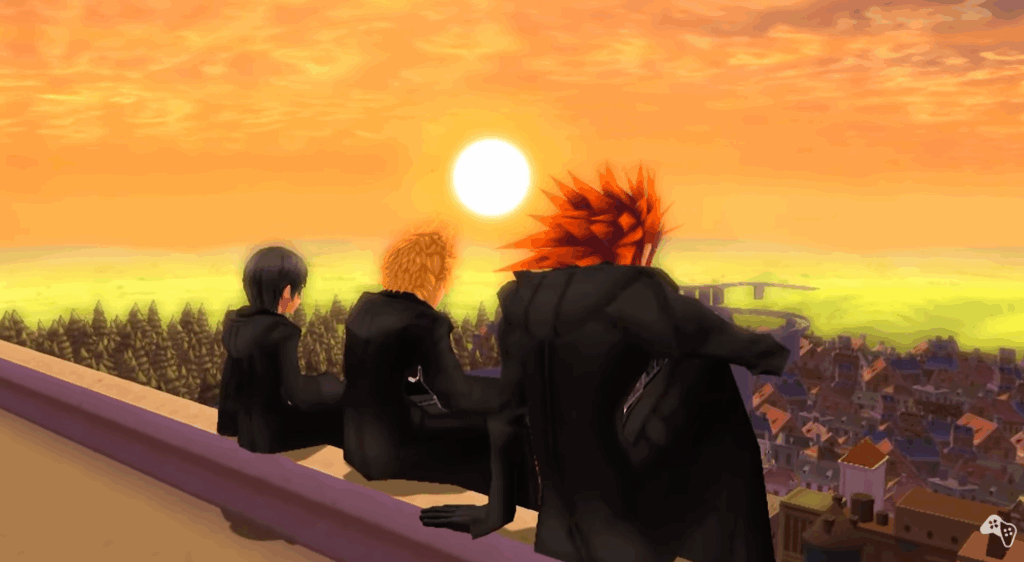
It is in the narrative where Roxas’ agency is developed. At the start of the game, Roxas is essentially a newborn. He has no memories, and no morals or beliefs. Roxas’ actions at first are defined by what he is told his purpose is. He goes on missions because that is what he is told to do. Notably, in other games, there is at least the narrative illusion that the main character is in control (for example, Sora is traveling across the world to look for Riku and Kairi in Kingdom Hearts 2). But in 358/2, Roxas, through his relationships with Axel and Xion, begins to define what is important to him — the first step of developing agency. Interestingly, because the player does not get to determine what Roxas does at the end of the day (always occurring in a cutscene), it truly feels like Roxas is determining and choosing how to spend his time — highlighting his agency apart from the Organization and even the player. Roxas therefore has the player as him go on missions not because he cares about the ideals of the organization, but because once he completes a mission, he gets to spend time with Axel and Xion. Roxas determines that his ✨friendships✨are his reason for living, doing everything in his power to maintain those bonds.
The reality, however, is that Roxas and Xion’s purposes precede them. They are both pieces of Sora (with Xion being intentionally created by the organization to be used to wield the keyblade), and are therefore pieces of a greater whole. They are not supposed to have agency, or an identity.
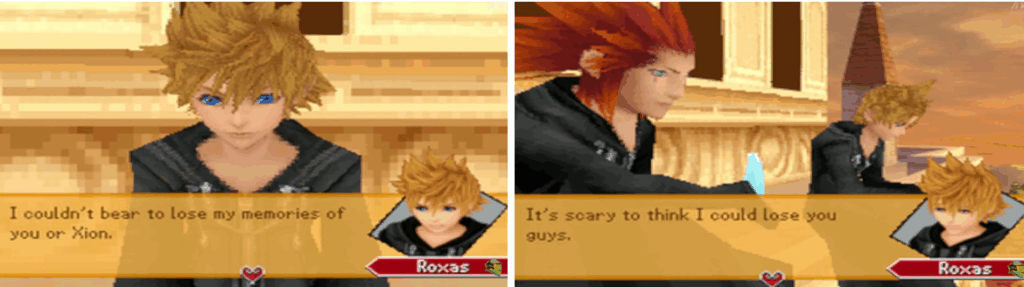
In the ultimate moment of Roxas defining himself, he is driven to determine why he was created. This culminates with Roxas leaving Organization 13 — a decision he makes in a cutscene, and the player has to follow through on. Roxas in this moment claims full agency as he is able to break out of the level design and cyclical structure of the game. However, Roxas is narratively doomed.
Despite the player as Roxas winning against Riku in a fight for his identity, the narrative of the game will always have Roxas lose in a cutscene. So far, cutscenes have been used to allow Roxas to truly define himself. Ironically then, it is a cutscene that leads to the final, permanent rejection of Roxas’ agency. In the most critical moment for Roxas’ expression of his agency, agency is taken away from the player and Roxas, leaving them powerless in the face of his greater fate. Agency was a privilege Roxas was never able to claim.
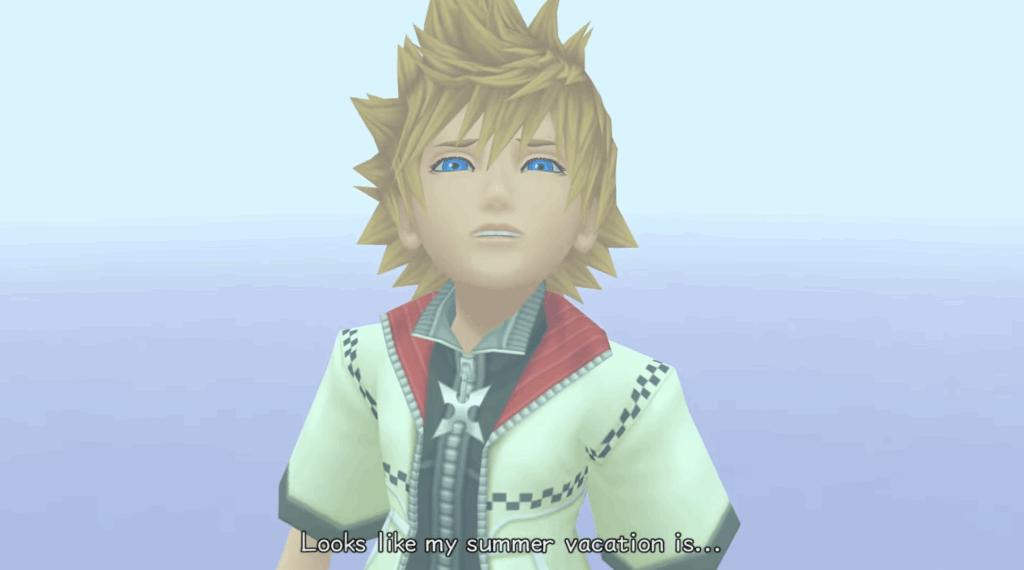


a kingdom hearts post !!! I’m celebrating
I really like this post. I haven’t played this installment of the series (why is kingdom hearts on so many different consoles…) but it was incredibly illuminating to how sad and narratively tense this game is. The parts of the game I’ve watched/the parts highlighted in your posts really illuminate how the game twists the original setup of KH1 to invoke this sense of monotony and the feeling of being out-of-place. Even the really joked on piece of dialogue “Who will I eat ice cream with?” from this game only serves to highlight how small the world Roxas inhabits really is.
Really great post! If you do your final video essay on kingdom hearts I would love to watch it