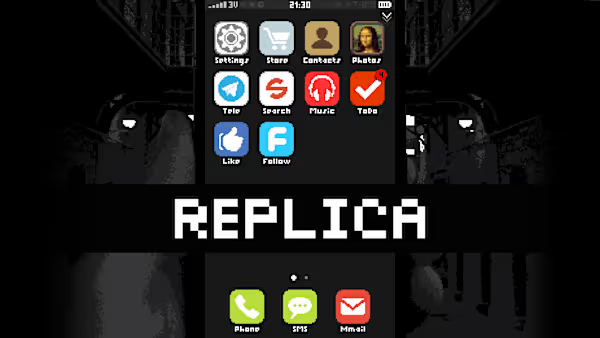
When I first opened Replica, I honestly thought it would be a small puzzle game about looking through a phone and finding clues. The setup is simple: you are given someone’s smartphone by a government agency, and your job is to go through it to look for evidence that the owner might be a threat. You scroll through texts, photos, call logs, and search histories, just like on a real phone.
At first, it even felt kind of fun. There is something naturally curious about unlocking someone else’s phone and discovering their life piece by piece. But as I kept playing, that curiosity slowly turned into discomfort. I was not just solving puzzles anymore. I was invading someone’s private world. The game never really gives you a moment where someone clearly tells you “this is wrong” Instead, it lets you keep going, and that is what made it even more disturbing.
In real life, a phone is probably the most personal object most of us own. It has our messages, our photos, and the things we would never want strangers to see. However, in Replica, that same object becomes a tool for investigation. I was not just reading fictional plot points. I was reading someone’s private conversations, their fears, their relationships. And the game pushed me to do it faster and more efficiently.
At some point, the phone stopped feeling like a normal phone. It felt more like an interrogation room. The person on the other side was never physically present, but their whole life was laid out for inspection. And I was the one doing the inspecting. That shift happened so quietly that I barely noticed when I stopped feeling guilty about it.
Replica has multiple endings, which usually suggests that your choices lead to very different results. And in some ways, they do. Different characters live or suffer depending on what you do. But emotionally, none of the endings felt like a real victory to me. No matter what I chose, the system always remained. It kept observing, sorting, and deciding. My actions changed small outcomes, but they never touched the structure behind them. It made me feel like even when I tried to resist, I was still being processed as part of the system.
Replica doesn’t depict an exaggerated, sci-fi dictatorship with deafening propaganda slogans and overt violence. Instead, it presents something calmer and more familiar, control through interfaces and the taming of minds through daily routines. Replica did not scare me with monsters or jump scares. It scared me by showing me how normal all of this could feel.
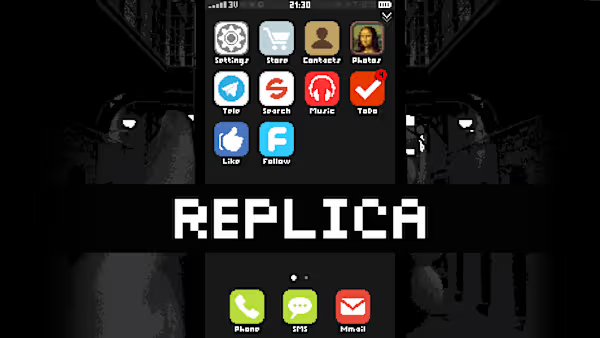


This is kind of what I talked about in my midterm video, I also enjoyed how real or likely the game felt. It really showed how close we are to being controlled in this way, and the ways we are ALREADY being watched and controlled. I like your take on how Replica weaponises your curiosity.