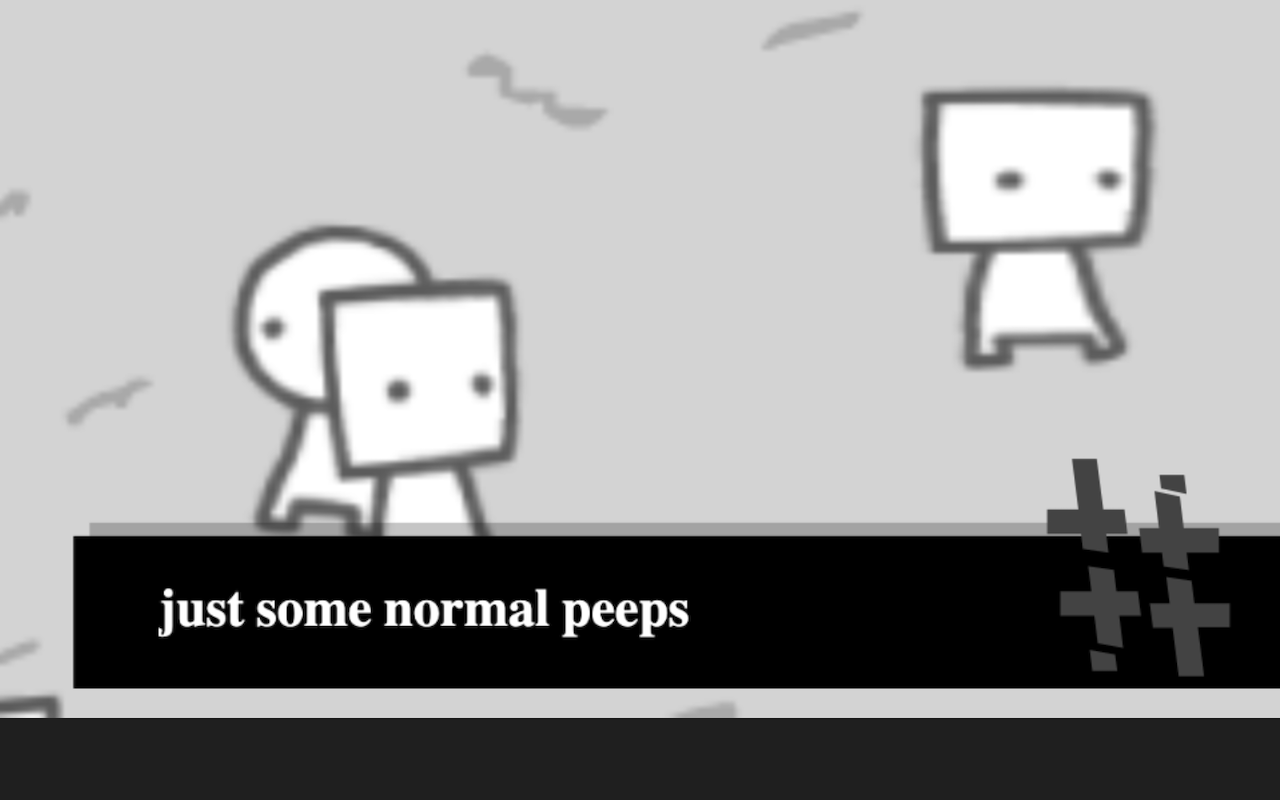
We Become What We Behold is a game I found to be somewhat familiar. The game is short and simple, yet it captures how the media shapes what we see and who we become really well.
The exaggerated hashtags reminded me of the eye-catching news headlines. News articles always have the most shocking, outrageous, and scandalous headlines to compete for views and likes. The wholesome, peaceful interactions of the circles and the squares are dismissed. This reflects how the media appeals to our emotions, especially the strong ones that could be irrational, like fear, anger, or excitement, focusing on gossip, crime, or scandals, often ignoring the “boring” content and distorting reality. It’s almost as if good news is not news. Balanced reporting never happens. In the end, the world of squares and circles ends in a chaotic war, and it feels inevitable because the media keeps reinforcing negativity, amplifying division, and feeding back only the most extreme moments.
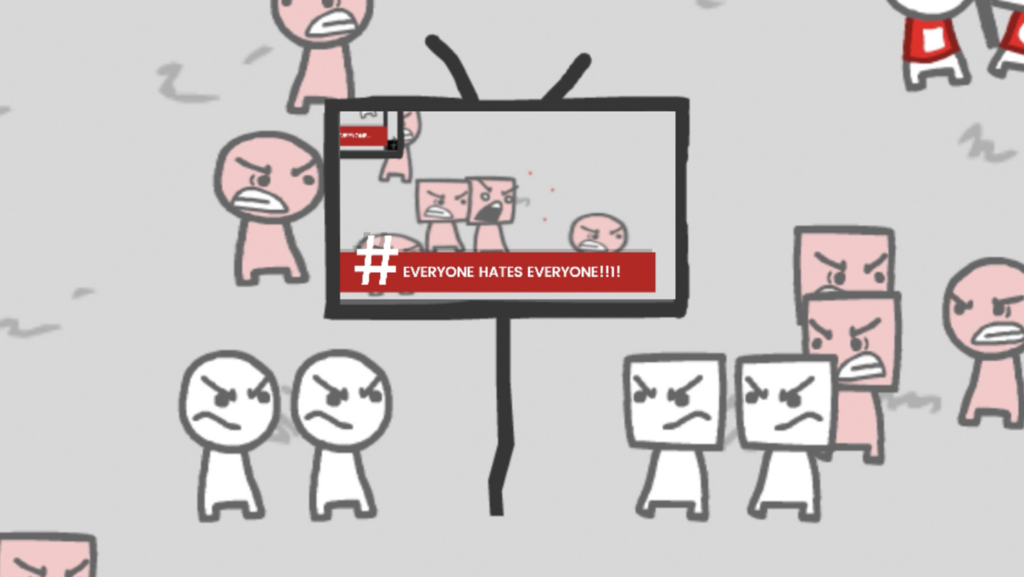
The game makes the problem of media sensationalism painfully apparent. It shows how a cycle forms. Humans are drawn to shocking content. It is natural to stop and look into what feels urgent or dramatic. Media outlets understand and take advantage of this human instinct very well. They push headlines that promise outrage or alarm because it guarantees clicks, engagement, and advertising revenue. We consume what is “juicy,” and then the cycle intensifies. We become accustomed to seeing only extremes and begin to think they represent the world.
This creates real consequences beyond screens. Media designed around shock value increases stress, anxiety, and distrust. When people only see conflict in the coverage, they assume society is constantly in conflict. We Become What We Behold exaggerates this phenomenon, but what I found unsettling is the fact that the exaggeration is believable. The game captures how easily fear and hate spread when the spotlight only shines on these negative feelings, allowing these moments to overshadow everything else and shape our perception of reality. If we only pay attention to chaos, chaos becomes the only thing we see.