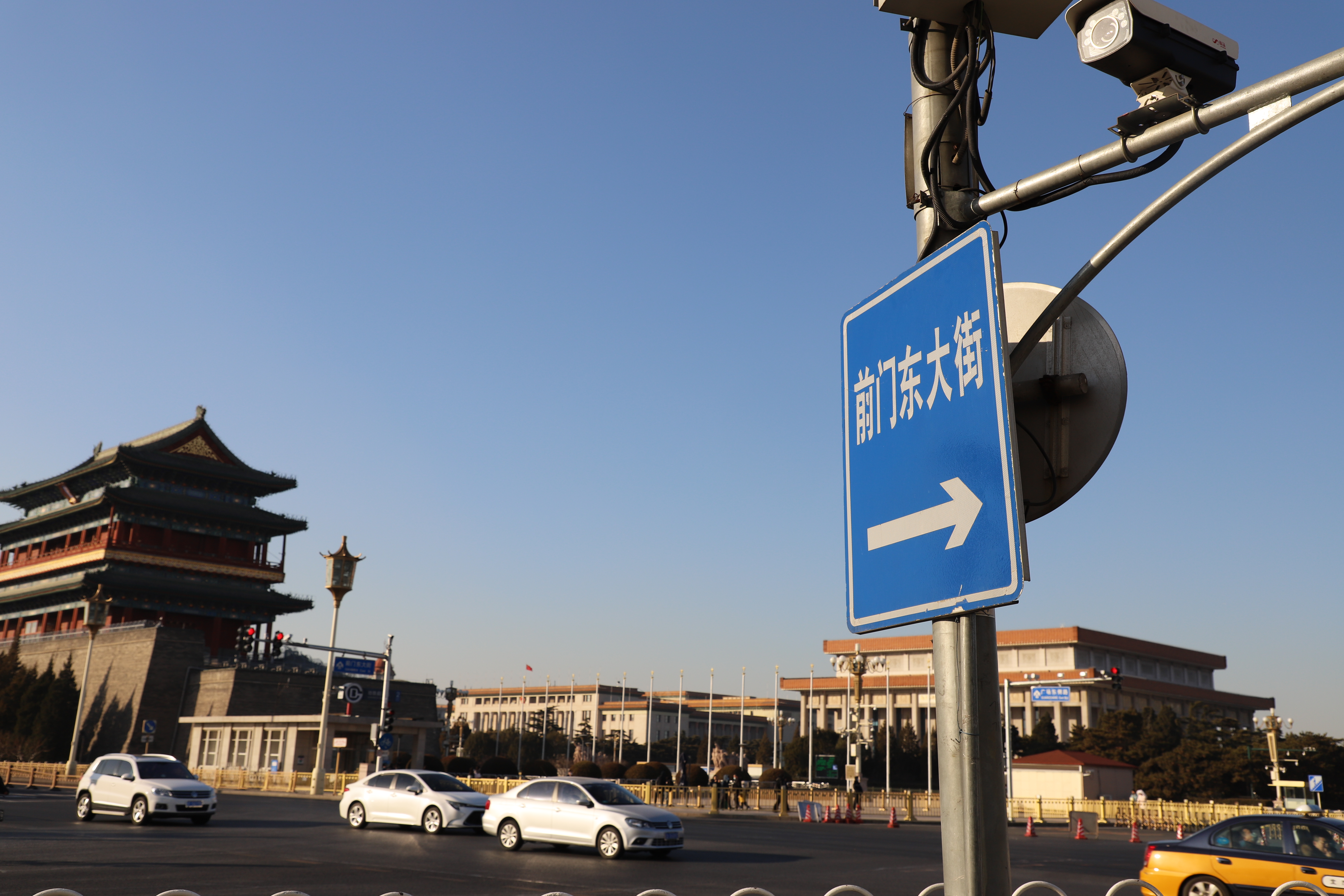
When I was in high school, one of the traditions that seniors participated in on the last day of senior week (right after submitting our extended essays – and if you took the IB, you’ll know what specific kind of hell I’m talking about) was an event called Race Around the Jing. Seniors would dress up in group costumes, get handed a list, and be sent out into Beijing on a scavenger hunt across the city. Less chaotic and wacky than UChicago’s annual Scav, Race Around the Jing sent seniors who spent the majority of their time in Beijing at home studying or hanging out within their expat bubble into our host city to get proper contact with Beijing before graduation.
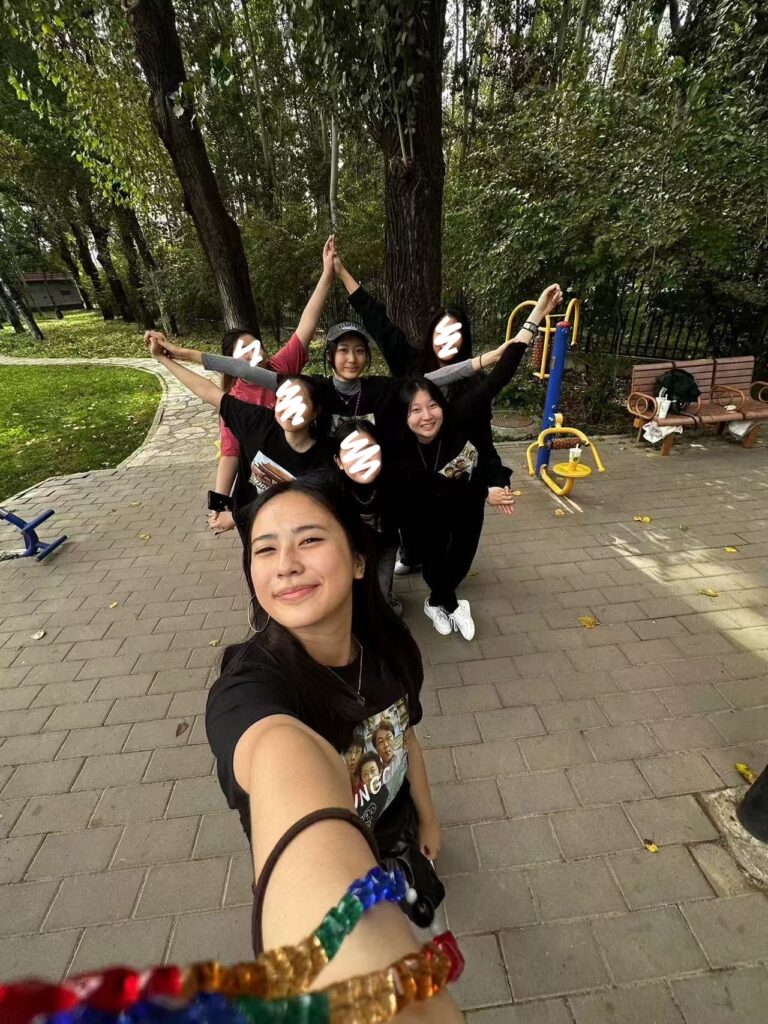
Prosocial games like Scav and Race Around the Jing create a learning environment much more persuasive and impactful than your average PSA. Sitting with my high school class through anti-smoking and anti-drug talks, I could almost feel the disinterest and apathy physically materializing. In contrast, Race Around the Jing had groups up in arms about what costumes to prepare, how to best strategize to maximize time and efficiency, and even people who were less competitive, figuring out where the best hangout spots for the day would be. It wasn’t that my high school had obfuscated the intentions of the scavenger hunt well enough that we couldn’t tell it was supposed to be a learning experience, but that the experience itself was gamified so much so that people didn’t seem to mind the intermixed educational aspects. Each item in the scavenger hunt was a new place somewhere in the city; the more places a team got to, the more points they scored. Teams could split up to cover more ground, but had certain items that needed the entire group present. Taking public transit of different forms afforded you extra points as well. All in all, the embedded point-reward system motivated students a lot more than simply speaking at them did.
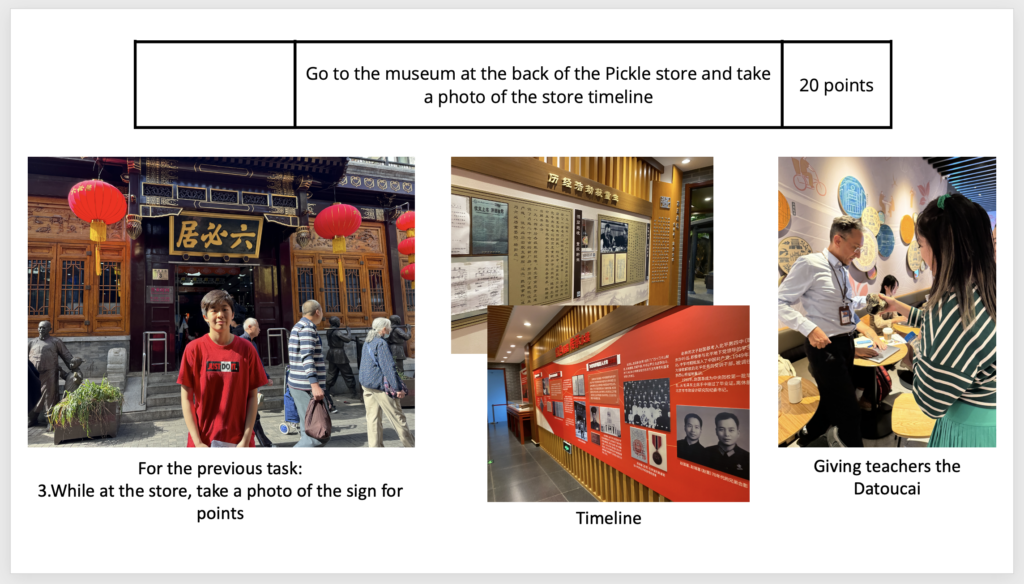
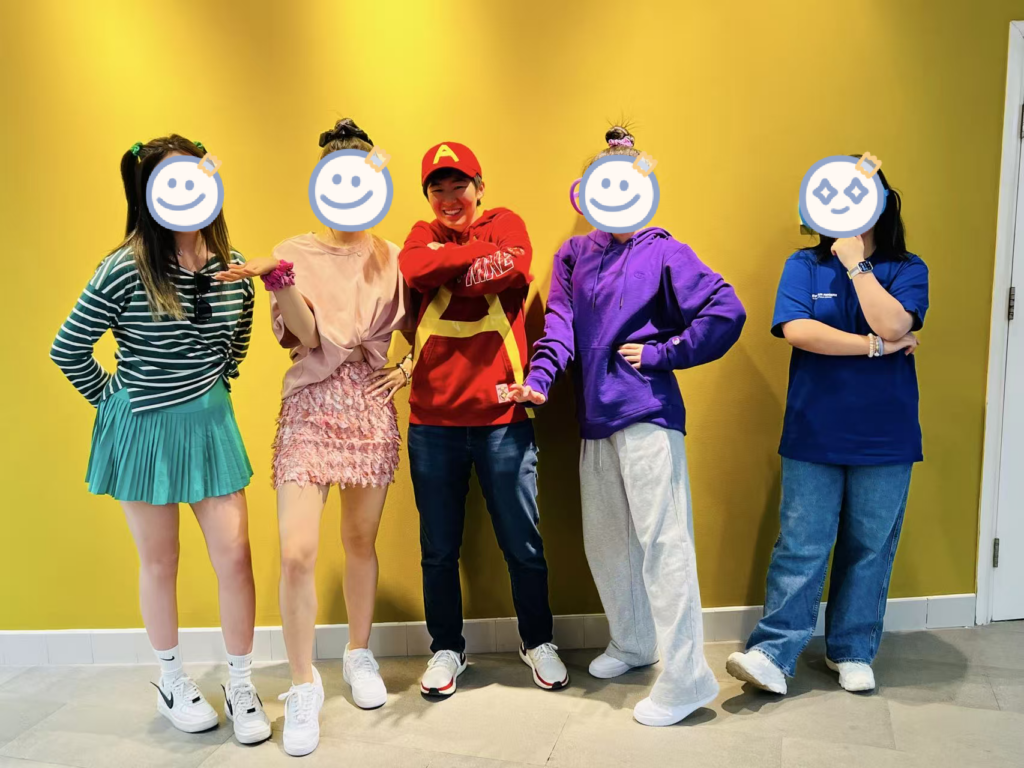
The gamification of education in this sense was not only influential but also greatly empowering to students. At least in my experience, it felt as if, as seniors, we were finally trusted to go out into the city without hand-holding. And while I took it as an opportunity to hang out with my friends around the city I grew up in, learning to take public transit and navigate on our own, my close friend took it almost as a personal challenge. As soon as the list was released, she had a strategy planned, an optimized route outlined, and a PowerPoint prepared to compile all their points in. Needless to say, her group won (as Alvin and the Chipmunks). The fluidity of the game to be both playable for the competitive and the leisure players opened up the audience and allowed for more engagement overall. There was no forced degree of participation, as long as you showed up with your group.
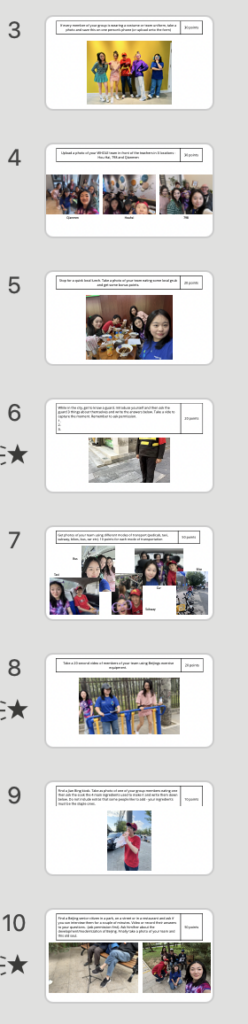
The year that our class played Race Around the Jing, however, we had the added layer of difficulty of avoiding upsetting the government. In the past, large groups were sent to Tiananmen Square and other such culturally significant places in full costume, which, in hindsight, is not a great look. So, as we navigated ourselves towards the square this year, we were all warned to wear subtler costumes and travel in smaller groups. While this seems upsetting to some people, to our grade, it became another dimension of our game, because part of understanding Beijing and the physical city is to also understand its realities and inner workings.
Ultimately, this kind of embedded intermixing of prosocial education in games has been shown to be empirically more persuasive than direct PSA-type speech deliveries. Race Around the Jing was a great senior farewell to the city that we learned and lived in, leaving us graduates with a fun and educational impression of the city that we, as international students, often didn’t have the chance to fully experience.