ADHD is throwing my life out of order, so I figured I’d give Habitica another try. Even though Habitica is not technically a video game, it does gamify various aspects of life, like good and bad habits, daily tasks, and overall To Do’s.
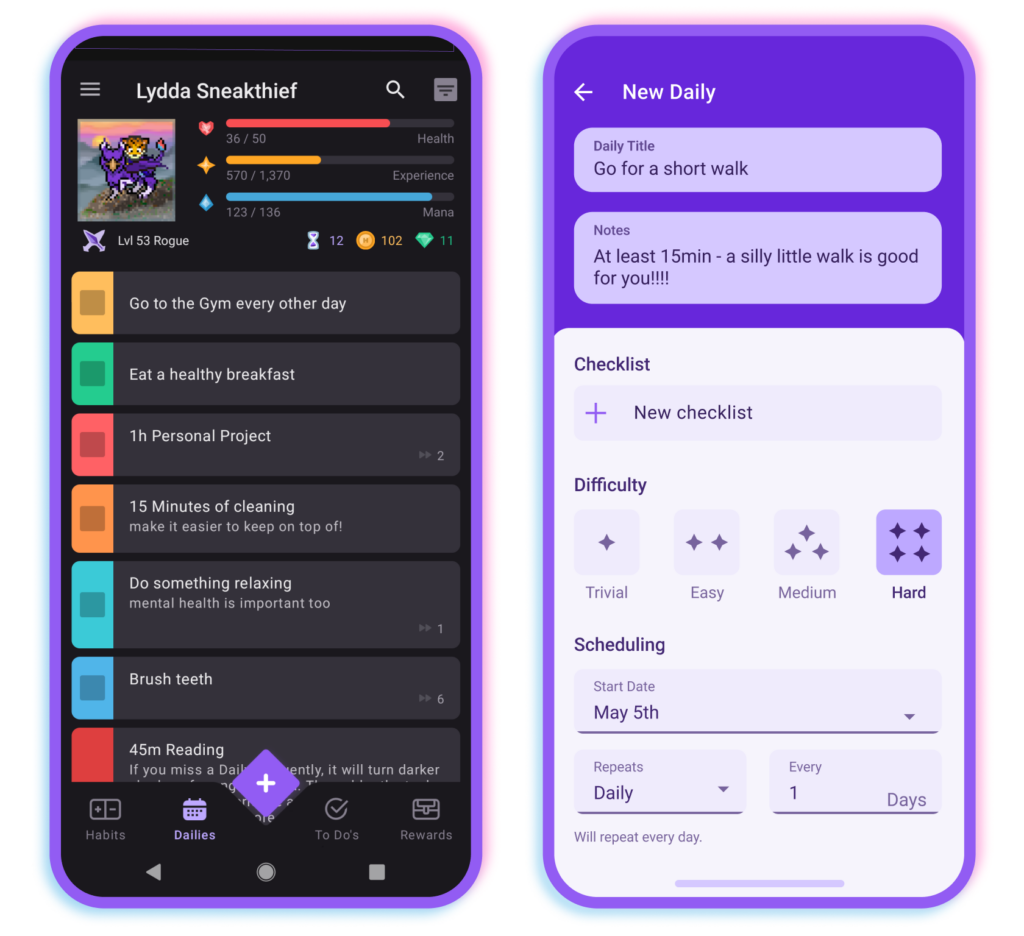
Habitica makes you create and customize an avatar, which is then immediately given a health and experience bar. These bars are affected by the tasks and habits you complete. You are also given coins for the good habits and tasks you complete. You can use these coins to purchase rewards for your character. As your experience bar increases in value, you also get to level up. There are also several achievements you can obtain, which provides further incentive to complete tasks, keep up with good habits, and ditch bad habits.
The reason why this app is so successful can be explained through the concept of embedded design. For example, obfuscation is used to hide the prosocial elements of being productive in one’s day-to-day life. The tasks and habits are still visible enough for us to know what to do but they are also somewhat hidden with the fantasy game UI. Instead of tasks and habits in the real world, they can now be perceived as tasks in a game that should be completed to level up your character. A lot of what’s getting hidden here is the gravity/weight of the tasks in the real world, which can honestly feel like a burden and, funnily enough, make it harder to actually start the tasks.
Another aspect of embedded design is present with intermixing. Tasks and habits are on topic, but there are also off-topic elements like rewards that are meant to distract you a bit from the on-topic items. They also work well with the on-topic items such that completing the on-topic items get you to the off-topic items, which provide some form of temporary relief and possibly euphoria. Getting to customize your avatar further, leveling up, getting pets, and other types of rewards help provide a fun incentive to continue working on tasks and good habits.
Whether or not the app will work for me in the long term is questionable at the moment, but one thing is clear: embedded design can help with gamification.


I loved your breakdown of embedded design here. The idea that Habitica softens the emotional weight of tasks through obfuscation and intermixing made a lot of sense, and it helped me see why the app feels motivating even when the underlying work is the same. I’ve had moments where checking off a Habitica task felt easier than opening my real to-do list, and I think it’s exactly because the game UI makes everything feel a little less heavy.