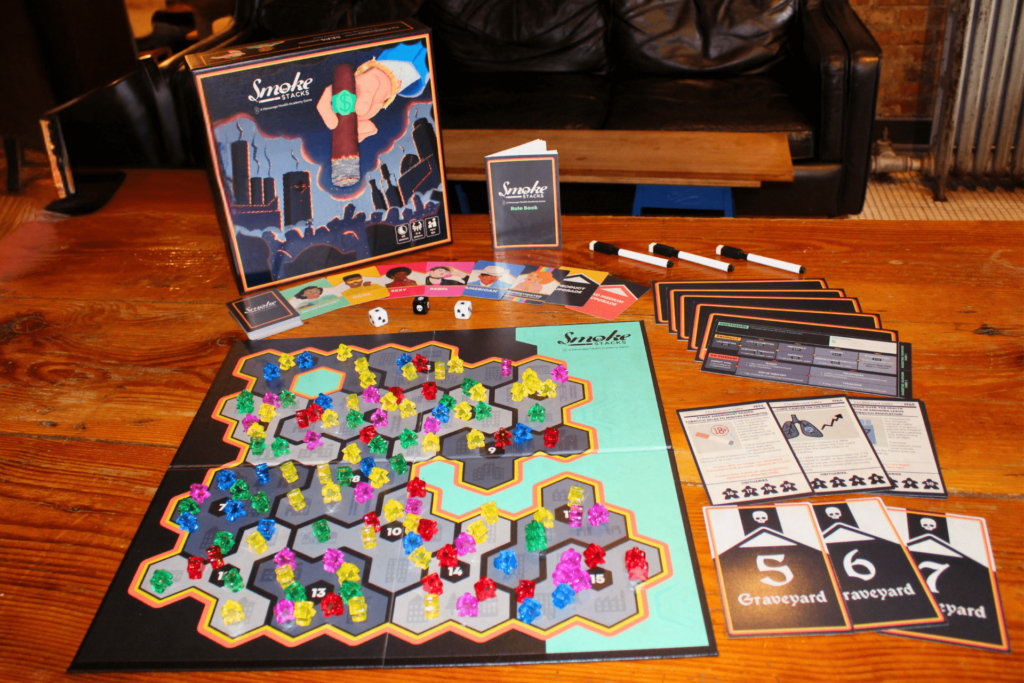
Mentioned in class was the board game Smokestacks, which was made by the Hexacago Health Academy. In this game, you play as a tobacco company, which immediately subverts our expectations on what a game to prevent young people from smoking should be. But that is indeed the point, as was mentioned in class. The intention is to not come across as preachy or as an example of propaganda because it might actually encourage young people to smoke instead. This goes back to “A psychologically ’embedded’ approach to designing games for prosocial causes” by Kaufman and Flanagan: “As a vast body of research stemming from reactance theory has shown, whenever we perceive that our freedom to form our own attitudes or decide for ourselves how to feel about or act on a particular issue is threatened, this triggers an aversive state of arousal that motivates us to defend that freedom – typically by resisting the persuasive attempt (Brehm, 1966; Brehm & Brehm, 2013)” (2). Therefore, it makes sense to be more subtle with messaging so as to not activate that defense mechanism.
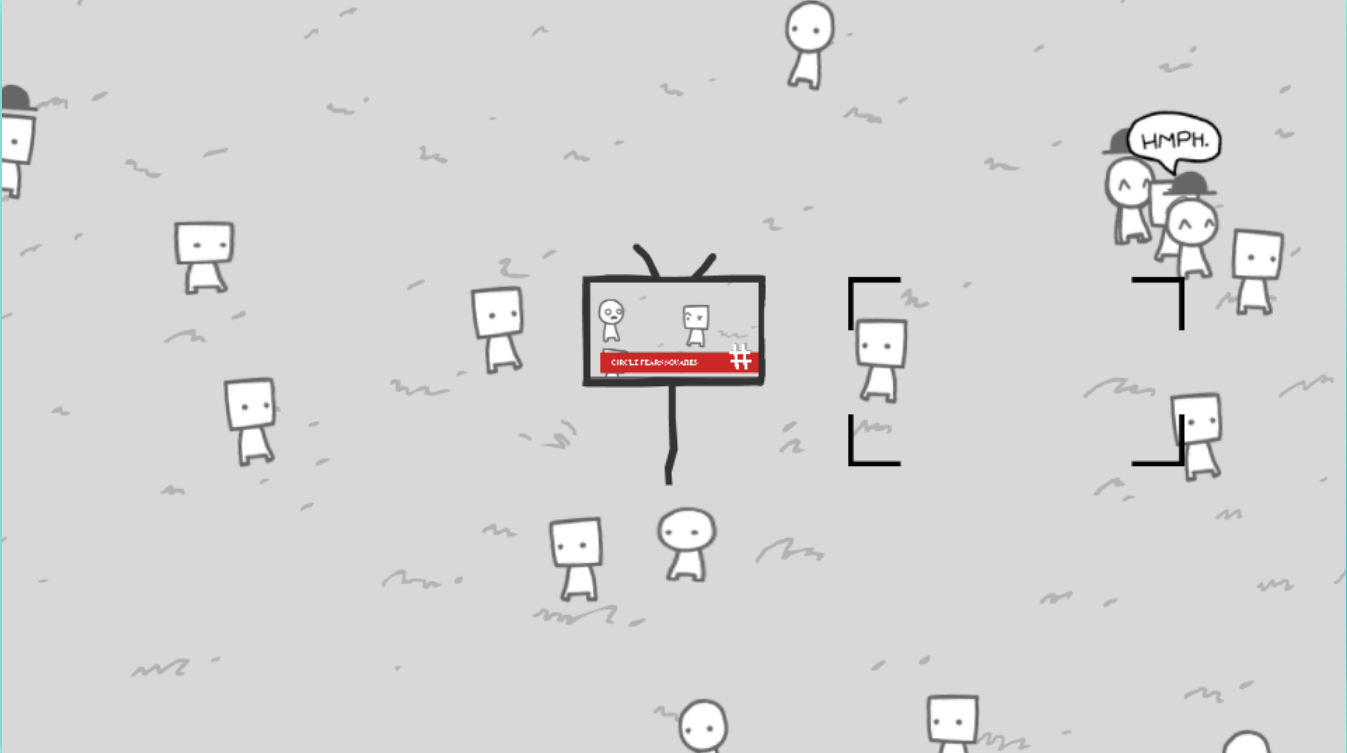
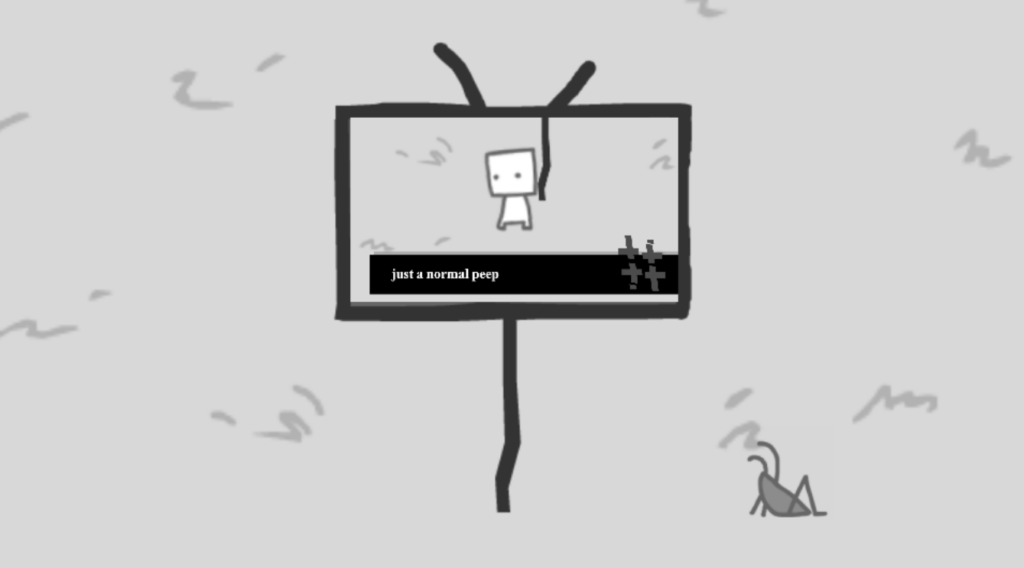
Similarly, in We Become What We Behold, you play as the “bad guy.” You are given the camera. You are the one taking pictures of the scene unfolding in front of you, which make it onto the TV that the circles and the squares are influenced by. Whenever you try to take a picture of something peaceful, happy, or mundane, the game doesn’t progress. The picture is taken, it is posted for everyone to see, but it doesn’t gain any traction. There is even a cricket to emphasize how utterly boring it is.
However, when you take a picture of something that is new, inflammatory, or fear-inducing, it is suddenly deemed newsworthy. A headline accompanies the picture in red, which highlights its greater importance in this world. Greater attention is therefore paid to these pictures and headlines.
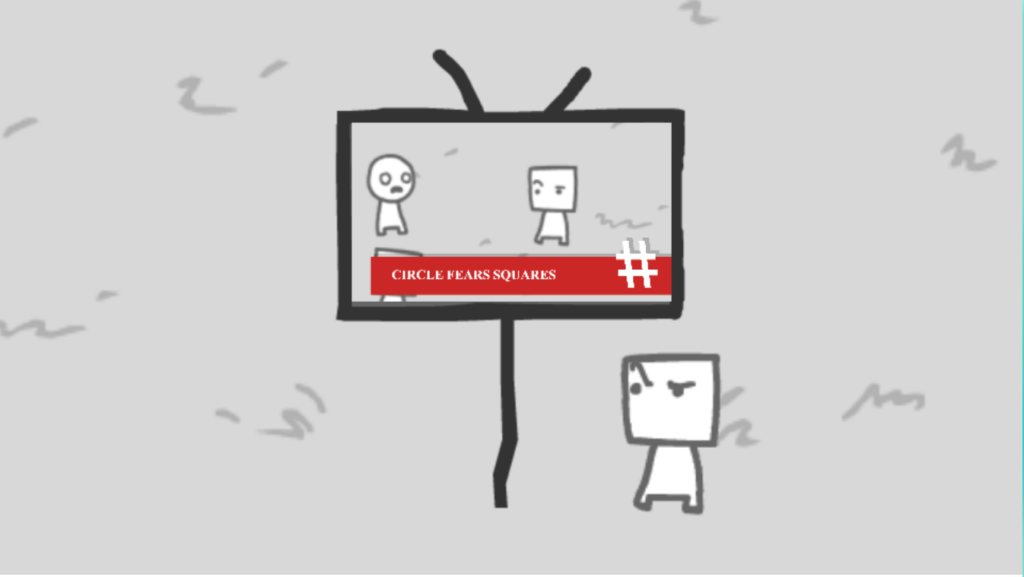
Furthermore, these headlines highlight the groups these people belong to (circles or squares), which leads the people to generalize things about the opposite group. You are therefore forced to progress through the game by taking these reaction-inducing photos and pairing them with equally incendiary headlines. This is similar to your role in Smokestacks, where you’re forced to progress through the game by targeting communities with marketing campaigns. You don’t really have a choice except to quit the game entirely, which makes you, if you choose to proceed, the cause of several deaths, either through smoking or violence induced by social media.
We Become What We Behold uses this approach to encourage players to be more intentional about the way they interact with social media. Do not take everything at face value. Do not generalize groups of people based on a headline or a post. Think about what gains the most traction on social media and use this knowledge to try not to contribute to the flames. And it does this not by being preachy, but through obfuscation. It allows players to become perpetrators which allows the knowledge to slowly unfold from there.