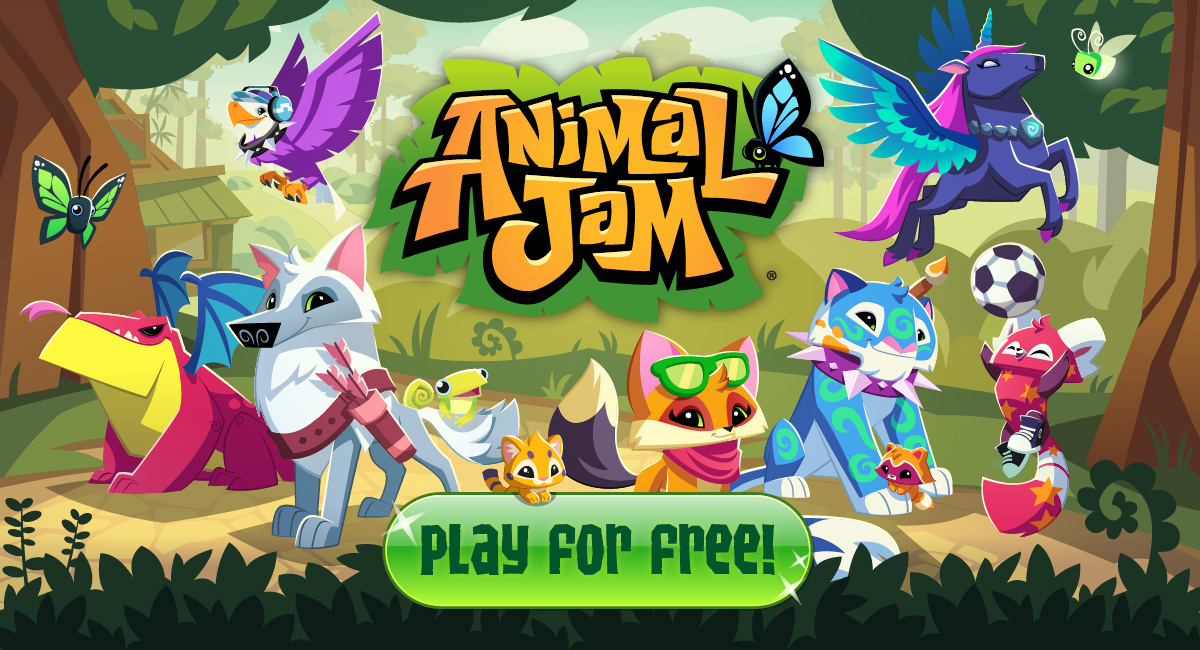
Animal Jam was a large part of my childhood. An embarrassingly large part, if I’m being honest. My daily screen time on that website was way too much for any elementary schooler, but it didn’t raise any concerns with my parents because Animal Jam was educational. It was partnered with National Geographic. It still is, actually! This is how they describe it:
“The game itself aims to teach children about the beautiful and natural world around them, through educational, safe, fun play. Partnered with National Geographic, it encourages children to learn more about the environment. In exploring Jamaa – an exotic world where animals are disappearing and the environment needs your help – you’ll learn about different lands, ecosystems and animals.”
But I wasn’t playing the game to learn. No one was. I was playing to be rich. To have so much liquid and material wealth that other kids would reach out and beg for me to share. To be better than everyone else because I had things they didn’t. Coins, diamonds (like coins, but harder to come by), rare items, beta items, limited edition animals—you name it, I wanted it. I was ambitious enough to get it. I spent hours upon hours playing mini games for money to buy items to trade for rarer items. Sometimes I’d get lucky and find a charitable person doing giveaways. Other times, I’d find someone stupid (in my 8 year old mind, at least) enough to trade me items they didn’t understand the value of.
But I wanted more.
Animal Jam was free to play, but only on the surface level. There was a stark class divide between players. At the bottom were non-member “New Jammers,” aka new players who were poorer than dirt poor. Then there were non-members—essentially everyone who played the game but were too poor to get a membership. Next, there were member “New Jammers,” who were just as poor in-game as their non-member counterparts, but they had real money. Real world cash to spend on in-game purchases. They were an investment. They had the potential to become richer than veteran non-members in a matter of days. Finally, at the top of the pyramid, were regular members. Players who had the time to stock up on in-game items. But more importantly, players who could access everything in the game.
Non-members played a heavily restricted version of Animal Jam. They couldn’t buy most animals. They couldn’t buy most items. Sure, non-members could trade for member only items, but they still couldn’t wear them. Members had access to more mini games. Better houses. Better decorations. Exclusive events that non-members could never hope to access.
Sure, the game had animal facts and videos made by National Geographic scientists, but did anyone really care? No. Obviously not. Sure, players may have clicked through the videos once or twice—I’d be lying if I said I didn’t do that, myself—but that made up one (maybe two) hours of playtime out of thousands.
If you were serious about Animal Jam, you were serious about clawing your way to the top of the socioeconomic pyramid. You needed to convince your parents to spend their hard-earned real-life money so that you could be a bright purple arctic wolf dressed like an extra in an Avril Lavigne music video.
So I had a membership.
Obviously.
And I had multiple of every animal. And house. and pet. and clothing item. And I flaunted my wealth, too. I needed everyone to know that I was winning the game. That I was better at it than they could ever hope to be.
And sure, there is no way to “win” Animal Jam from a technical aspect. It is an MMO centered around chatting with people and dressing up. But the second they added item rarity and memberships, it stopped being about education. It was a capitalism simulator with investments, wealth disparity, and green bunnies.
I was no better than a billionaire, hoarding wealth for no purpose other than to have it. I had fans. People made in-game fan-art of my character because I was so wealthy. I was Elon Musk, Mark Zuckerberg, Jeff Bezos, etc, with an following of people kissing my ass in the hopes I would help them reach my status (which I never did, obviously).
One day, I managed to get one of the most lucrative items in the game. I put it on my character, walked around for a few minutes, and logged out.
I had made it.
I had won.
And there was nothing left to do, so I left.
My account has been sitting dormant for years. My membership expired not long after. Even if I logged in again, I would have no access to the luxuries that set me apart from everyone else.
My account is nothing more than a private artifact collection. Items that I devoted years to collecting reduced to nothing but inactive lines of code rotting in a server contributing to the rotting reputation of educational kids games.
And you might be thinking: If the game is still active and you care enough to write a blog post about it, why don’t you log on and give away your items? Why don’t you revitalize the Animal Jam economy by spreading your wealth like former president Ronald Regan intended?
The answer is: I don’t care enough to. I really can’t be bothered to do anything but think about the website which ruled my childhood brain in retrospect.
All this is to say: If you want your kids to play an educational game about animals, play the Wild Kratts games on pbskids.org.


I was also an avid Animal Jam gamer, but I was one of the broke non-members. I remember going to the diamond store all the time and staring longingly at the arctic wolf, which was my dream animal. As an educational game, I think some of the mechanics did a good job of embedding educational content without being overt, like the adventurer’s journal that would encourage you to scavenge for different animals/plants and then it would give you some information about it. However, I think adding paid memberships disintegrated its integrity as an educational game as WildWorks started prioritized money over actual educational value. Players focused more on getting the coolest animals or clothing and trading rather than exploring the world and learning more about nature and wildlife.
Your point about everyone on Animal Jam wanting to be richer than their fellow players and Not actually being in it for the education is really interesting to me because while I had friends that did care about getting all of the spiked collars they could, I was really only there to learn about the animals in all of the areas. I watched carefully for the Giant Squid and waited patiently for the tapir to come around and sit down so I could click on it and learn more about it, and even now when I see or hear the word “tapir” I am taken back to that tapir made of code from 5th grade. It actually kind of baffles me that other children were running around trying to be the talk of the town while I was sat at my home computer using an email address I did not own to click on animals and read about them and then log off. But hey, if other kids wanted to be billionaires in a game where everyone is an animal, who am I to stop them? I only cared about my tapirs and isopods and macaws.