Over the past two weeks of class, we have played/ discussed two different games that deal with the idea of death in vastly different ways. For this post, I wanted to put them in conversation with one another and consider how they push back against typical videogame depictions of death.
Part 1: Typical Death And Violence
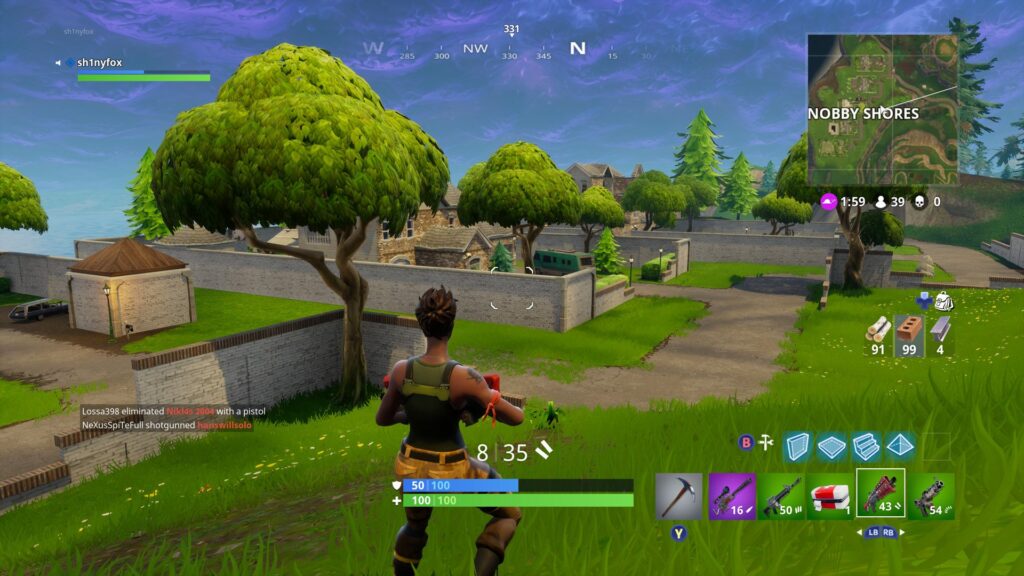
Despite not playing a lot of games, I feel like I have a pretty good sense of how violence manifests in videogames. I’m sure we have all seen the news stories about how FPS games are “destroying people’s minds.” In fact, lots of anti-videogame commentary centers around how much shooting/ fighting there is in games and how there could be potential impacts on behavior, especially in adolescents. [SIDE NOTE: I know that there are also potential benefits of games, such as increased senses of empathy, improved problem solving skills, and development of fine motor skills, but for the sake of this post, let’s roll with the haters.]
In games that center around violence, where harming others is a necessity for success, death becomes something inconsequential: death is just something that happens. In fact, one could argue that death becomes something… encouraged. You know the phrase “you can’t make an omelette without breaking a few eggs?” Well, you can’t get the #1 victory royale without killing all of the other players you are competing against. Death is also something you aim to optimize via improved weapons and techniques.
Part 2: Death Stranding
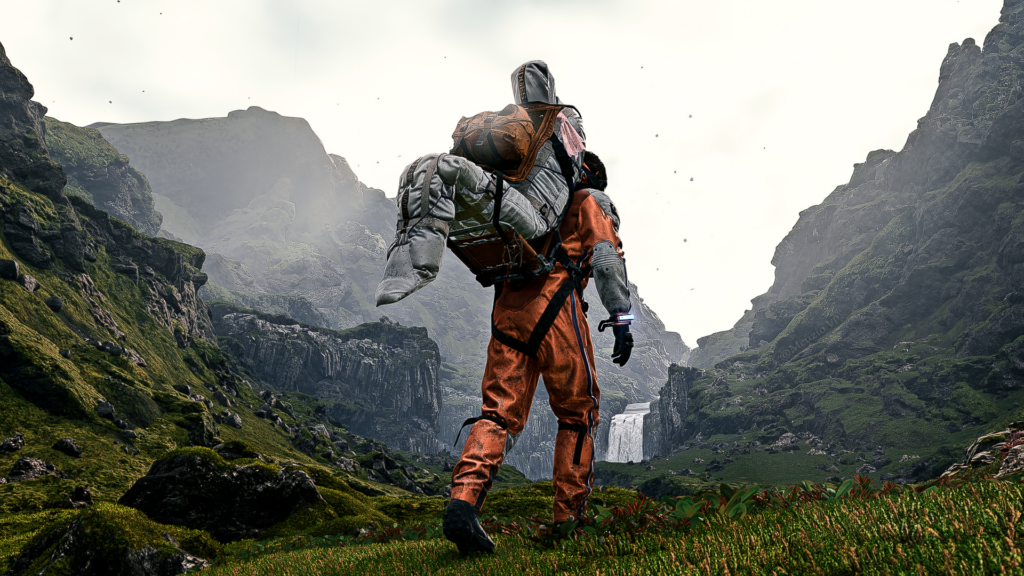
Fun fact: this entire post was actually inspired by a conversation I had in discussion section about Death Stranding right before Thanksgiving Break. When talking about Ash’s video essay, Ziyi (shoutout!) posed this question about the role of death within the game as a mechanic and why it is so different than other games. My answer? Death in Death Stranding is … bad. This kind of sounds crazy, but hear me out. Within the game, death is something difficult and consuming. Killing and its consequences are almost like a punishment to the player: you can either clean up the mess you make and risk your delivery performance, or you can leave the body behind and potentially blow someone up. Either way, death is not positive, which is a huge divergence for the way it is shown in most other games.
Part 3: Borders
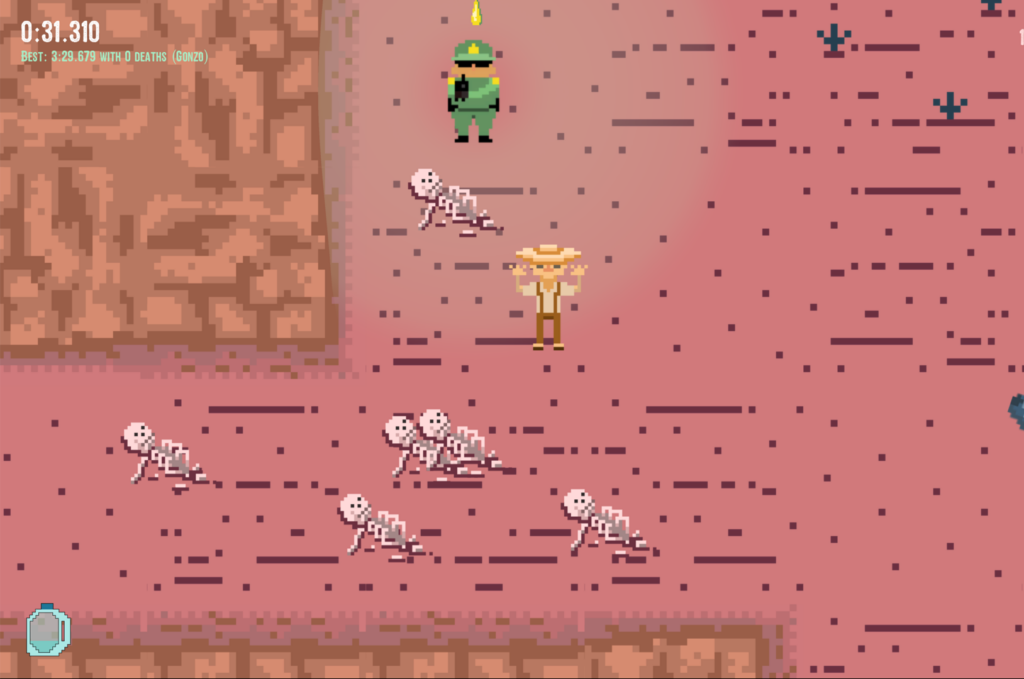
After a frankly chaotic Thanksgiving Break, I completely forgot the death discussion described above… until we got to Monday’s class. While talking about the elements and mechanics of Borders, I brought up the role of the skeletons within the game. Unlike most games, where failing results in the opportunity to replay in a completely reset world, Borders records failed attempts by marking the spots where you are caught with a skeleton. Because of this, death in Borders is consuming in a vastly different way than both Death Stranding and Borders: you are bombarded with images of failure that you can’t avoid. You aren’t necessarily being punished through having to sacrifice your current game due to your past decisions, but you are constantly being reminded (shamed?) of it. The game has a historicity of life and toil and struggle that is unavoidable, even after the game allows you to restart.
Conclusions
Overall, I think it is interesting to think about how both Death Stranding and Borders challenge/ complicate/ expand the definitions and implications of death within the world of games. Unlike popular FPS/ combat games, where death is a tool to advance yourself, death in these games serves as a hindrance (Death Stranding) or a reminder (Borders).This reorienting of death is powerful and honestly much more relatable to real life feelings around death than those portrayed in games like Fortnite or Call of Duty.


I think, as you point out, violence itself is a complicated issue. It can be a tool for oppression or liberation, and it can be used for play (like with sports) or to inflict pain.
In the case of violent video games, it is not just that a player is willing to act violently — it is also the fact that games require and demand a player to do so in order to progress. Specifically, video games, through their self-replicating circuits of instructions, encourage players to continuously act in such a way. This is compounded by the fact that there is an uneven level of labor labored against a player and their character’s actions. It is easy to inflict violence, and the moral/physical distance created by the medium only furthers the ease of doing so.
I also think it is interesting to consider who is considered “violent” in video games. Disabilities are often used as a way to make the body more capable of enacting violence (for example, consider Barret’s arm in Final Fantasy 7 becoming a gun). Similarly, race also plays a role in making certain bodies more violent, or more capable of enacting violence (for example, think of how Black characters are cast in stereotypical roles like “gangsters”, or the “loud Black soldier.”)
I agree that the representation of death is more relatable in a game like Borders because it is being used to represent real struggles. It does make me think, though: would this game be as powerful without the aspect of death? Can there be a way to make it just as powerful without any representation of death? Or is death the only way we can properly represent the struggles of crossing a border? Personally, I think that with the message that this game is displaying, death is necessary. It simply reflects the reality for many people who try to cross the border. However, maybe there is a way to omit death and still have something that properly reflects the reality of crossing the border in a way that is powerful and meaningful. I just don’t know.