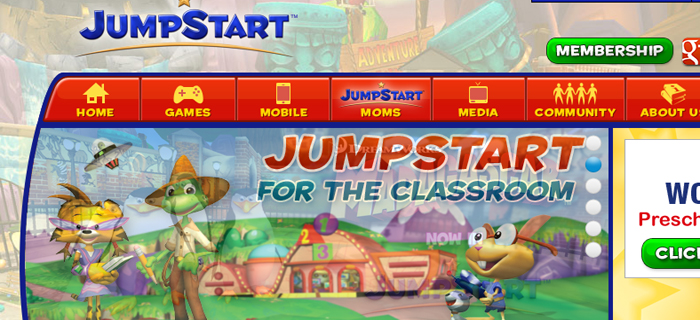
When I started the readings for this week and realized that the topic of Monday’s class was educational games, it awakened a memory buried in my brain: the JumpStart video game universe.
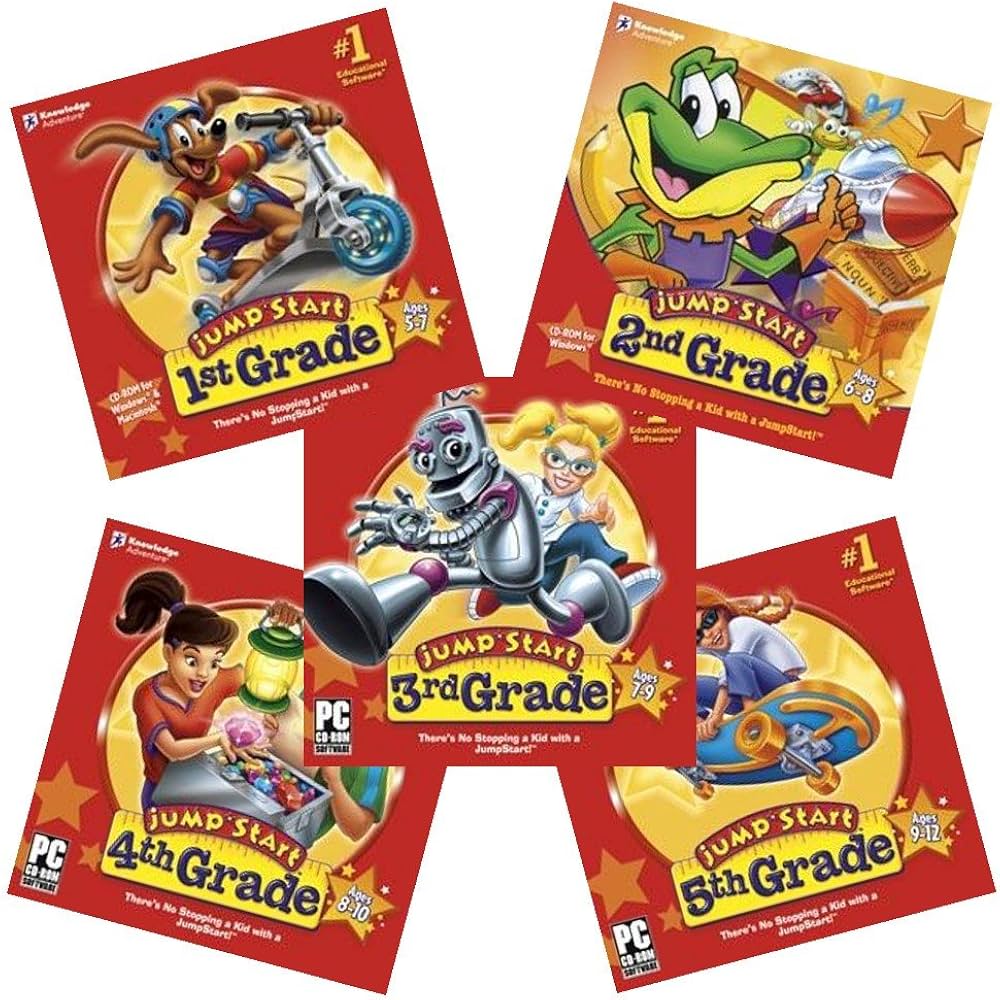
JumpStart was a series of educational games released from 1994 to (apparently?) 2019. The earliest iteration was JumpStart Kindergarten, a point-and-click, kindergarten-level game. According to the JumpStart Fandom Wikipedia, these games were generally released out-of-order, with everything from JumpStart Toddlers to 6th grade, and specialized games for language learning, reading, writing, math, science, coding, and more. I can’t remember which game I played specifically, but I’ve got a hazy memory of counting apples into a basket with the JumpStart mascot, wiener dog Frankie (pictured below).

When reading “Our Princess Is in Another Castle: A Review of Trends in Serious Gaming for Education” by Young et. al, a review of hundreds of works on educational video games, I was rather surprised by their findings. Essentially, video games in an educational context for children really only have a significant impact on language learning and physical education. This conclusion absolutely shocked me, especially with the prevalence of games like JumpStart and tools like LeapPads. I checked, and “Our Princess Is in Another Castle” was published in 2012, after the emergence of these games. There are hundreds of works compiled into the article, so checking doesn’t seem feasible, but I wonder if JumpStart comes up in any of the studies. I’d also love to know how a review like Young et. al’s would look now, as so many additional educational games have emerged, like MinecraftEDU or more “covert” educational games like Animal Jam.
I’m also quite curious if educational games have become more mainstream in classroom settings since this review was conducted. I don’t have any relatives in elementary school (and haven’t for about 10 years), so I don’t have any anecdotal evidence for their presence, or lack thereof. Some of my most vivid educational experiences were around games, so I feel I can personally attest to their value in classrooms, at least when used as a supplemental material.
I do think caution around “educational games” in the classroom is essential. Young et. al stated that educational games could never be a replacement for any component of early childhood education, and facilitation from teachers is essential, which I completely agree with. Games can also be made by educational game companies without being truly educational. For example, my personal favorite iteration of a JumpStart game was JumpStart 3D Virtual World, which was an MMO for late-elementary-school/early-middle-school aged children.
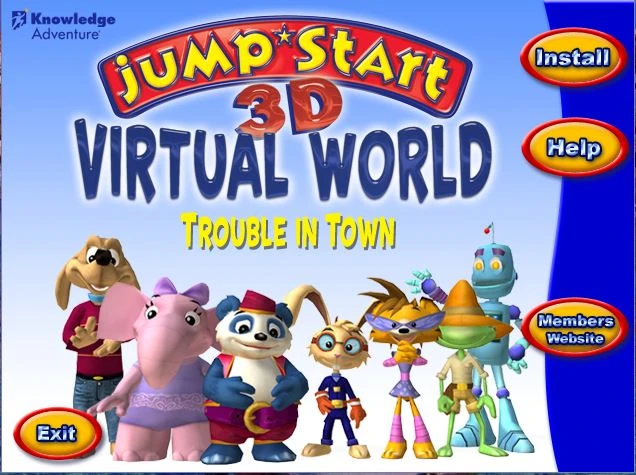
However, I don’t think I could claim this game as educational in a classroom context. JumpStart 3D was comprised of quests and minigames, like “Escape from Adventure Island” and “Crazy Karts.” While these minigames could inspire excitement, they might not be appropriate for an actual classroom setting. However, it still holds non-traditional educational value. JumpStart 3D’s value came from broader concepts, like curiosity and problem-solving skills. I wonder if there are ways that games like JumpStart 3D could be incorporated into the classroom, or if the integration of obvious educational games should be prioritized.