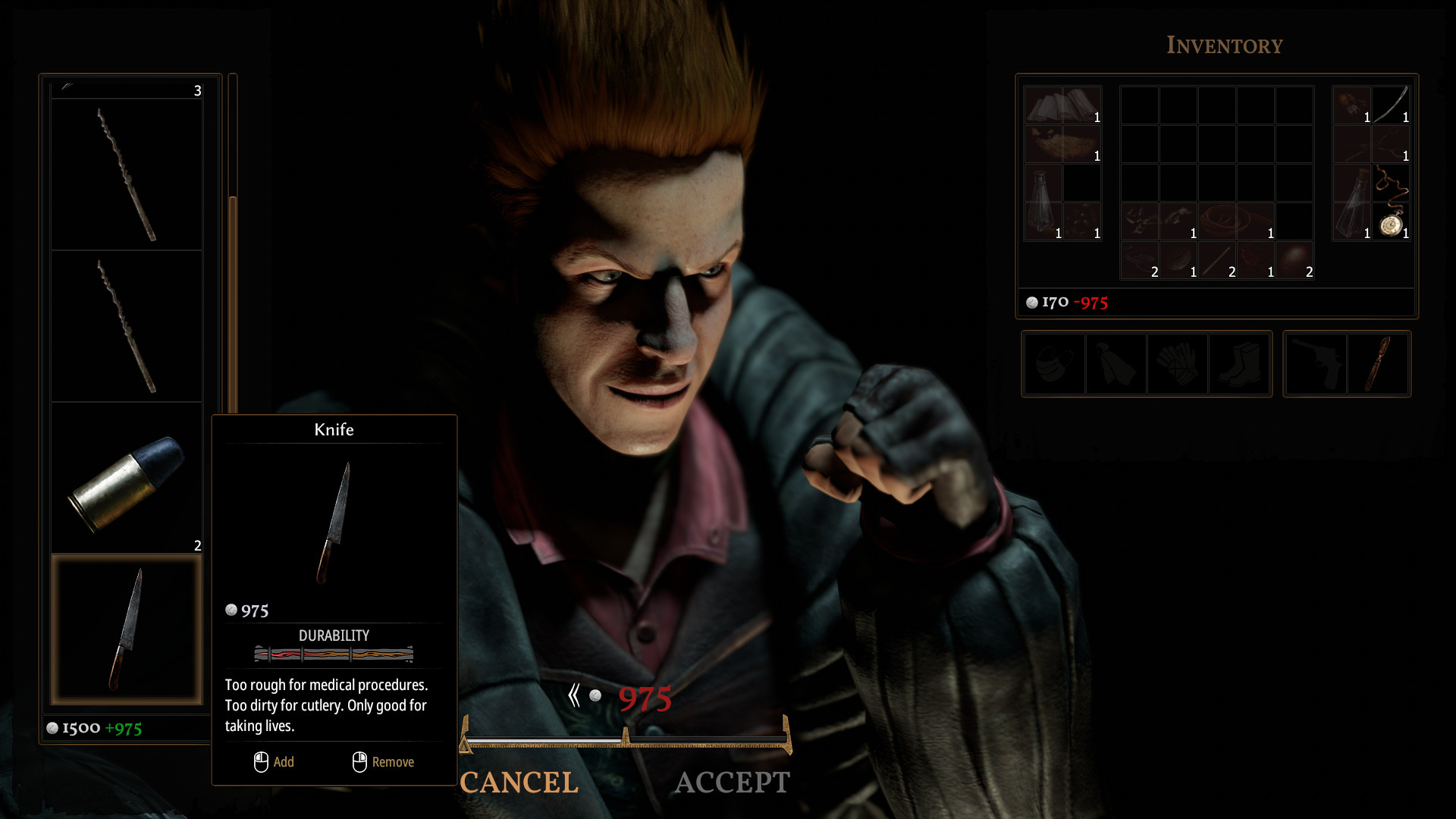
This post is sponsored by the Sand Pest! Is your economy too healthy? The Sand Pest has a solution for you! Clicking the affiliate links for a 500% upcharge on all survival necessities, and I’ll get a little commission on the side! xoxo
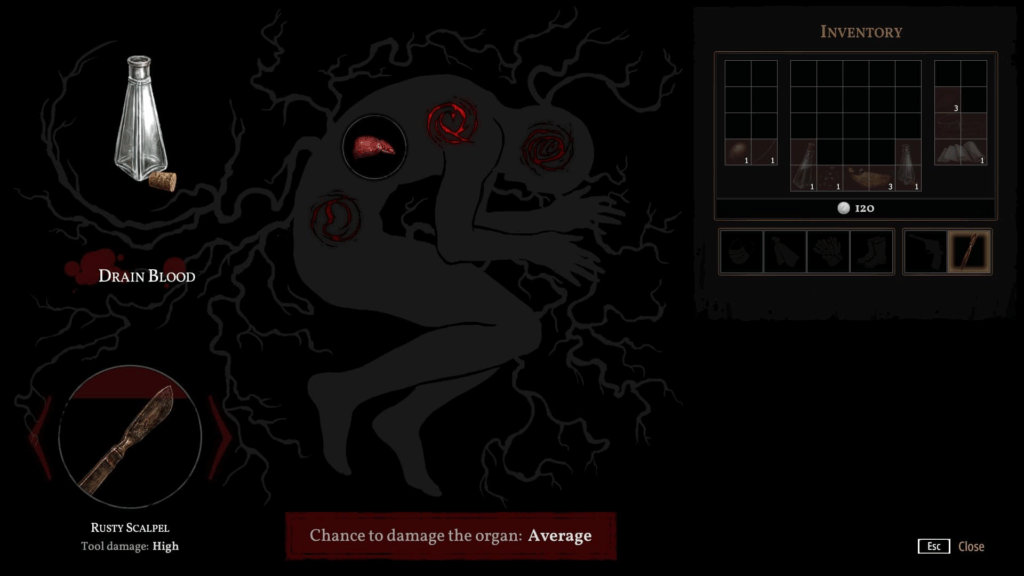
I love selling organs in Pathologic 2. It’s so annoying trying to conduct commerce in a plague-ridden town in the Russian steppe. Vendors who sold fresh bakery bread for a hundred rubles on the day of your arrival, fresh-faced and ignorant of the mystical disease carving away at the bowels of the Earth’s soul, are now charging five hundred rubles for a pathetic slice of stale bread! That’s of course if you can even find a store with any food left to sell–COVID toilet paper all over again, I swear. But black market vendors are lifesavers in a serious way (and I don’t just mean selling you life-saving antibiotics that you, as a doctor, otherwise have to bribe from young children with peanuts), and here’s why: Dystopian economies reveal how in-game economies BRAINWASH US into living out a fantasy of The American Dream.
Alright, let’s back up.
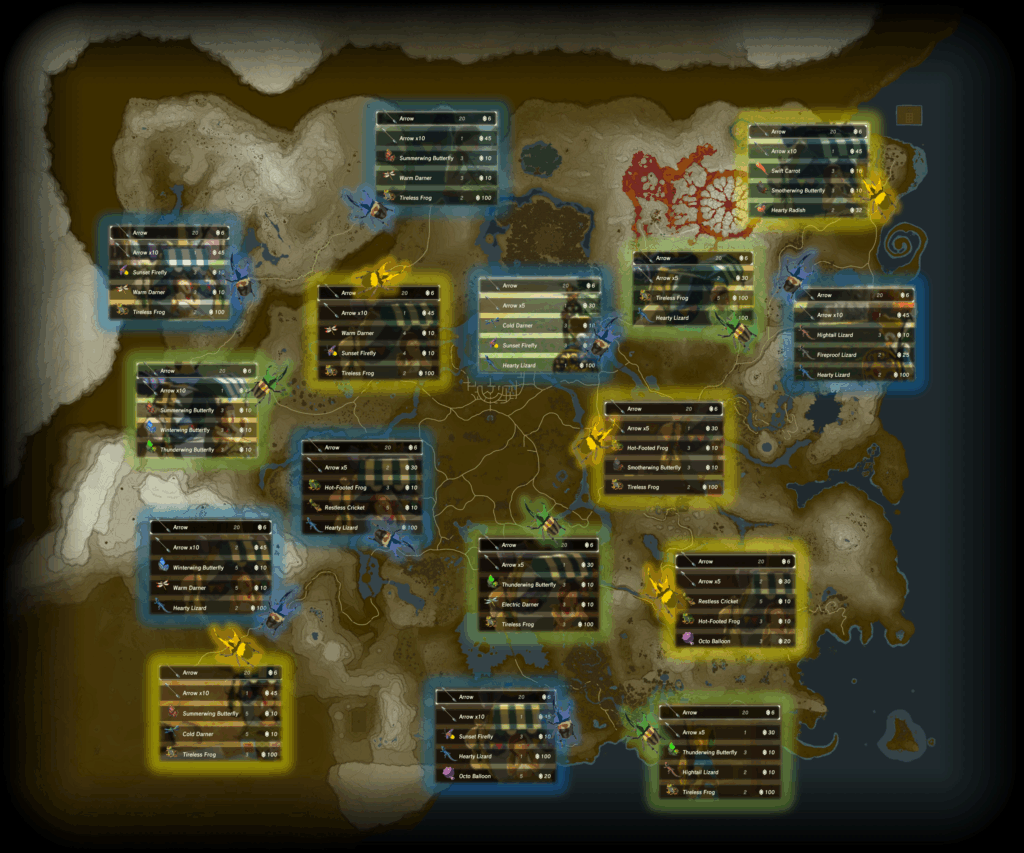
Too many video games are falling into the franchising model. You can get the same butterflies from your local Beedle trader in Breath of the Wild as you can from any of his identical twins across the world, all for the same price. That kind of monopoly has made Beetle so rich that you can sell him any number of any of your goods, and he’ll just buy it! What’s this guy need 99 hot-footed frogs for, anyway? The cold hard reality is that Breath of the Wild is coddling us, gamers. It and other games have in-game economies so predictable that we come to assume that anything we gain, we can sell, and we can sell at the same price. This uniformity says to us players that our labor is always proportionally rewarded. I know that if I spend twenty minutes using the Master Sword to cut dry grass, I’ll gain forty bundles of rice, and I can sell that rice for the same hundred-something rupees anywhere, anytime.
It’s stable to the point of narcissism: In-game economies in entertaining games are designed to fill that urge in the player to see their efforts rewarded–hard work in, positive benefits out. It’s so unrealistic, guys. Like, what capitalist overlord in their right mind would doll out wages commensurate with our labor? It’s like what our gal Julian Novitz (2017) said that McKenzie Wark (2007) said about what Jane McGonigal (2011) termed “a virtuous circle of productivity”:
“[A] regularity of reward and advancement in return for the investment of time and labour supports [the] contention that many games present their players with an idealised version of capitalistic relationships, where there is an uncomplicated relationship between work, skill development and material reward, essentially operating as they should rather than as they frequently do in real life.”
Y’all, game economies are a power fantasy. It’s a world where rise and grind culture actually works because your “investment of time and labour” as a character “going to work” in the game–or the meta level of you spending your time and money on this game–is rewarded the way Capitalism promises to reward us. It’s the American Dream all over again: anyone can rise to the upper class if they work hard enough. So these games are fundamentally escapist not because the world is scary and Stardew Valley is under your totalitarian thumb, but because they fulfill the promise that capitalists manipulatively make and then exploitatively break: The market economy is fair, and you are a free agent in that economy.
So, really, the actual monster in survival horror games is the lack of a Walmart. The essay quoted earlier, “Scarcity and Survival Horror: Trade as an Instrument of Terror in Pathologic,” by Julian Novitz, is about how horror games make you feel powerless and sick inside by taking away our ability to turn work into money and money into goods and services. Limited resources ranging from food to weapons creates a feeling of scarcity that forces emotionally-charged decisions about what you care about and what you have to risk. In other words, they break the illusion of agency, stability, and idealism developed in games simulating ideal capitalism. As Novitz puts it, “Survival horror games create a sense of terror through the contrast that they present with the stable, reliable and idealised systems of work and acquisition that are present, both metaphorically and explicitly, in other games.”
[ok I’m dropping the framing device this is exhausting]
But Novitz’s essay doesn’t stop at saying that breaking economic expectations causes horror. They point to many scholars who suggest that, like an abandoned kid crying with relief when reunited with their parents, dystopian games produce “pleasure” by presenting players with oases of standard economies. Gianni Vattimo, for example, brings up “ironic nostalgia” as a response to dystopian fiction, in the sense of you-didn’t-know-how-good-you-had-it. That means that the terror of survival horror games isn’t in being betrayed by capitalistic systems; it’s coming from the absence of capitalistic systems that make life feel safe. By extension, that means that capitalistic systems are safe, just like the entertaining games we talked about earlier seem to suggest. Again, quoting Novitz:
The absence of the normal (reliable and idealised) relationship between work and reward in survival horror could just as easily be read as reinforcing these systems through the sense of terror, vulnerability and unpredictability that this removal is intended to create.”
Novitz claims here that games which pin horror to anarchy imply a dependency of human safety, fulfillment, and society on capitalistic economies just as much as idealizing games do. Instead, they suggest, a game that actually critiques capitalism shouldn’t show how bloody it is without a market economy; it should show how bloody the market economy actually is. Introducing the bloody, panicked economy of Pathologic (2005). It gleefully refutes every lie those games told us about the predictability of exchange economies. Prices are out of control, inventories are empty graves, and your resume from med school doesn’t even cross the desk of the plague that kills everyone who can’t afford a bunker. These, Novitz shows, is what happens when capitalism tries to valorize money, work, and social hierarchies as equivalent to physical survival.
But I want to take this a step further: Pathologic 2 (the 2019 sequel) does, in fact, feature a thriving economy: the black market. Var the Scar-Faced is single-handedly keeping the gig economy afloat by buying fresh organs from you, no questions asked. When the rich people’s promises to help you and the town turn out to be political lies, Var still rewards your good work ethic: Killing thieves is good for the neighborhood, sure, but the Slicer House turns your charity into a paying job by buying those pesky livers off you. A local incarnation of Death runs a popup market called the Dead Item Shop that is undermining Big Business. When state-backed currency collapses, he accepts bloody bandages and scrap names for material goods like opioids and panaceas.
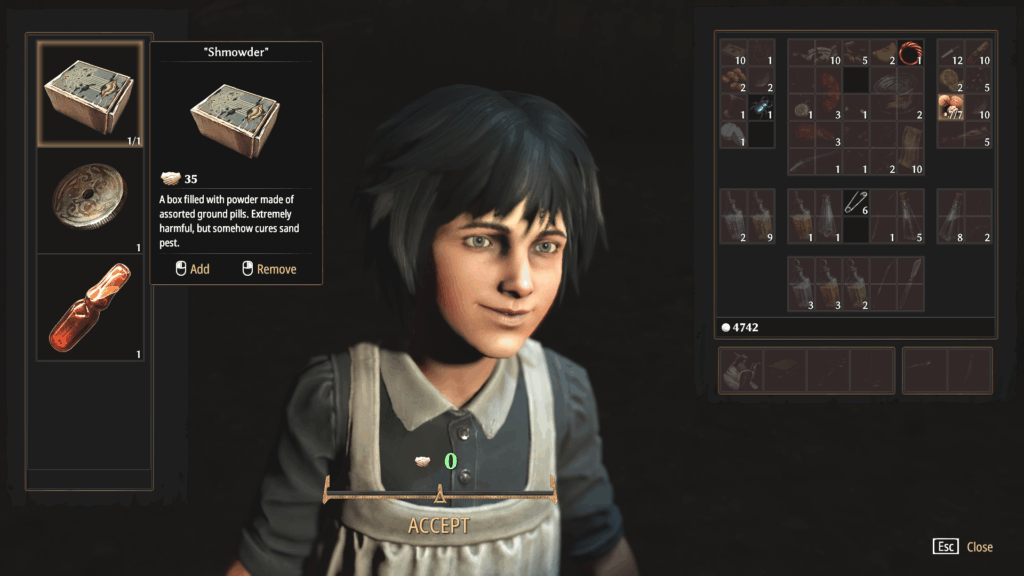
Both of these savvy entrepreneurs are upending capitalistic norms about the exchange value of goods that hold the traces of the human. When the Powers that Be–the industrialists, politicians, military, and intellectuals–treat human lives as disposable and useful only for the materials you produce, dystopian economies are our way of saying no, the nameless hordes are people who matter! Their blood and bones have value even when the rest of the economy doesn’t. People in infected districts will throw their jewelry and life savings at you for a couple of painkillers because, in the middle of a plague, everything post-modern capitalism claims as valuable, expensive, and enviable is revealed to be worth nothing. Instead, healthy organs, altruistic collectivism, and the panaceas created by curious children are the most precious goods and services in the world.
Primary Citation: Novitz, Julian. “Scarcity and Survival Horror: Trade as an Instrument of Terror in Pathologic.” Transactions of the Digital Games Research Association, 2017, vol. 3, no. 1, pp. 63-88. doi.org/10.26503/todigra.v3i1.64

First off, love the clickbait title and sponsor of the post. Truly giving youtube video in the best way… Besides that, I totally agree about games and the fantasy of the American Dream. I was talking to my friend about the inherent brainwashing of many games: you can play/ succeed at games by working hard, no matter who you are in real life, which is very America-coded. I have never played Pathologic 2, but there is something cool about how it forces you to engage with organ selling (at least, that is the way I am interpreting this post). It makes the evilness of selling human body parts essential to survival, which just emphasizes the ways capitalism makes us sell ourselves for profit.