When reading Young’s article “Our Princess is in Another Castle: A Review of Trends in Serious Gaming for Education” I found myself reflecting on my own experience with video games used as educational tools. Unfortunately, rather than being a tool to challenge my thinking, most of the video games that have been part of my pre-college curriculum were more like entertaining flashcards (e.g. Kahoot and Quizlet).
As described in the article, one of the shortcomings of games is that students might not reflect on games to understand the curriculum being taught, sometimes even deferring to random clicking until they get a right answer to win the game (69). This can be useful for something like times tables where the goal isn’t for the student to understand how multiplication works, but to improve mental math. I remember in elementary school we would spend at least half an hour a week doing a multiplication/division video game on our computers. The game seemed effective since students were given math equations based on their personal skill level, unlike on paper where it may be very difficult to provide a level that is the right amount of challenging for everyone.
Similarly, I believe that this logic can be applied to language learning. In language classes, people are often taught proper grammar structures, such as where to put commas and how to conjugate verbs. Despite this pedagogy, people (at least in my experience) don’t know the proper names of all the grammar and can’t describe the theory behind it. Do you regularly think of gerunds or dependent clauses when talking or writing? After a long time exposed to a language, some things just sound correct and others don’t. Similar to typing, you just know where all the keys are and would know something is wrong if your letters were switched.
“Leveraging video games to teach language in varying forms may be the most effective use of educational computer gaming to date” (74).
I believe that video games (and not just the educational ones) are highly effective for language learning. Many of the shortcomings of educational videogames are mitigated when considering language learning. In math, you are often learning the theory behind math, not just memorization, so that when you are exposed to a new problem you know how to approach it. In languages, however, there are often a limited way of saying things like “hello” or “I want this” and eventually after enough exposure, your brain just makes the connections without someone explicitly teaching you, even for new phrases. Though we don’t think about it, media in our native language also reinforces the proper use of vocabulary, grammar, and slang.
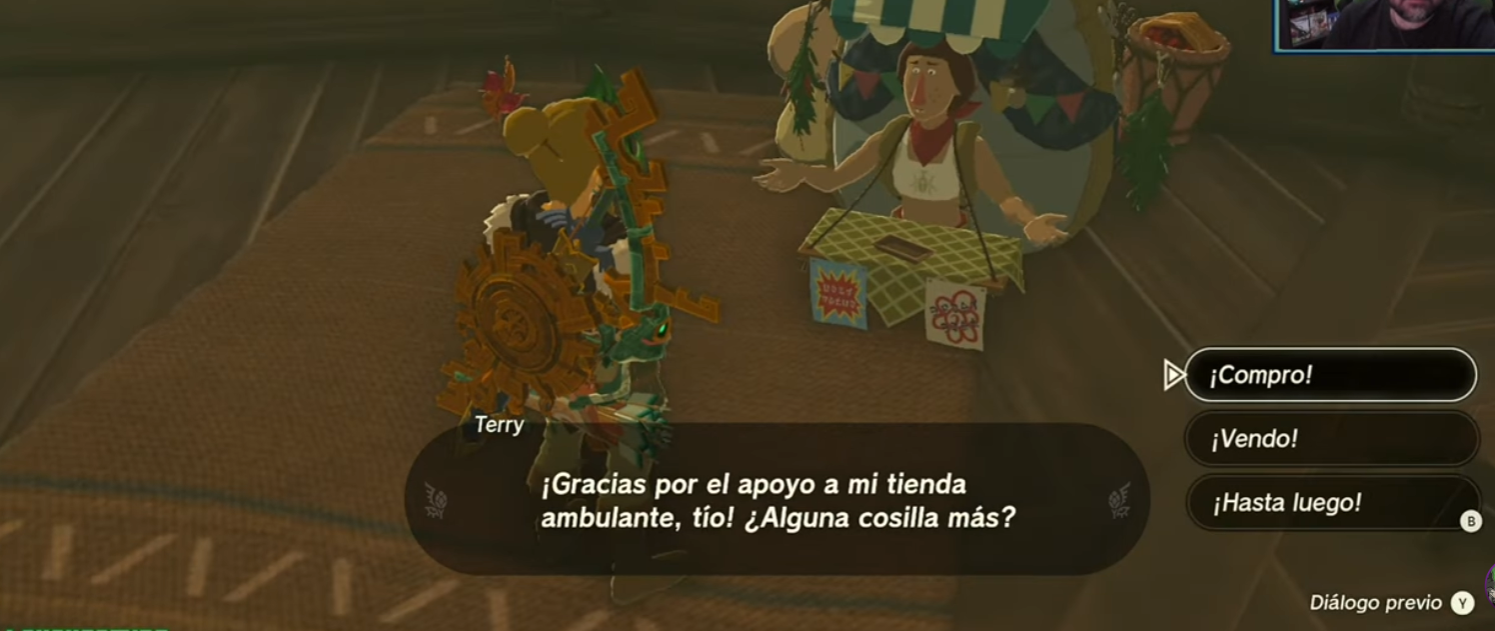
The article mainly attributes language learning as being effective for video games because of the social aspects of language learning and immersive environments (75). In videogames, you may hear/read lots of dialogue and in turn make decisions about what to say to people and NPCs, forcing you to make connections about what words and phrases mean. When I played the Legend of Zelda Breath of the Wild and Tears of the Kingdom in Spanish, I learned vocabulary by repeatedly finding items and then associating ideas with those items based on their uses or appearance, not what their meaning was in English. I learned that certain phrases might be used if I wanted to buy or sell something. I remember even having to look up certain shrine walk-throughs in Spanish because I didn’t know what they were called in English.
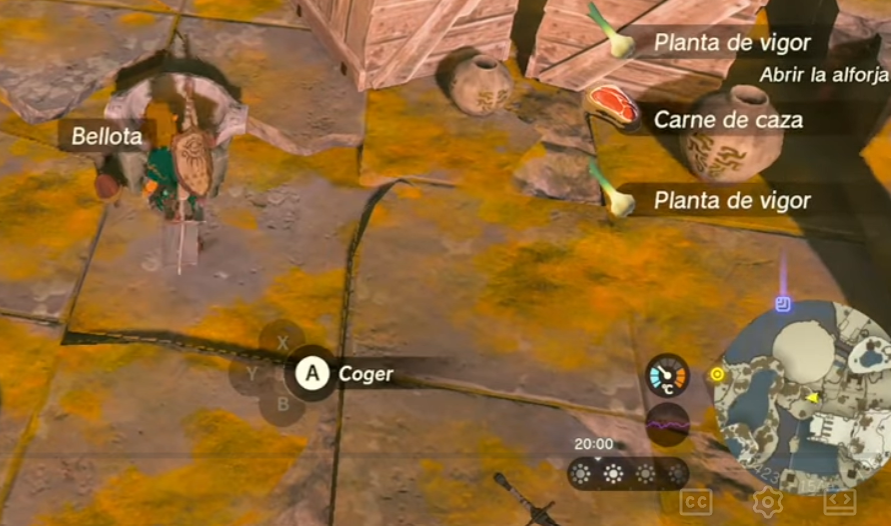
Additionally, videogames can provide a huge variety of situations for roleplaying with a language that might feel unnatural in a classroom. Asking a friend for directions to a grocery store in class can be awkward, and they might not respond back correctly, but asking another player or NPC in a videogame can contextually make more sense and result in a meaningful, fluent response.
For these reasons, video games, and not just the educational ones, are particularly useful for language learning. I’m curious about the prospect of making more games (educational and not) available to students. Popular audiobooks and eBooks are often available through libraries, so why not let people check out video games? I’d be happy to hear your thoughts and if you’ve had any experiences with language learning through videogames!


I really enjoyed your explanation; I also believe that videogames can be very useful for language acquisition. Even among other mediums, like tv shows or podcasts, like I’ve also explored, games let you control the pace of dialogue and some amount of agency over what you say. The aspect that I think is most helpful, though, is the ability to fail. Whenever speaking in my high school spanish class, I’d always be embarrassed if I said something wrong, but a game character (usually) will never judge you. Looking at games without significant RPG elements and ‘choices’, many options in games can be tried multiple times. Just looking at the cover image for this post, a player could figure out what compro, vendo, and hasta luego mean from selecting those options. If they wanted to buy something, click Vendo, and then only see a list of their own inventory, they can learn the meaning of vendar naturally, without any negative consequences to the gaming experience.
(While playing a visual novel in a language you only have a tenuous grasp of may not be as helpful for learning the language, it could also be fun in its own right.)
I really appreciated your perspective here, especially the contrast you draw between how games handle math versus how they handle languages. You’re totally right that a lot of “educational games” end up feeling like glorified flashcards which are great for drilling but not great for deeper understanding (and at that point you kind of may as well just do a quizlet in my opinion). I actually have very similar experiences with this recently, as I’ve begun to play pretty much every video game (whether it be pokemon, league, or whatever) all in french. Personally I used to take french classes in school, but as I’ve moved away from that I have very less opportunities for practicing.
Other forms of media, at least in my opinion, dont really hold a candle to helping with languages in this regard as you’re not necessarily forced to then read into every word that is said, whereas the feel of video games is a lot more deliberate for gaining these experiences!
Your description of how video games can provide environments that allow people to learn languages quicker than they otherwise would is really compelling, and even though I knew about video games to teach language, I had never even considered roleplaying as a way to add to that category. While it may be stigmatized, it is undeniable that roleplaying gets people, not just children, to interact with others in a space they create, and because of that, it really does have an excellent environment to foster learning languages. Interaction and immersion is the quickest way to learn a language, and while I have never personally used a video game to learn a language, I will say that it would have been significantly harder for me to learn Hebrew if I did not speak only in it every Thursday night, which is an environment that if I did not have, I suppose I could have found through video games instead.