When I was three years old, I saw the Sam Raimi Spider-Man films on DVD, and I was afflicted with the curse that is being a Marvel fan. It spread from Spider-Man to X-Men and eventually to the one Superhero that was from the same place as me, Gambit.
All this is to say that while I don’t normally play live service games often, Gambit’s recent addition to Marvel Rivals has pulled me back into the game–and the trend of making games into labor. It was doubly interesting that this happened the weekend before our discussion of labor in gaming. In class, much of the discussion was on the gamification of labor, but Live Service games have done the opposite, making daily gameplay feel less like an escape and more like a chore.
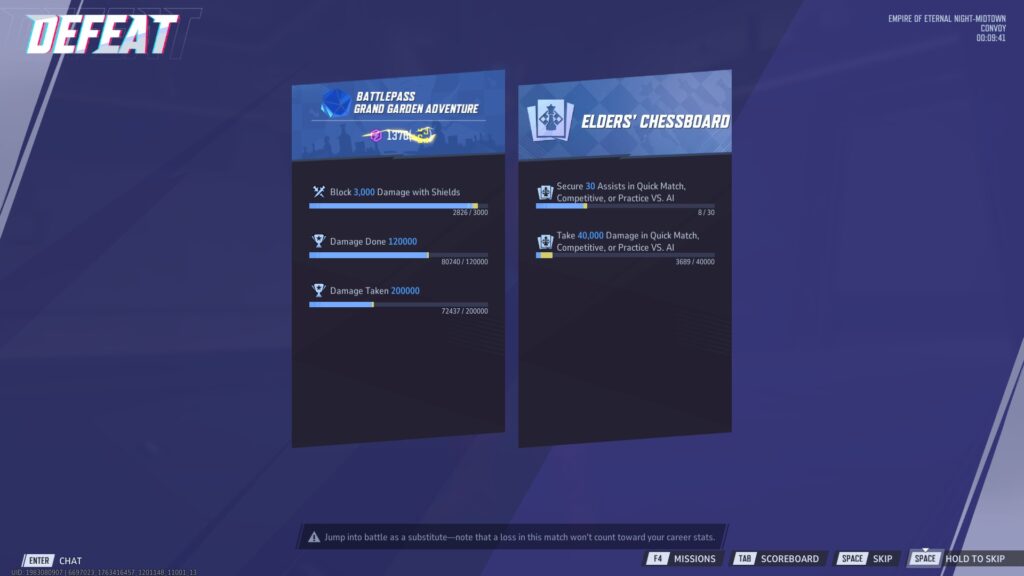
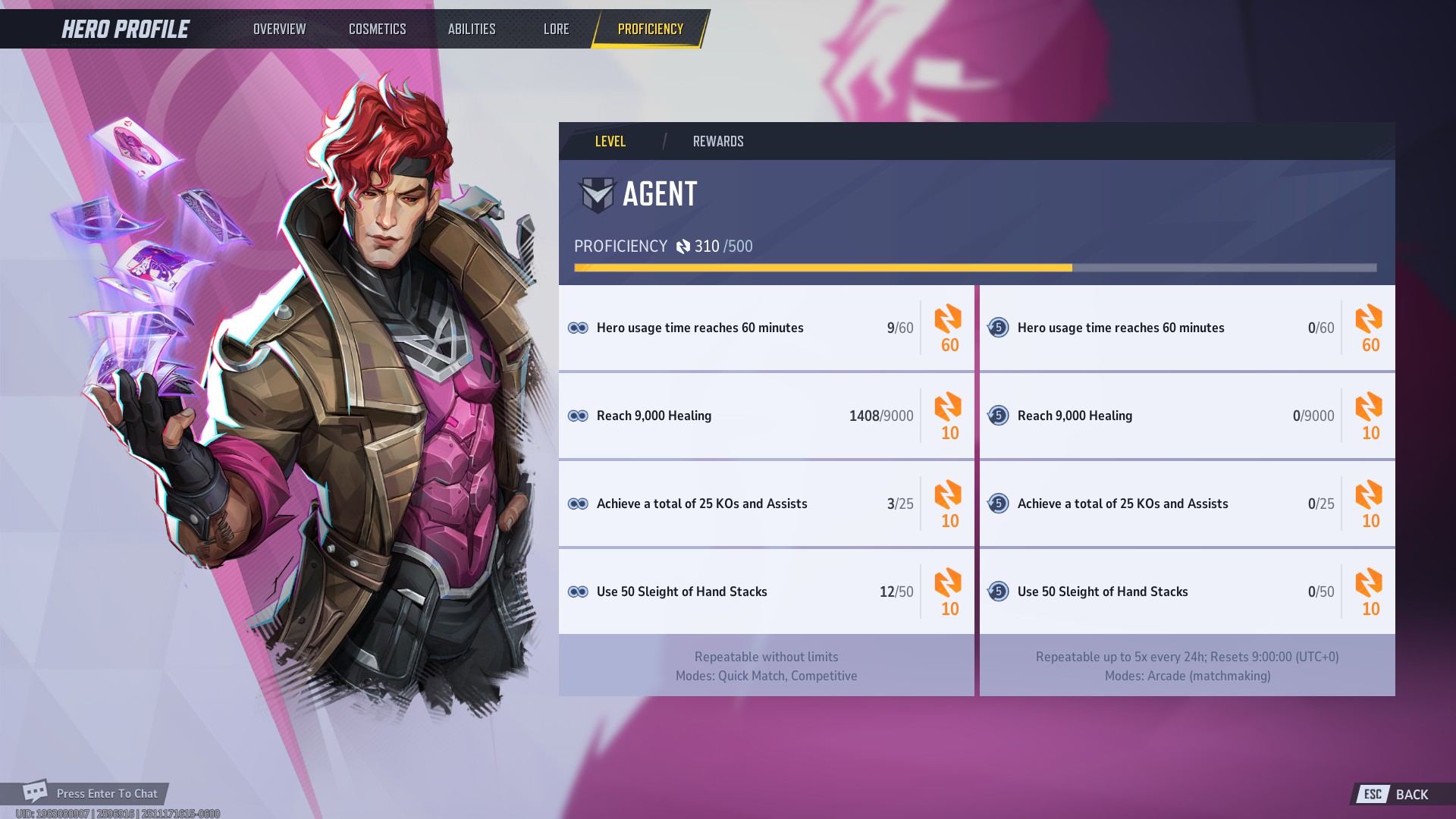
This laborification of games is truly an inverse of the gamification of labor. Where gamification gives intangible and ultimately valueless rewards for real labor, the rewards for labor in live service games have actual monetary equivalents. When I completed a quest, I might get a spray or an emote, but I am also likely to get some of the game’s currencies, “units” or “chronovium”. Units are used in the game’s store, and chronovium is used to make purchases in the Battle Pass.
The game’s paid currency, lattice, can be exchanged for either. This provides a real world monetary value to both currencies. These quests can also be exchanged for rewards that are impossible to be purchased, but they have equivalent values to other things in the game.
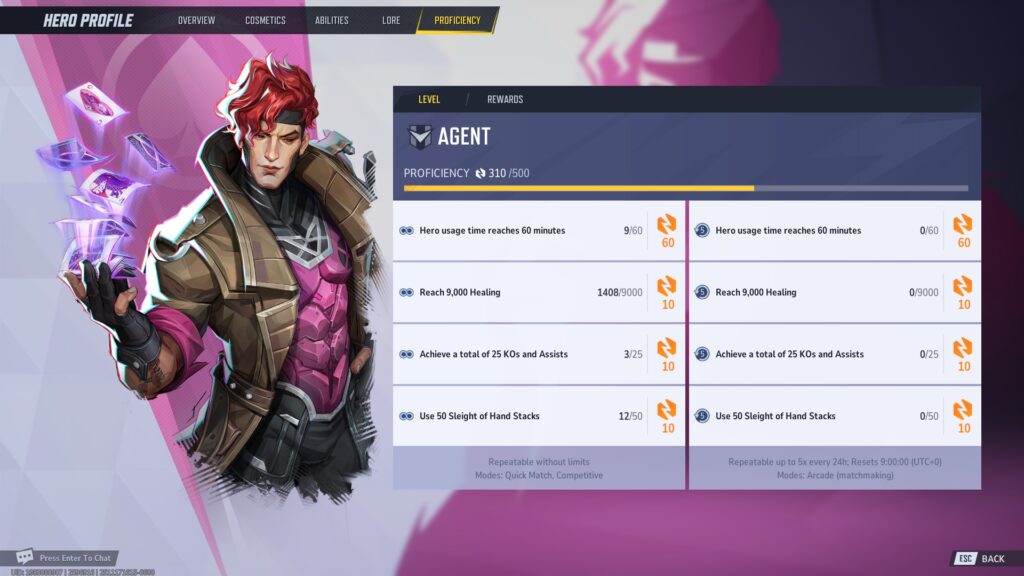
When a player’s proficiency with a hero reaches “Knight” level, they receive a spray of that hero that cannot be purchased in another way. But it carries the same imagined worth as others, which can be purchased for actual money.
The reason I focused on these quests at all was to avoid paying money for a skin, seeing a few hours of gameplay worth saving around five dollars. There was essentially an hourly wage to my gameplay–less than minimum wage, but still something.
I know I am not the first person to point this out, and Marvel Rivals is not the first game to do so, but it is one of the few times I have given into this scheme. (The most recent one I can remember is Fortnite’s most recent Marvel season.) All I seek to do is point out the trend once more with a small case study.


The phenomenon you point out is a fascinating one, which I have seen many times despite never engaging with those types of games myself. What is so interesting is that this “laborification” of games is entirely different from labor in games. There are ways that “laborification” and performing labor in games feel similar. For instance, there is a shared fatigue that can occur, such as grinding for resources in Minecraft compared to the grind for a collectable item in a live service game. However, there is a fundamental difference, which I would posit as the corruption of play. While games where you perform labor turn that labor into play (separately from how labor is turned into play via gamification), the “laborification” takes a non-laborious play activity and corrupts its purpose. The end goal of the play activity is no longer play itself, but the tangible reward at the end. In a way, this no longer counts as play, if the only reason you are engaging with this play activity is the labor that can be gained from it. And the fundamental difference to performing labor in play is that the end goal of that activity is still the play itself.
The quanitification of in-game work for real world money, in particular the ability to spend real world money instead of playing the game, is such a fascinating aspect of live serivces games, like you’ve detailed here. I’ve see this with the gachas I play; in particular, at the worst exchange rate, one USD in ‘Zenless Zone Zero’ is equivalent to a set of dailies. I can’t speak for ‘Marvel Rivals,’ as I haven’t gotten to try it yet, but there is also a hard limit of the amount of free currency in ‘ZZZ.’ The game obviously wants to push players to spend money, and with the randomness of gacha mechanics, there’s gurantee of getting everything you might want. From I understand, this work is also for skins in ‘Marvel Rivals,’ which are not something that is going to really change the gameplay. I’m curious on how that affects the player’s perception of this laborization of games, knowing they are working for a tangible change to gameplay versus a cosmetic item. I could see both being more appealing, with one offering a more substantial reward while the other is more of a bonus the player can opt not to try and get without significant consequence.
As a side note, I am also a Marvel fan (though it was seeing ‘The Avengers’ that cemented my lifelong love for the characters), but I still haven’t tried out ‘Marvel Rivals.’ By the time I got a computer that could run the game, I sadly didn’t have the time to try it.