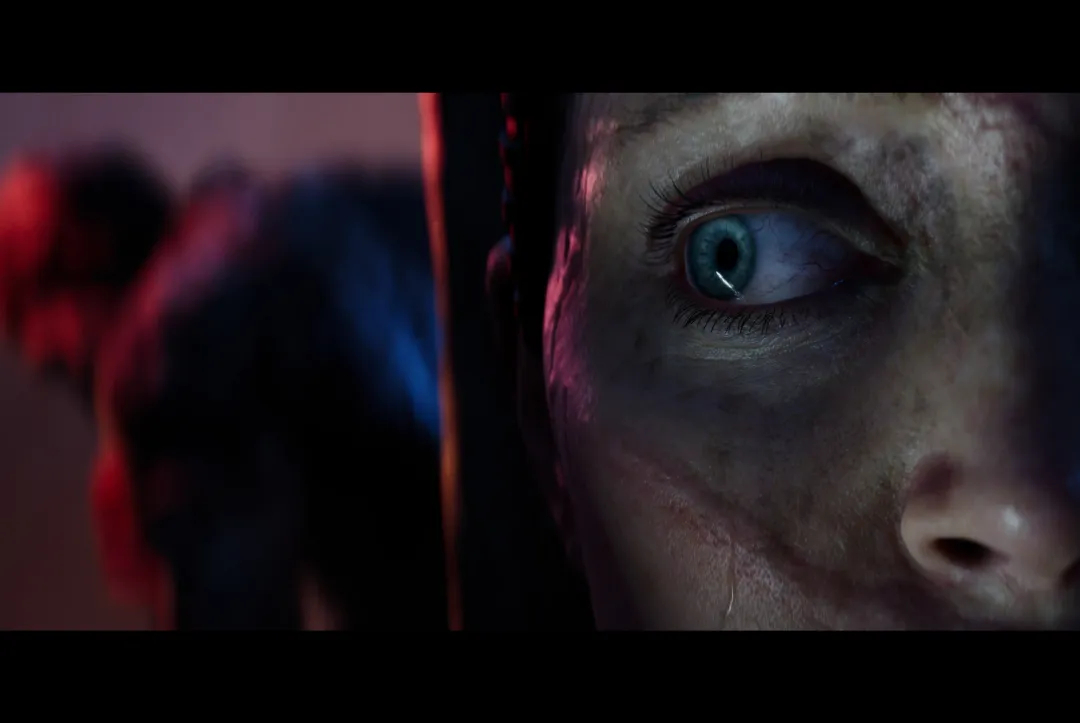
Hellblade: Senua’s Sacrifice is a difficult game.
Yes, it’s difficult in the way that the unforgiving fine-motor demands of Dark Souls is difficult, and the way that solving a Saturday NYT crossword is difficult. But it’s also difficult in the way that straining to hear a presenter who’s too far away from the mic is difficult, and the way that taking exams while the seminar class next door is piercing through the walls is difficult.
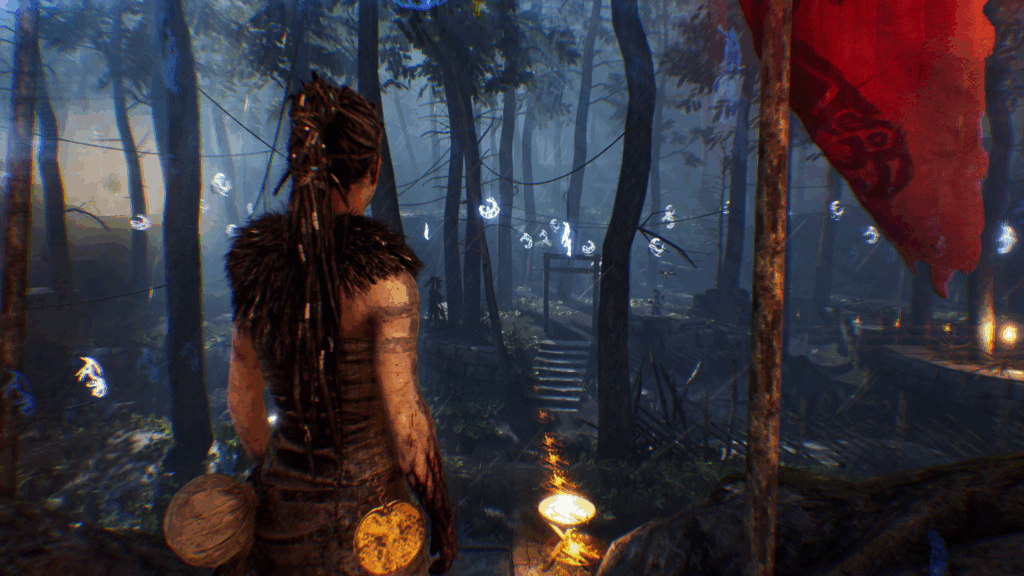
Senua is psychotic—not a murderer, not really, not a madwoman cackling through an asylum. Psychotic, deluded, as in hearing things that don’t exist, seeing faces long dead or fictive. It’s medieval Ireland; there are no medications to clear her gaze and no therapists to walk her through grief. We, through the tether of our controllers, can’t force Senua into our reality; we consent by playing to enter Senua’s reality, where, for once, the environment consents to her approach to the world and shifts into puzzles based on visual hallucinations, an unstopping tide of inner voices whose paranoia is justified, adaptive, when warning of the Nords who lurk in wait with scythes.
And in the same way it’s difficult for Senua and other people who experience psychosis to walk in our world, it is so sensorily difficult to walk in hers. Like when OCD looks at a big box store and the mom-and-pop store next door and freezes your feet to the concrete as a mental debate over cost, morality, energy, breath, panic, grows rancid and terrifying in the brain. Like when you know, with absolute certainty, that your neighbor is plotting to shoot you through the vent grate you share and no one will believe you, and you call the police and they mutter “schizo” into the radio, and everyone tells you to go see a therapist while you’re drowning in a frozen lake, pounding on the ice from below, and the sane people above don’t even know it’s winter.
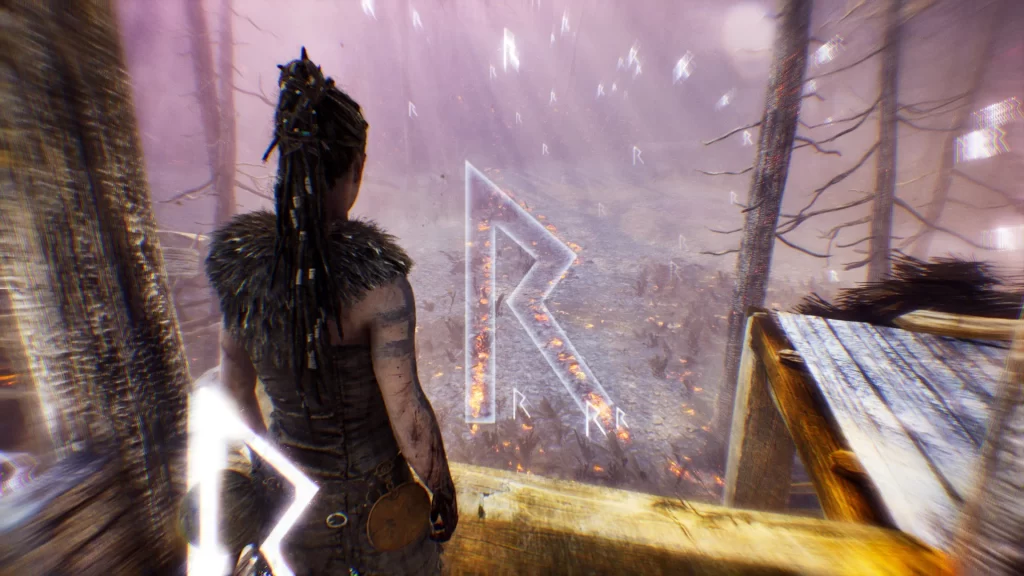
And you can adapt to this difficulty, graciously with more ease than a person with schizophrenia ever could adapt to a world that doesn’t obey their senses. The ludicity of this world is a fantasy of the mentally pained having all of their mental experiences validated. No, Senua isn’t hallucinating—the glyphs that form through the shadows of trees and the fires that rip through past and present alike are real, really really real, and she can touch them so we can touch them. We learn to see the world how she sees it, and reciprocally, the world accommodates our gradual shifts of accepting layered voices, fighting with demons of trauma.
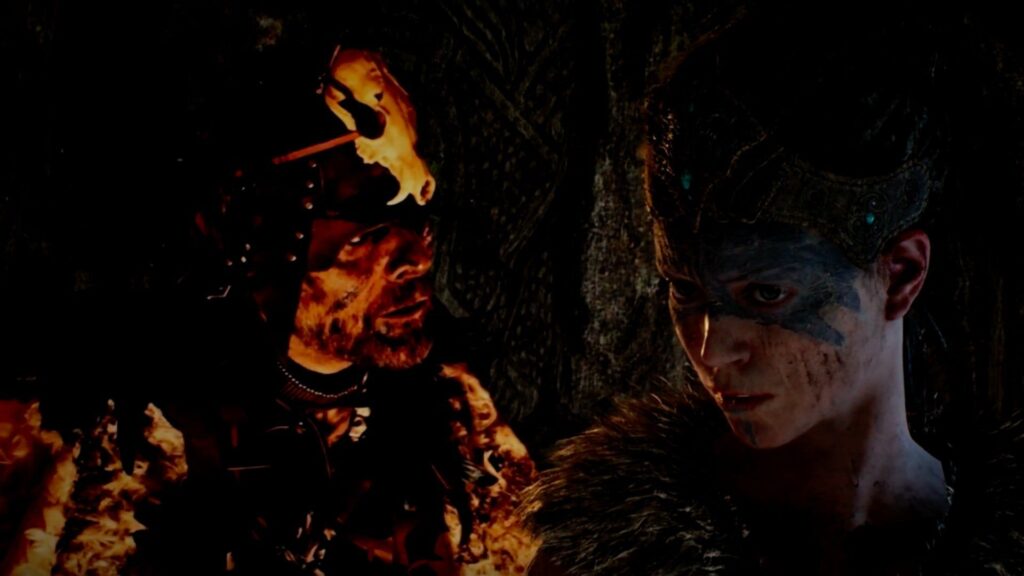
The visual hallucinations Senua has of a dead mentor are rendered as FMV—full-motion videos, videos of a real person unanimated and unpuppeteered—and are therefore more real than anything else in the world, than anything in a 3D-rendered video game should be. It’s difficult to step into this foreign world, but because the game allows Senua’s psychosis to turn from disability to superpower, we can overcome that difficulty. We can own it.
Not just that. Hellblade is also difficult in the way that reading “I Have No Mouth And I Must Scream” is difficult, or having a friend relate their traumatic experience while weeping in the stacks is difficult. Senua’s screams are not short. Her expressions peel into prolonged, wide-eyed agony. She is not the hero of a video game—she is a human, and her hand shakes as she cauterizes her wound and her trauma doesn’t shield us from the sight, the real, bone-cold sight, of her lover strung up and flayed.
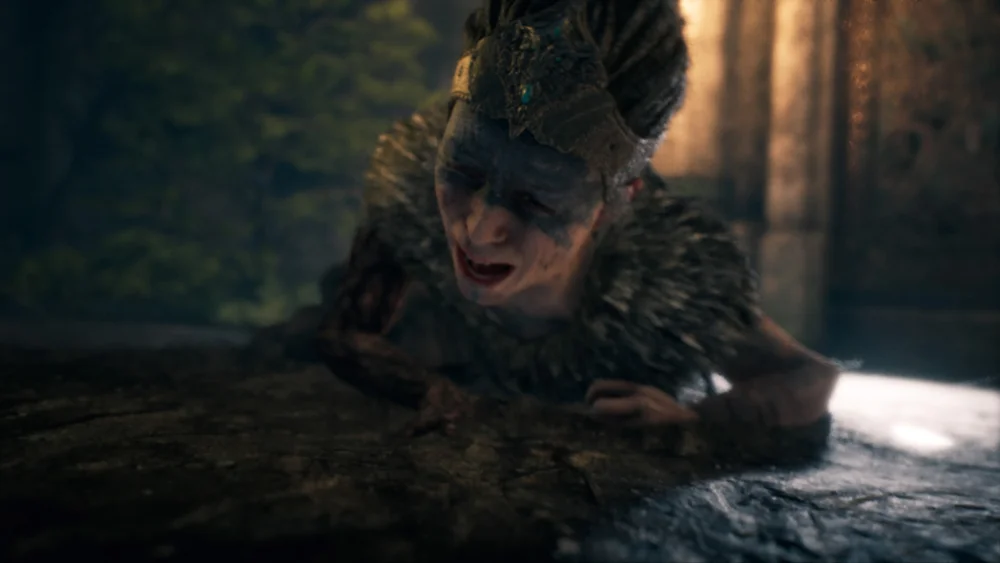
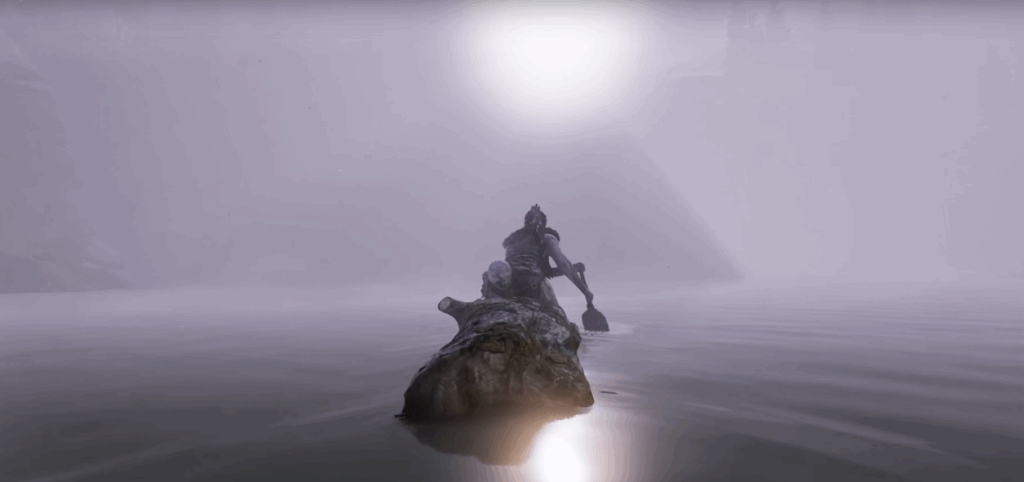
Affective difficulty isn’t a slow challenge of adaptation; it’s a heartache that challenges you every moment to keep playing, because Senua can’t quit, she’s promised not to quit, and the only way for her to quit is to end the story and from the moment she first steps into the prologue she sends that possibility away by kicking her canoe back out to sea. It’s difficult to watch. It’s difficult to see a person in pain and not be able to reach out to hug her, to plead with her to stop. It’s difficult, even though she’s not real, even though she’s pixels, even though the historical raids the game superimposes on its story happened centuries and centuries ago in the same mythic universes that Thor movies render with such humor. Real? No, not real, like how hallucinations and delusions aren’t real, and we know it’s not…but not when we’re in Senua’s world. Not when hallucinations can slice into her arm and we grimace at her shriek.
It’s hard to walk with her. We walk with her anyway, because the only way to soothe that affective pain, not hide it, not turn off the computer and walk away with her ghost trapped in the subconscious, is to mend the void that created the difficulty in the first place: Senua is alone. Alone in her psychosis, alone in her quest. With us beside her, validating that yes, her pain is so, so real, at least she’s not alone.


This post is so wonderfully done — personally I do believe that affective difficulty is the hardest form of difficulty to engage with. As you mention, Hellblade has the player consent into Senua’s reality and world. It is not just that the player plays as her, but instead becomes her. The player not only hear the voices she hears, but they hear them in the same manner that she does. The tension of being in this state becomes clear — a player relies on the voices that tell them an enemy is behind them. But just as there are voices guiding the player, there are those trying to hinder them. How can Senua tell those voices apart from the voices that call for her own harm? What voice is right to listen to? Who determines which voice is right? A similar scenario manifests with the visuals in the game. Senua’s journey requires her to go from one area to another — a task that does not have any obstacles. However, it is the need fight imagined enemies or deal with changing environments that create barriers to Senua’s journey. The player’s world perception shifts just like hers — they cannot simply say an enemy isn’t truly there and run past. The player cannot have Senua ignore her own reality, they must engage with it. In order to go on Senua’s journey, the player must engage with the rules of Senua’s world.