In class, we briefly discussed the relationship between power and control. A part of this discussion that I found interesting was whether or not power is a necessary component in creating a feeling of control. While personally I don’t think power is necessary to having control, I believe that it is one of the most common ways games can create a feeling of control in the player. Additionally, this discussion led me to think about how games manipulate their mechanics to alter a player’s perception of power and control and create different feelings in the player.
The example I’d like to explain this idea with is Metroid Dread. Released in 2021, the game is the most recent in the Metroid series and one of my favorites. In this instance, I find Dread particularly interesting because while the Metroid series as a whole is well known for its use of atmosphere to create a feeling of fear and uncertainty in the player, Dread uses its gameplay and mechanics to give the player a sense of, well, dread.
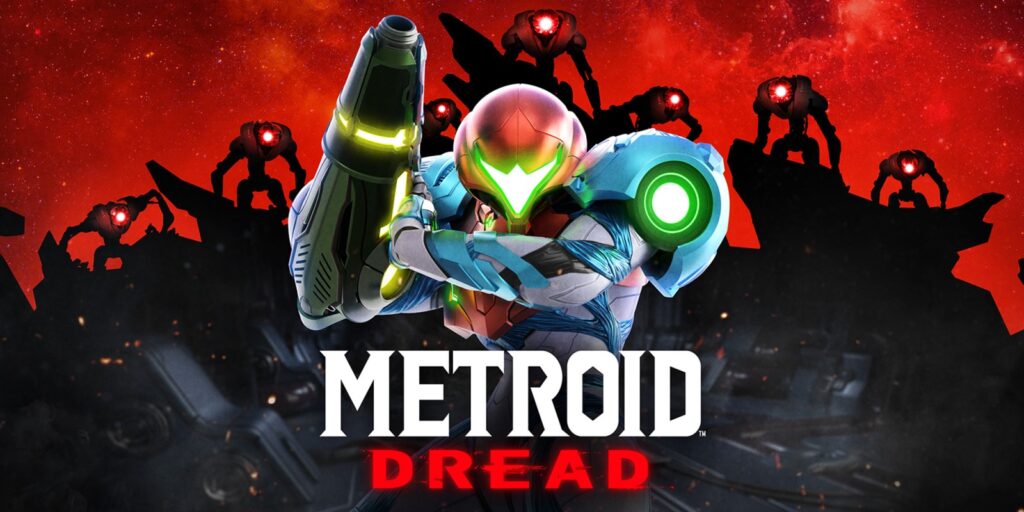
But before explaining how Dread creates fear, we need to understand how it creates a sense of control through empowering the player. Simply put, there are two main ways that power in Dread creates a feeling of control in the player. The first is that Samus herself is a powerful character. Depending on how skilled the player is, Samus is able to defeat nearly any enemy she comes across as long as the player is able to continuously dodge and shoot. Additionally, abilities like the melee counter allow Samus to physically smack her enemies around and send them flying. Because the player is so powerful that they are able to defeat anything they come across with the proper application of skill, the players feels as though they are in the proverbial drivers seat and in control of the situation they are in.
The second way involves one of the most iconic gameplay mechanics of the Metroid series: item acquisition. Over the course of the game, the players collects items such as missiles, bombs, suits that allow the player to move around underwater or withstand lava, and the ability to jump infinitely in the air. While some of these items increase Samus’ combat prowess, allowing her to more effectively defeat enemies and feel more powerful as described in point one, most items are dedicated to increasing Samus’ exploration abilities, allowing her to go to previously inaccessible places. In this way, because the player has more powers at their disposal, they feel as though they have an increasing mastery over their environment and are more in control of the space they occupy. With time, they can go anywhere they want and become strong enough that no enemy can truly stop them. Power has given the player a very satisfying feeling of control.
The EMMI inverts both of these relationships.
To briefly explained what an EMMI is for those uninformed, the EMMI (Extraplanetary Multiform Mobile Identifier) is a research robot originally intended to collect the DNA samples of local wildlife. They were sent to planet ZDR (Dread’s setting) before Samus in order to figure out what mystery was going on inside the planet. However, they were reprogrammed by the game’s villain, and are now hellbent on capturing Samus and extracting a bit more than just her DNA. EMMI are limited to only existing in certain areas of the game, and each area only has one EMMI, for a total of seven.
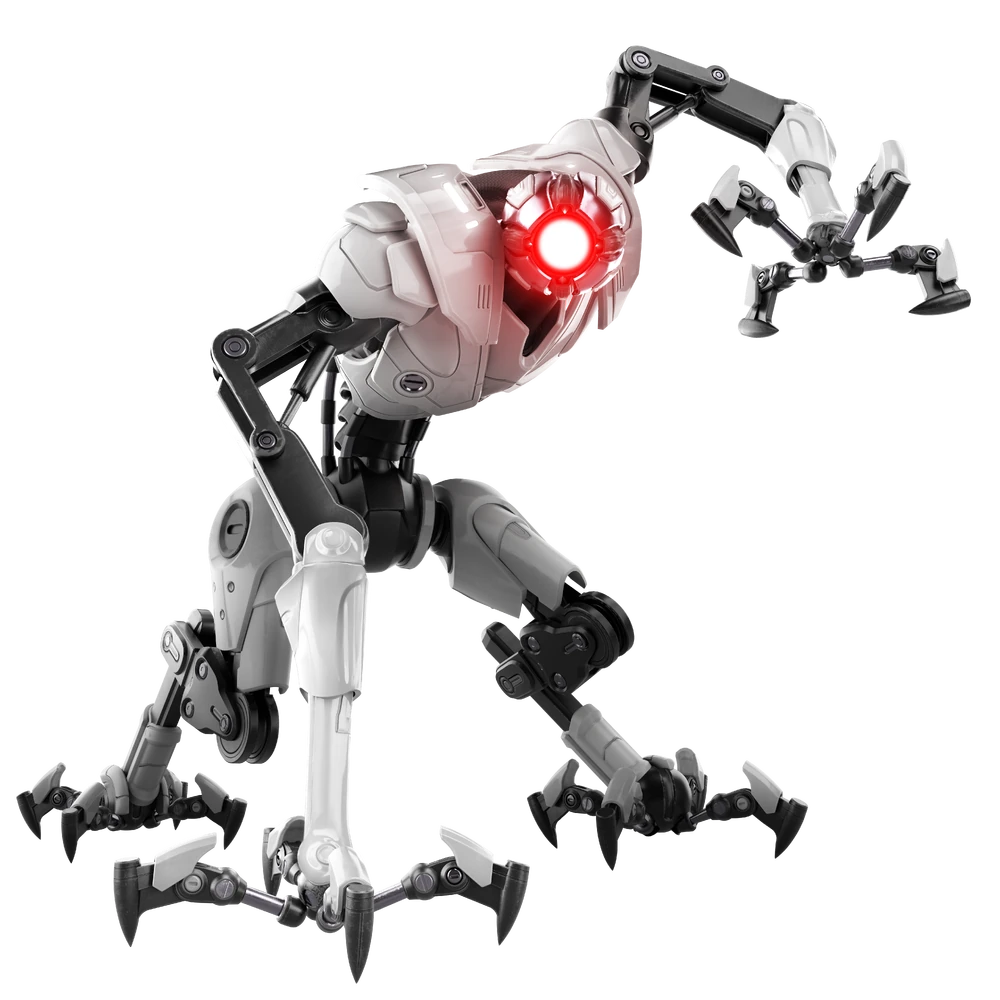
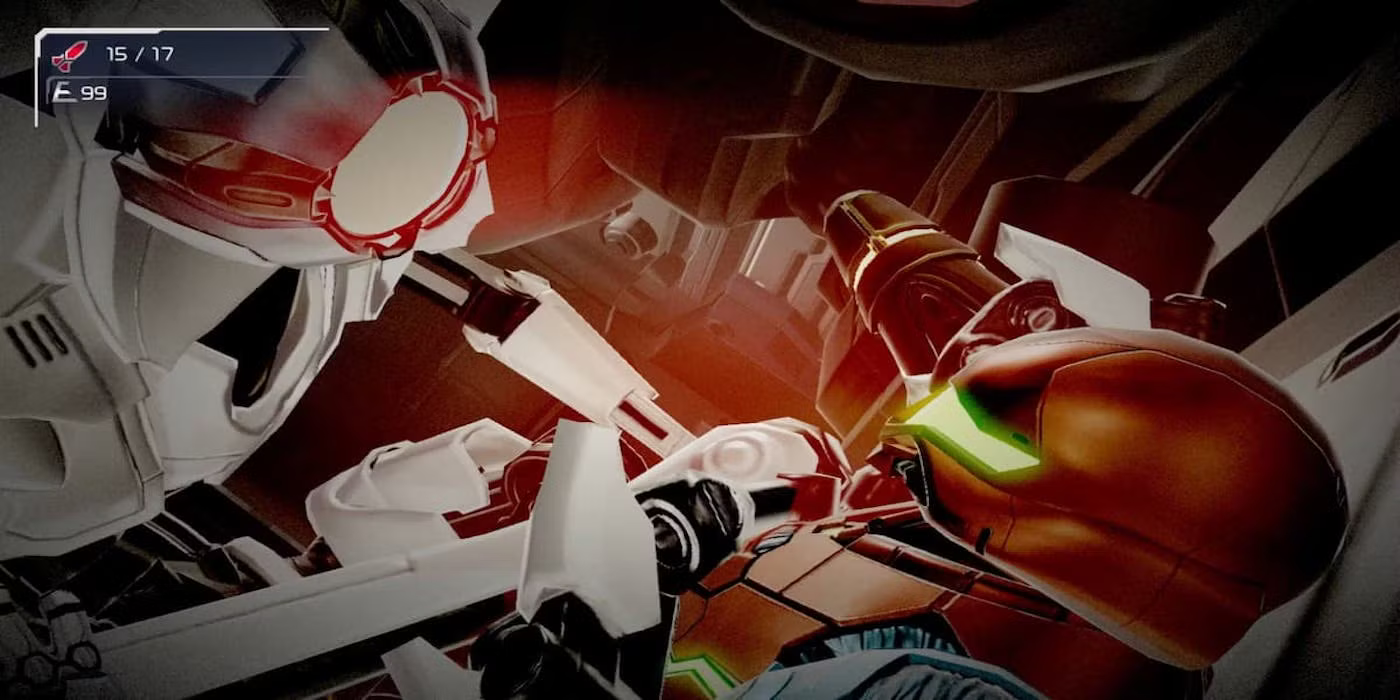
To return to relationships of power, the EMMI are terrifying because they use their own power to take control away from the player, and thus create a sense of fear. Regarding the first relationship, the EMMI are effectively unkillable by Samus. None of Samus’ conventional weapons will leave so much as a scratch on an EMMI. The player is eventually able to acquire a method to defeat the EMMIs, but those are rare weapons the player can only use once. As such, the player’s only option a vast majority of the time is to avoid conflict, or if they find you, escape as quickly as possible. If an EMMI catches the player, then it pins Samus down and the player can only hope to parry at the last second before their drill pierces Samus’ helmet. In a game where nearly any enemy can be defeated with the proper application of skill, the EMMI serves as a brick wall to the player, confronting them with a situation where they are truly powerless, and wresting any feeling of control they player may have from them, instead often causing fear or panic as the player desperately tries to escape the EMMI.
Related to the EMMI’s undefeatability, the EMMI is limited to only occupy a certain section of the map. Whenever the player enters this environment, which is labeled with special doors, they can constantly hear the EMMI search for Samus. When in the EMMI’s environment, the player is no longer the hunter, but rather the hunted. Instead of charging across the environment with bravado, they must move cautiously and meticulously as they avoid the EMMI. Because if the EMMI so much as hears Samus’ footsteps, it will begin pursuing the player with inhuman precision. The EMMI is faster than you, it is able to move more efficiently than you, and it even knows the environment better than you. It prevents the player from being the master of their own environment, and instead of using your arsenal of powers to explore, you must use them to escape. In these two ways, the EMMI is incredibly efficient at using its superior power to take the feeling of environmental and physical control away from the player and instill a sense of fear. Here, we see how the subtle manipulation of power and control in games can create unique feelings and experiences for the player.
However, I would be remiss if I did not mention that most players eventually get over their fear of the EMMI. While you can still never defeat the EMMI except for special circumstances, eventually the player is able to learn how the EMMI operates. You can figure out the patterns of the movements, new tricks to avoid detection, and even get good enough at parrying that you can resist the EMMI’s grasp. Even in situations where you are meant to feel powerless, Dread provides the player with small opportunities to regain control of their situation and build a sense of confidence in the player. This is not even to mention the immense feeling of power and satisfaction that comes from finally being able to turn an EMMI into a smoking scrap heap.
In this way, Metroid Dread also manages to provide us with examples of how nuanced the ideas of power and control are. It displays how these concepts can be delicately played with in games to invoke incredibly different experiences and emotions in the player, whether they be fear, confidence, or satisfaction. As such, I think Metroid Dread is a great example of how power and control are both interlinked and can be played with in the media of video games.


I really like it when, in games, the player’s form of agency via their gained/inherent power-ups is used against them or is entirely ineffective. An instance of this is in Risk of Rain 2, where when you fight a certain boss that has a phase where he literally takes all the items you have gained during your run and uses them against you. You can eventually get them all back one by one by dealing damage to him, but I can manage the feeling of panic that many people had when they first fought against him. So seeing this mechanic be represented in Metroid is really cool, as it is the namesake of the entire genre of Metroidvanias, where this idea of the player unlocking/earning power-ups throughout a play-through was first popularized.