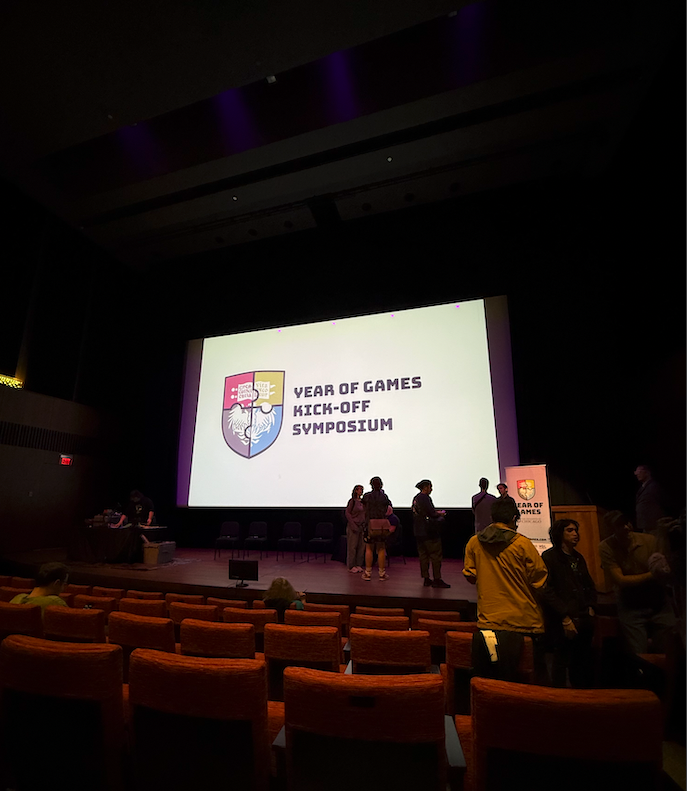
At The Year of Games Kick-Off Symposium at the University of Chicago, the “Sound, Music, Play” panel explored how sound shapes emotion and play. Sound is usually the last thing we notice in games, which is exactly why it matters. What happens when we start paying attention?
Midway through the Sound, Music, Play panel at the Year of Games Symposium, Joanna Fang, an Emmy-winning Foley artist at Sony, asked the entire audience to shake hands with their neighbors. The room rustled for a second, then went still. “That was the quietest thing I’ve ever heard,” she said, before demonstrating how that same handshake transforms on screen. A sharp clap, a faint rub, a slow release.
It was a moment that captured the entire session’s tension: the gap between authentic silence and constructed silence.
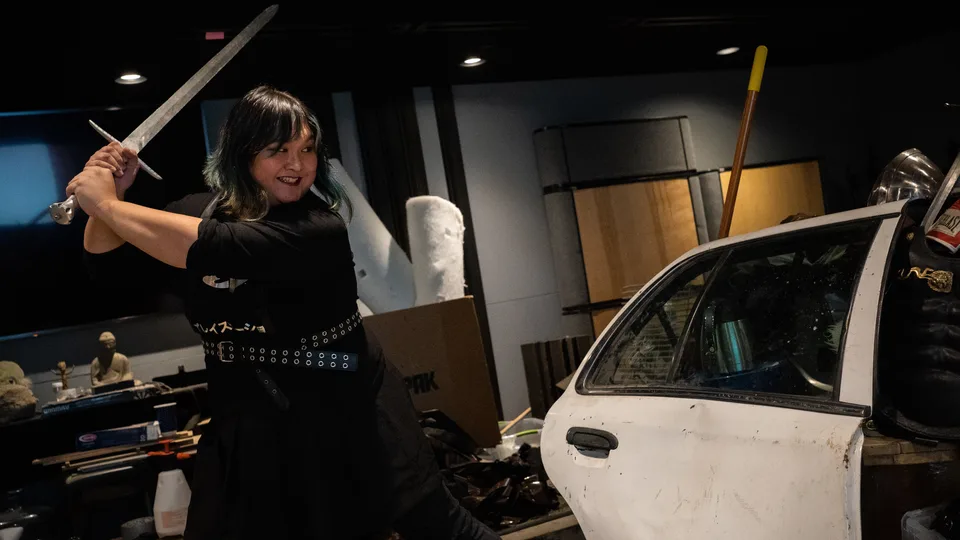
Foley in Motion
Joanna Fang at work in the Foley studio, performing everyday gestures to create emotional sound.
Fang described Foley as “performing emotion through footsteps,” and suddenly sound in games felt less like technical craft and more like choreography. Each sound effect became a small act of empathy. A click of heels. A sleeve brushing fabric. The soft exhale after impact. Watching her snap manicotti pasta to mimic a bone fracture was strangely intimate, almost like an act of care disguised as violence. She also talked about how reality often disappoints. Real footsteps in Grand Central Terminal? You can’t hear them. Real handshakes? Silent. But players expect sound because decades of Foley have trained us to hear the world as louder, sharper, more present than it actually is. We’ve been taught to listen wrong, or maybe, more generously.
Chris Granner, the legendary pinball composer, shifted the discussion from feeling to intent. “There’s no bad soundtrack for a visual experience,” he said. “Only mismatched intent.” It sounded almost defiant, but the point was profound: sound design failures aren’t about quality but about dissonance between what the player feels and what the world means to say.

Chris Granner in his home studio.
FM Synthesis and the Pinball Era
Granner’s 1980s FM synthesis recalls a time when creative limitation became innovation.
Granner’s demo of early FM synthesis felt like time travel. The metallic arpeggios and buzzing textures were raw, imperfect, alive. Unlike today’s sample libraries that strive for realism, his work embraced artificiality, letting the machines sound unapologetically like themselves. It was a reminder that technological constraint can produce its own kind of honesty. There was also something gleefully defiant about his story of the banjo that got cut. He fought for it, lost, came back from vacation to find it gone. “It didn’t matter if I was right,” he said. Sometimes the best ideas die in committee.
Kentucky Route Zero’s Aural Minimalism
Ben Babbitt’s restrained soundscape turns silence into narrative space.
Composer Ben Babbitt (of Kentucky Route Zero) admitted to going through a “Michael Bay phase” of sound: maximalist, overfilled, constantly loud. Over time, he learned that silence can do more emotional work than noise. “It’s about knowing when not to play,” he said. His evolution reflected a path familiar to many indie creators, moving from spectacle to subtlety, from volume to vulnerability.
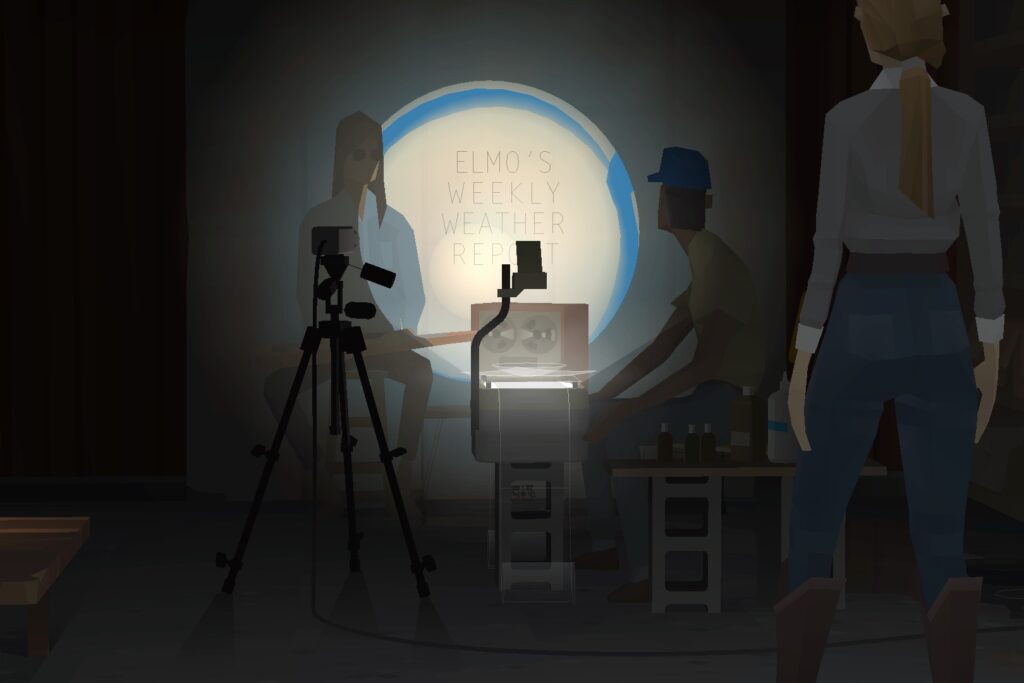
Scene from Kentucky Route Zero (Cardboard Computer, 2013). Sound design by Ben Babbitt.
Global Soundscapes and Cultural Layers
Takashi Shallow reflects on house music, cultural translation, and appropriation in game sound.
Takashi Shallow traced his personal entry point into sound to Cruis’n USA on the Nintendo 64, where a Black queer art form, Chicago house music, was reinterpreted by Japanese developers, then played by a suburban kid twenty miles from the Warehouse where the genre was born. “It was layers of appropriation,” he said. The anecdote wasn’t judgmental so much as self-aware. Sound circulates globally, but meaning doesn’t always travel intact.
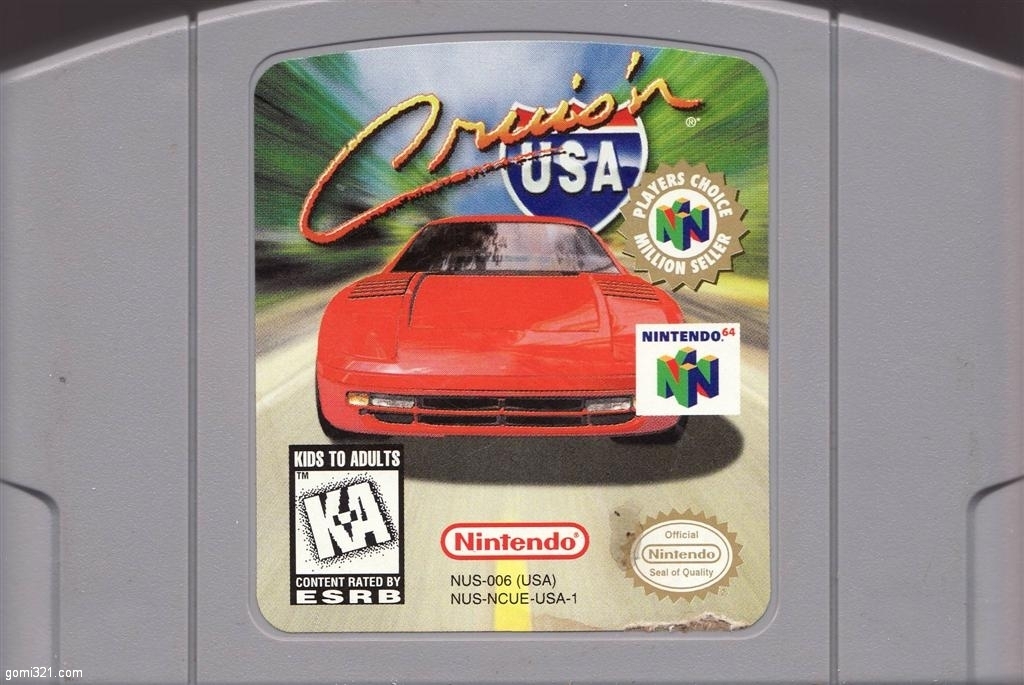
Cruis’n USA cartridge for the Nintendo 64 (1997). Developed by Williams Entertainment, published by Nintendo.
Later, Shallow warned against the “default exoticism” of using Middle Eastern or Asian motifs to signal otherworldliness in games, citing Edward Said’s Orientalism. He argued that every sound choice, even synthetic ones, carries cultural weight. Silence, too, can be complicit when it erases who gets to be heard. What struck me wasn’t moral outrage but something quieter: curiosity about how sounds become clichés. When did the oud start meaning “desert level”? When did taiko drums become shorthand for “ancient Japan”? He wasn’t asking developers to stop using these sounds, just to be clear about what they’re citing and what they’re leaving out.
The Sound of Silence
The panel began and ended in silence—not absence, but attention.
By the end, the conversation had shifted from “how sound immerses us” to “how sound governs us.” Fang spoke of collaborating with Foley engineers as an act of trust. “He can hear outside of my body,” Fang said, describing how her colleague corrects, reinterprets, and amplifies her performance. That kind of embodied listening felt like the truest definition of play.
As I left the auditorium, I kept thinking about that handshake. It wasn’t just a demonstration of silence but was a lesson in collective listening. Everyone in the room participated in sound by withholding it. Maybe that’s what great sound design teaches us. Noise isn’t the opposite of silence, but its echo. And in a medium obsessed with immersion and realism, perhaps the most radical act is to leave room for quiet.
Works Cited
“A Conversation with PlayStation Studios Senior Foley Artist Joanna Fang.” Sony Interactive Entertainment Newsroom, 24 May 2023, https://sonyinteractive.com/en/news/blog/a-conversation-with-playstation-studios-senior-foley-artist-joanna-fang/.
Chesler, Josh. “Kentucky Route Zero’s Ben Babbitt Found an Unexpected Home for His Music in Video Games.” SPIN Magazine, 28 May 2020, https://www.spin.com/2020/05/kentucky-route-zero-ben-babbitt-interview/.
“Chris Granner.” VGMdb: The Music of Visual Arts and Games, 2023, https://vgmdb.net/artist/6393.
“Cruis’n USA (Nintendo 64) Original Soundtrack.” Video Game Music Download Archive (KHInsider), 2023, https://downloads.khinsider.com/game-soundtracks/album/cruis-n-usa-n64.
Cardboard Computer. Kentucky Route Zero. Annapurna Interactive, 2013.
“Sound, Music, Play.” The Year of Games Kick-Off Symposium, University of Chicago, 17 Oct. 2025. Panel featuring Joanna Fang, Chris Granner, Ben Babbitt, and Takashi Shallow.


This was a very interesting blog post about a panel I wish I hadn’t missed. It was very cool how wide the variety of panelists was and how they each contributed a very unique perspective. Personally, I am quite agnostic to sound in videogames, especially background music. Usually the sounds fade out of consciousness while I remain quite aware of visual or haptic stimuli, which I think is a bit of a shame. This, however, gives me an interesting perspective on silence. On some level, I am processing the sound and can be more comfortable with something in the background. On the other hand, I wonder if I would notice if the game chose to be silent. Also, given how important sound effects are for basic game-to-player communication, these moments of true silence are quite rare. I wonder if true silence is always disturbing on some level due to the lack of feedback that one normally enjoys. Lastly, one thing to consider with silence is how some (shitty) headphones have a static buzz when plugged in without active sound playing. I wonder how that affects the experience of silence, when you can’t get to true silence.
I really wanted to go to this panel, but sadly I couldn’t make it. I found what you mentioned about the speaker snapping a piece of pasta to simulate a bone fracture very interesting. It made me think about the real source behind every sound effect, what we think is not exactly what we hear, and game designers want that. What you said about players expecting sounds from handshakes unlike the silence in reality is also fascinating, too. Sounds do play an important part to keep video games stimulating. And about how certain sounds signify certain cultures? I wonder if these instances of misrepresentation started in video games, or in other media like films.