We grieve what we’ve lost, what we had in the past but don’t have now. We grieve loved ones who exist only in memory. We grieve moving away from communities we felt safe in, physically or culturally. We grieve the passage from “is” to “was.”
But recently I’ve been thinking about grief not as a past-tense-oriented feeling, but as a future-oriented one: Grief is the pain of never being able to experience the could-have-beens. I grieve my grandmother’s death because I never got the chance to know her—I learned my mother tongue too late. A friend, encountering their ex a decade later, was struck with the grief of what would have happened if they’d said this instead of that, if they’d gotten to see their ex grow into this person they don’t recognize anymore.
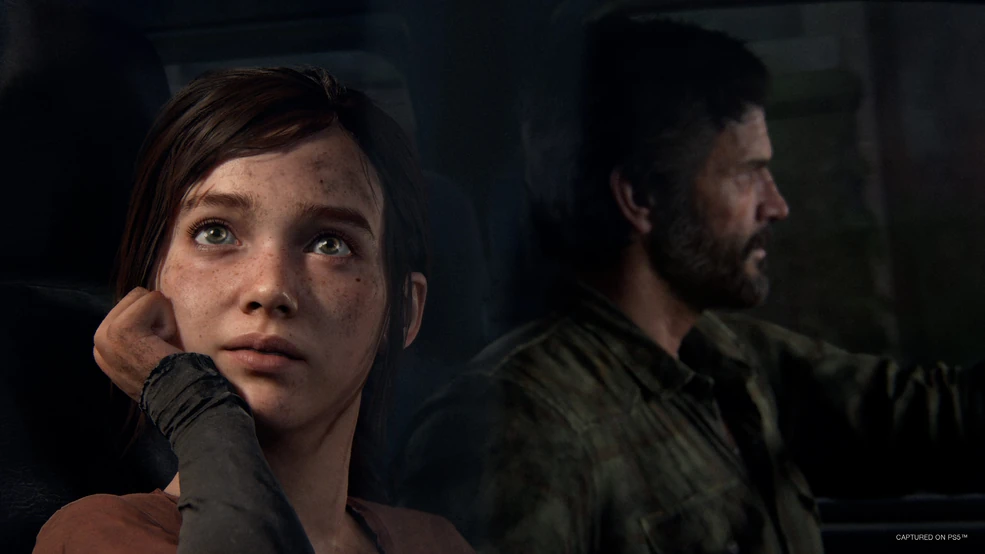
Citizen Sleeper isn’t a Game About Grief the way The Last of Us, Expedition 33, or What Remains of Edith Finch are—those games where Death dares you to a staring contest you will always lose. But I still felt that persistent absence as I traversed the space station in search of credits and a life worthy of spending those credits on. My playthrough was, according to my peers at the time, unusually efficient. I am, by birth, a completionist, and my playtime of Baldur’s Gate 3, Tears of the Kingdom, and many others soar indulgently into the hundreds. I spent exactly 5.4 hours playing Citizen Sleeper. The moment I realized that my resources limited the number of questlines I could pursue, I triaged all of my affective and cognitive effort toward a single subplot: Saving Mina and Lem.
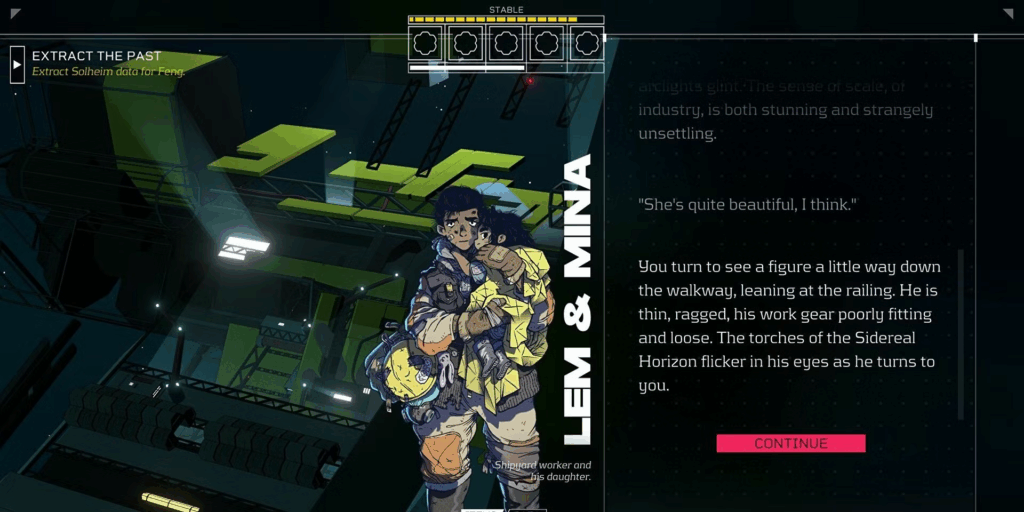
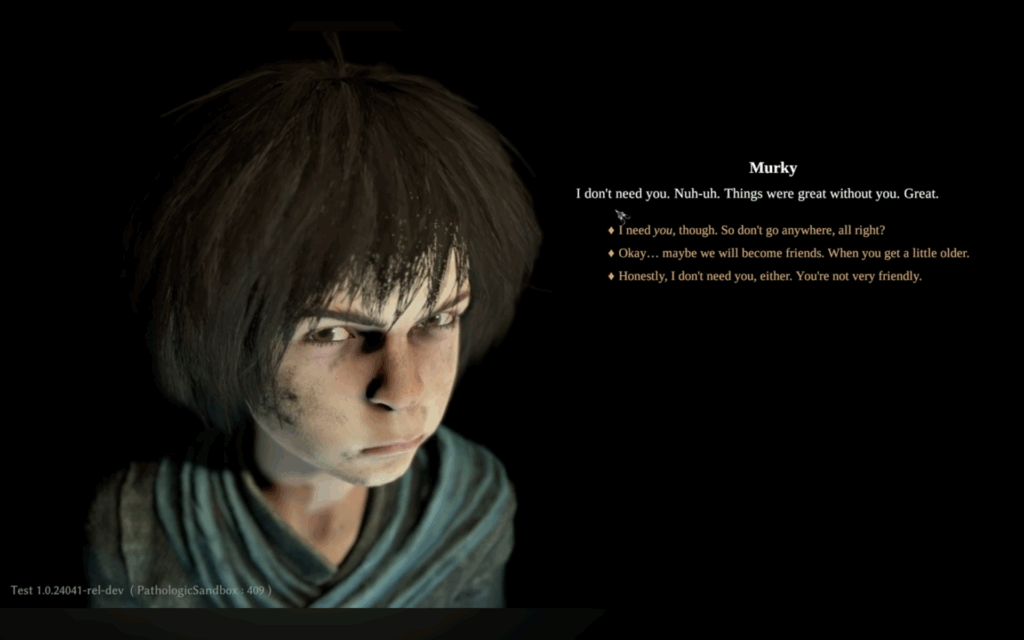
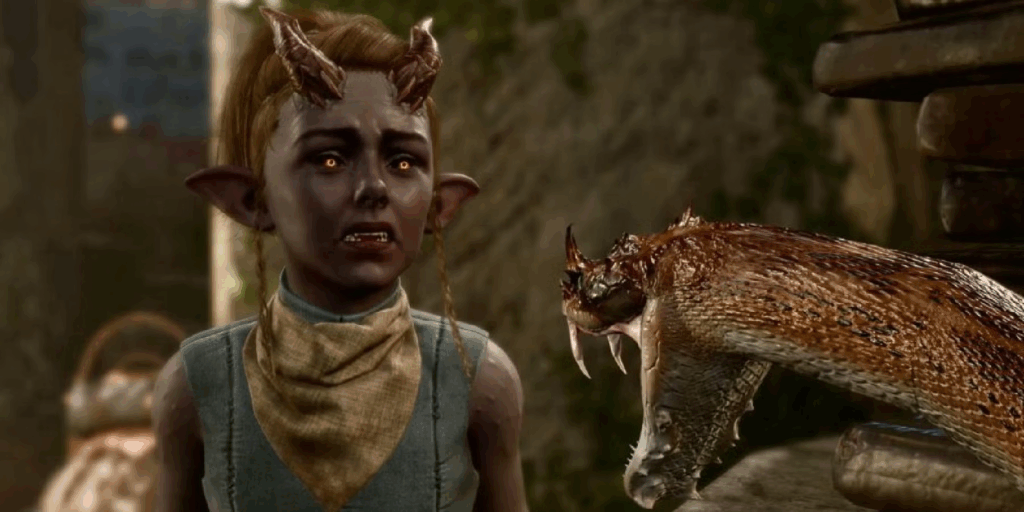
It was never a fair fight. I saw Mina wrapped in that yellow blanket, eyes snarling at me as she clutched her guardian Bun-bun, and I knew that I would let everyone else on the Eye burn if I could just get this girl to smile. Like Pathologic’s Murky and BG3’s Arabella before her, her design and writing slotted perfectly into the synapses of my parental fantasies. She wasn’t just cute; she was suspicious, and that more than the geopolitics of the capitalist dystopia was a far more personal challenge that I committed all of my most precious rolls to.
I bluntly carved past the gameplay designed to invoke uncertainty, hard decisions, and resilience to failure and suddenly pledged myself to min-maxing. I spent my sixes on gambling wins so that I could feed myself, and then all the rest of my dice went to babysitting Mina and eventually buying passage for her, Lem, and myself to escape to a new world. All the side quests I’d opened in Act 1 of the game? Abandoned. The fate of the Eye? Irrelevant.
Why? Maybe it’s as simple as the societal maxim that kids’ lives are more precious in their innocence and potential than adults’. Mina’s young; she hasn’t had the chance to become a person yet or much more than a macguffin with a couple personality traits. Grieving her—whether she dies or whether I don’t get on that spaceship to see her grow up—isn’t just “It’s sad that a life ended.” Grieving her is “What kind of person would she have become?” How would our relationship evolve? What happens when you give a kid a chance to grow up with clean air and every opportunity to live a better life than us?
I haven’t picked up the game since. If I committed to any other route, I’d always be haunted by the fact that Lem and Mina are still out there on the docks. I’d know that Mina, in that universe, would never speak—not just because my protagonist isn’t there to coax her into a smile and a conversation, but because her storyline would never activate.
I’m too scared to grieve them—to make myself vulnerable to the “What Ifs” of lives that I could be sharing with them. I’m a pretty shit revolutionary; I chose the safety of my closest few at the potential cost of the entire corporate-enslaved populace. But I’ll take the diffuse uncertainty of those dozens of undiscovered, unactivated sleeper agents if it means I can even tip the odds that Mina—that my newfound family—has one more chance at living a different life.
The ending “A Long Journey to a Small Unknown Planet” summarizes precisely that committed, still tenuous hope.
“This feeling, this rumble, will be your constant companion for the next decades. It will be there when you work, when you watch Mina grow, when you dream of the planet at the end of the journey…It will be the final thing you hear, as Mina shuts down all but the most vital of all your functions, and hopes beyond hope that you make it your final destination. All the while doubting that you will.”
We doubt we’ll make it. We’re certain Mina will.
P.S. If Lem and Mina are in the sequel…I’m not sure if I want to know.