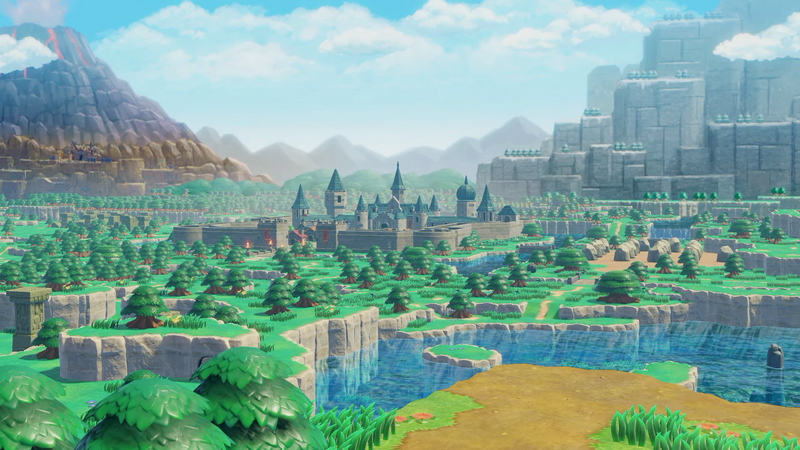
One of the panels I attended at the Year of Games Symposium was “Future-Facing Forms of Inclusive Storytelling”. While I found the panel very enjoyable and interesting to listen to, one of the concepts that was discussed that stuck out to me was when the panelists discussed the idea of identity tourism in games. Specifically, how identity tourism can be negatively used in the improper representation of certain groups in video games.
As I understand it, identity tourism in the context of video games refers to how video games can allow to people to be “tourists” and use games to experience cultures and times that are unfamiliar to them. The example given during the panel was of a game that took place in feudal Japan, which could potentially allow the player to experience what it was like to live in feudal Japan.
Of course, in the panel, they focused on how this type of identity tourism can be harmful. If the ones making the game on feudal Japan do not take the care to do their proper historical research, then they give the player an inaccurate experience of what feudal Japan was like. They may think it is a world full of only Samurais and Geishas compared to the dynamic and complex time it actually was.
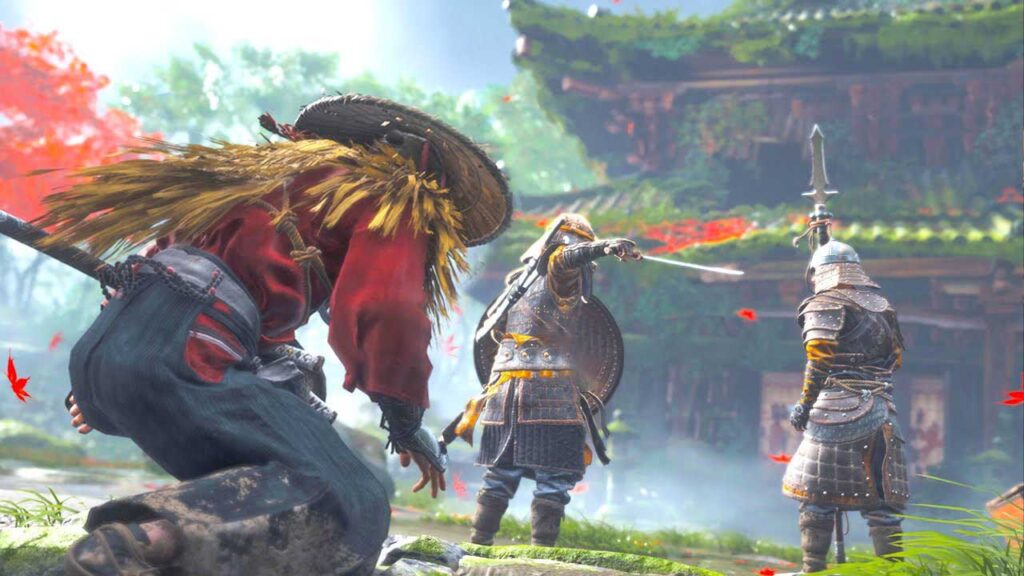
Obviously, this type of identity tourism, not just in games, can be very harmful. In giving players an inaccurate experience, you are educating them improperly, and as they navigate other facets of life they risk using this improper education to have a poor understanding of actual Japanese history. And in many ways, what was intended to be an experience that spreads knowledge and appreciation of other cultures is instead used to cement ignorance.
In this sense, we see how dangerous identity tourism can be. Even in the context of a game purely meant for entertainment, it can have severely harmful real life consequences. In a way I think this speaks to how impactful games can be as a medium, but I also think that identity tourism is something we have to be especially mindful of in games. This is because in my opinion, unlike in other forms of media, identity tourism is a vital part of video games.
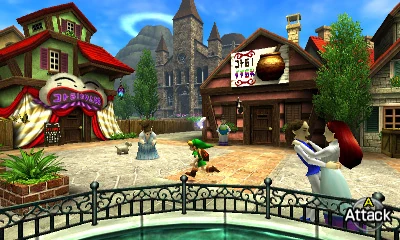
I believe that this is because video games are fairly unique in the interactivity they require from the player to be experienced. While all media is interactive in the sense that we need to interact with it in some way to experience it, we have to turn the page of a book or hit play on a movie, video games take their interactivity to another level, often requiring that the player take an active role in the story by literally playing it out. For example, in a game like The Legend of Zelda, for all intents and purposes the player becomes Link, fulfilling their role in the story and furthering the plot by defeating bosses. This is a much more immersive experience than watching or reading something like Lord of the Rings, where the user can simply take a passive role and observe the characters carry out the plot.
This is not to say that this level of interactivity or immersion is necessary for identity tourism. Reading a fictitious book about feudal Japan can still create identity tourism and provide all the associated dangers. However, I do think that this level of interactivity and immersion makes it so that identity tourism is both more pronounced in and a necessary component to video games, even if those video games portray a purely fictional world.
To elaborate on that last point, I do think that identity tourism can still happen in games that take place in purely fictional worlds. To move back to The Zelda example, playing a Legend of Zelda game most often immerses you in the world of Hyrule, which has its own history, races, and cultures. In this sense, you are still experiencing a culture and place that is unfamiliar to you, and therefore having an educational experience in a way similar to playing a game that takes place in feudal Japan.
This is just to illustrate the point that I think identity tourism is a vital part of the majority of games. I would not try to claim that identity tourism for Hyrule is as dangerous or impactful as identity tourism for feudal Japan. Although, I do still think that the portrayal of fictional cultures can have negative real world effects. After all, most fictional cultures did not fall out of a coconut tree. They are often based on or at least inspired by real life cultures, and if creators are not careful with the use of their inspiration, they can still end up spreading harmful ideas or an improper educational on real life cultures and identities, even if they do not explicitly show up in their creative work.
To conclude, I think that identity tourism is something that is both an integral part of and much more pronounced in video games. It is because of these two things that we should be especially wary of identity tourism in video games, since identity tourism is something that can have serious and harmful real world ramifications about different identities and cultures. I also think that we should be wary of this danger even if we are not focusing on representing real world cultures in video games and are only concerned with portraying fictional cultures and identities.


I did not attend this panel, but this concept of identity tourism reminds me of the broader concept of virtual tourism that I discussed in a class related to virtual reality. One of the major objectives with these VR worlds is to fully immerse the viewer in places and situations where they normally wouldn’t find themselves. In that way virtual tourism reminds me a lot of identity tourism because it is meant to be representative of a place or situation that exists in the real world, and the obvious threat of not representing it honestly or accurately. This presents a threat to the equitable representation of entire cultures, which mirrors this same challenge in video games.
I’ll put in a note from the devil’s advocate — representation in media is essential for minorities to “count” as part of the greater whole of recognizable community members. I remember a classmate who interviewed people on their favourite Disney princesses, and without exception, every interviewee whose culture had been coopted into one of those films chose that princess as their favourite. I’m among them — Mulan (1998) is a hotbed of identity tourism, fictionalizing everything from matchmaking procedures to the personability of the Emperor. Yet, as a second-gen Chinese person, it’s one of the only times that Chinese culture is recognized in Western media not only as a background character but as a mythos worthy of presenting in narrative form. The artists in particular studied and traveled for months to years to grasp the flow of Chinese watercolor paintings and capture the uniqueness of the landscapes. The ideal is for artists and game makers to be from the culture they represent; perhaps the epic triple-A-ness of Black Myth Wukong or the Taiwanese cultural critiques by Red Candle Games are more educational as sites of identity tourism, just as visiting an unexoticized city like Fuqing would give a tourist a more “authentic” experience of China compared to the curated streets of Beijing. I don’t buy it, though. The accuracy of foreign portrayals doesn’t concern me nearly as much as their intentions (commercial-artistic), their intended audience (socioeconomic and cultural), respect for the narrative (characters as objects or subjects), and affective rhetoric (celebrating, condemning, exoticizing, etc.).