In Uncertainty in Games, Costikyan starts off by saying that “[u]ncertainty is not, in most circumstances, a good thing” (1). He emphasizes how undesirable it is to be uncertain about important aspects of life, like health and money. However, he goes on to acknowledge that games defy this view, and that uncertainty is actually a crucial part of games. Jumping off of this, I would argue that horror games exemplify the cruciality of uncertainty the most clearly.
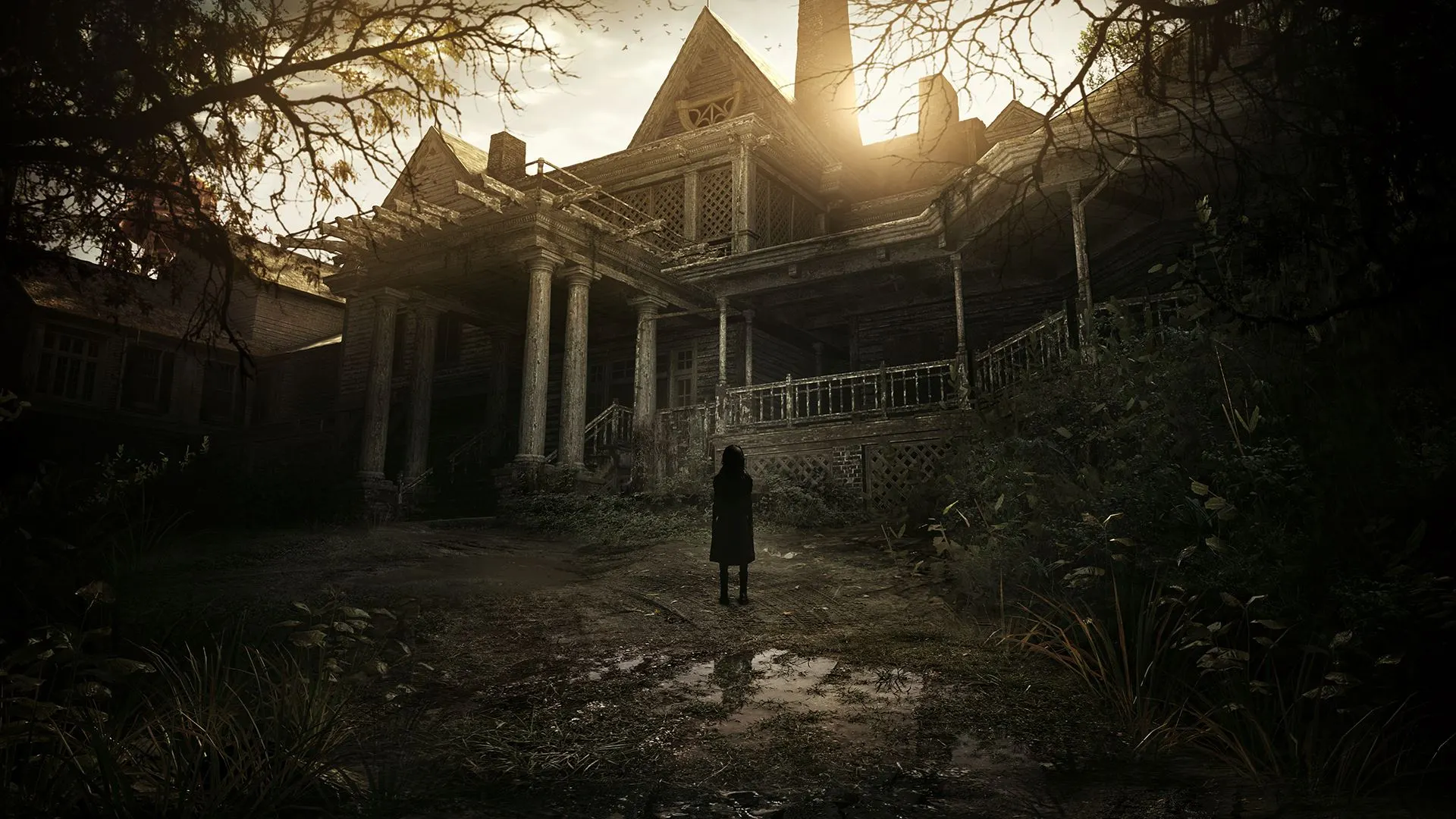
Over the summer, I played Resident Evil 7: Biohazard, which is the first survival horror game in the Resident Evil series to feature a first-person point of view. This specific game follows the main character Ethan Winters as he looks for his missing wife Mia.
SPOILER WARNING: After this point, I will be talking about parts of the game that may be considered spoilers.
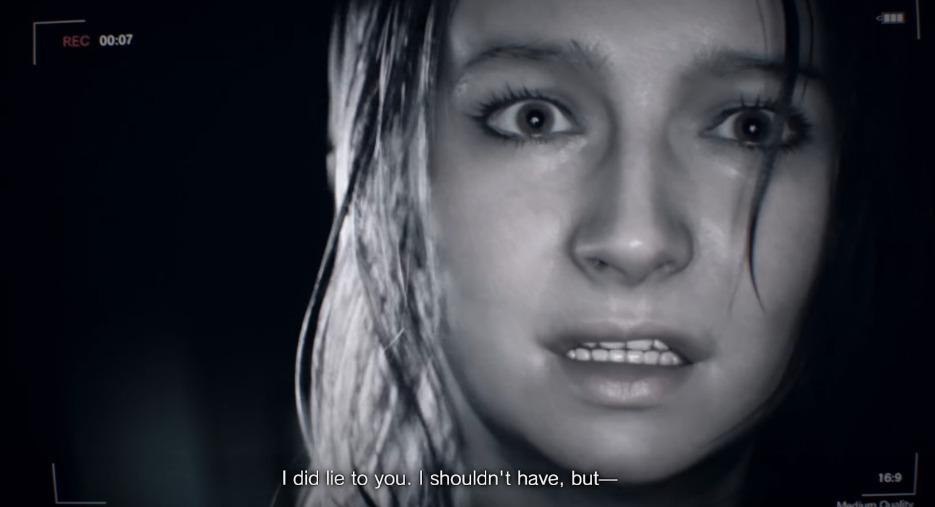
Immediately, players are struck with a form of uncertainty: narrative anticipation. Ethan watches a video of Mia happily stating that she will go home soon, before shakily closing the video on his laptop. In this moment, we become uneasy. Ethan starts to pull up another video, which makes us wonder: what are we about to see? This moment doesn’t last long, as a more recent video begins to play. It features a more distraught and disheveled Mia warning him to stay away. As we watch this, we don’t know what she’s talking about, what she means when she is apologizing for lying to Ethan, and why Ethan must stay away. But we do get the sense that she is, and Ethan will be, in danger.
Source: Tumblr
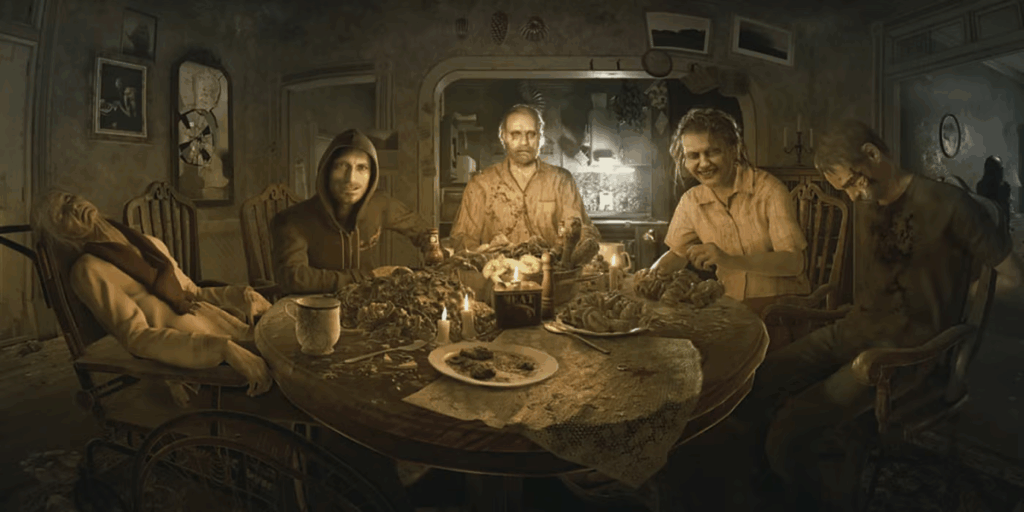
Ethan is led to a house in Louisiana to find Mia. In this house, he encounters the members of the Baker family, who have been infected by a mold that turns them into sadistic beings (of course, the reason why they are so monstrous is not revealed until much later). He also finds out that Mia has also changed in this way. There are a decent amount of jump scares from the unexpected appearances and disappearances of the Baker family and Mia, which contributes to a pervading sense of extreme narrative anticipation. They also perform strange and unexpected actions at times. For example, there is a dinner scene in which the Baker family is eating human remains and then forces Ethan to eat them as well. Ethan refuses to eat the remains, which prompts Jack Baker to feed him a knife instead.
Source: Rock Paper Shotgun
Furthermore, at a certain point, Ethan must grab a metal dog head for one of the doors, but when he does, Jack Baker grabs him and kicks him down, which triggers a fight. When I was playing this game, I was startled by a lot of the jump scares and even gasped at times, so I would say that yes, Resident Evil 7 is scary and yes, a lot of that was because of the narrative anticipation that left me constantly on edge.
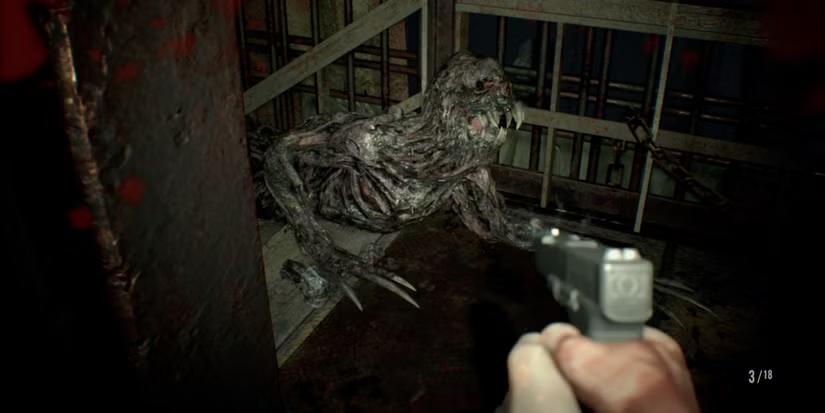
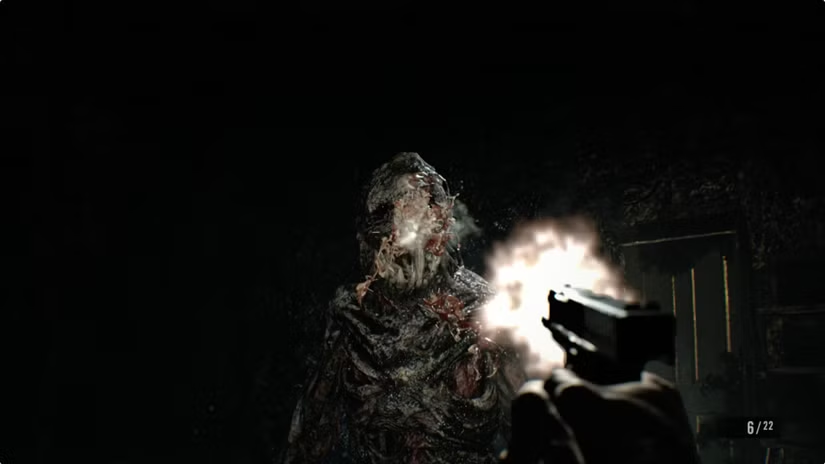
Another prominent form of uncertainty in this game is performative uncertainty, which arises whenever Ethan must use a weapon, like a gun or a knife or even a chainsaw, to attack enemies. It becomes uncertain whether Ethan will prevail or whether the enemies will kill him. And this relies on the player’s performance, which could deteriorate in stressful situations. I personally am very bad at shooting in stressful situations, so I was getting hurt left and right, especially by the Molded, which are basically mold monsters who are very difficult to kill. Headshots are the most effective, but it’s very difficult to be that accurate.
Source: The Times of Snow
Source: Polygon
Performative uncertainty adds to the horror of the game; many parts of the game become horrific simply because they are under our control. They rely on our skills and actions to get past the horror and move forward, which places a lot of responsibility on us. We must trust ourselves to overcome the terrors of the game, which isn’t always easy.
Horror is a genre that relies greatly on uncertainty to instill negative emotions like dread and fear, as shown in this analysis of Resident Evil 7: Biohazard. I want to use this analysis to show that horror games have the power to depict mental disorders effectively and accurately. I am choosing to focus on obsessive-compulsive disorder (OCD), which is often misunderstood by the broader public mainly because of poor media representation. To explain briefly, people with OCD suffer from intrusive thoughts, or obsessions, which are unwanted and disturbing in nature. Fear that the thoughts will come true causes compulsions, which are thoughts or actions that seek to reassure the person in some way. OCD thrives in uncertainty. As someone who suffers from OCD, I often call it a disorder of what-ifs. Questions often plague my mind. What if I left the door unlocked? What if I didn’t wash my hands well enough? What if I hurt someone? What if I lied?
A horror game, which also thrives in uncertainty, can have so much power in representing OCD. It can take those what-ifs and make them into an interactive experience that feels real, like OCD often feels. Narrative anticipation can help obscure the truth of those obsessions, making the player keep wondering, what if? Perhaps the thoughts will form scenes that jump scare the player, similar to the jump scares in Resident Evil 7, to make them feel contaminated or like a bad person who did something morally wrong. The scenes can blur the line between thoughts and reality for maximum effect. Performative uncertainty can be implemented to represent compulsions and, in turn, place a ton of responsibility on the player to move forward. They will then feel as though they are responsible for what is happening in the narrative (the obsessions). This is how people with OCD usually feel, as if they are responsible for their intrusive thoughts, as if they must do something to stop them. These situations should be anxiety-inducing and cause player performance to get worse, similar to when people with OCD are very anxious and their compulsions get more difficult to overcome. As players move past the compulsions, they will be provided with the relief of truth, but this will only be temporary until the next intrusive thought comes in. And this’ll repeat, over and over again. A horror game has the power, through its use of various types of uncertainty in extremity, to show that OCD is real and it is scary. It’ll even have the power to create proper OCD representation that doesn’t mock us, make light of our situation, or stereotype us.