From rouge-likes with randomly generated dungeons to FPS games with random bullet spreads, randomness can alter one’s playing experience.
We can group randomness into two distinct forms. The first of these two, pre-luck, can be defined as randomness before the player has any input. The other, post-luck, can be defined as randomness after the player has executed an input.
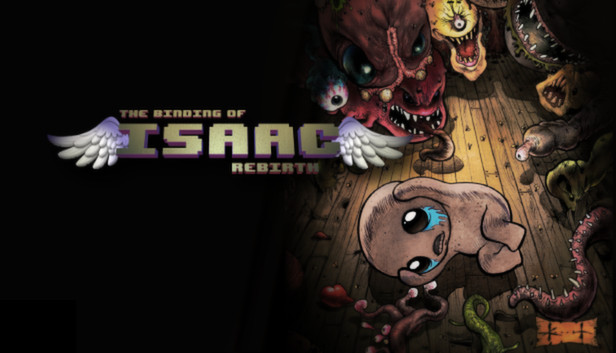
The Binding of Isaac (TBOI) is a rouge-like game that’s main focus is obtaining a multitude of items that will grant the player different abilities. Every floor in this game has an item room with a random item in it (sometimes multiple like seen below). The randomness in this example comes from the options provided to you, which falls under pre-luck. This type of randomness can add replayability to games and make the player feel like they get a new experience every time.

In TBOI, you start off weak and with no special abilities. Each item you get is randomly selected from a pool of items of a given room, and they can be anywhere from godlike powers to something that actively hurts you. This can make multiple runs drastically different from each other; if the player does not get lucky with a good item on the first floor, they might be incentivized to restart the run and look for a better start. The opposite problem to this is also true, if you obtain enough good items then the game converges to a point where it doesn’t matter what is thrown at you – you will just beat it. Having too much pre-luck in a game can make the gameplay not consistent at times. It creates a funnel system where the beginning has limited opportunities and over time, it becomes concentrated to having game-breaking items.
Another rouge-like game, Hades, has a slightly different approach to pre-luck. Instead of being given completely random items, you can choose 1 out of 3 given boons from select gods. At the start of a run, you have the opportunity to choose which god you want to select an item from. This eliminates some pre-luck aspects while still keeping the excitement of not knowing which specific item the god will provide to you. In addition to this, each item has similar base power, but can be enhanced with rarity upgrades and leveling them up. The progression throughout a run can feel more linear and in your control than in a game like TBOI – you can manage certain parts of pre-luck to provide you with a consistent playing experience.
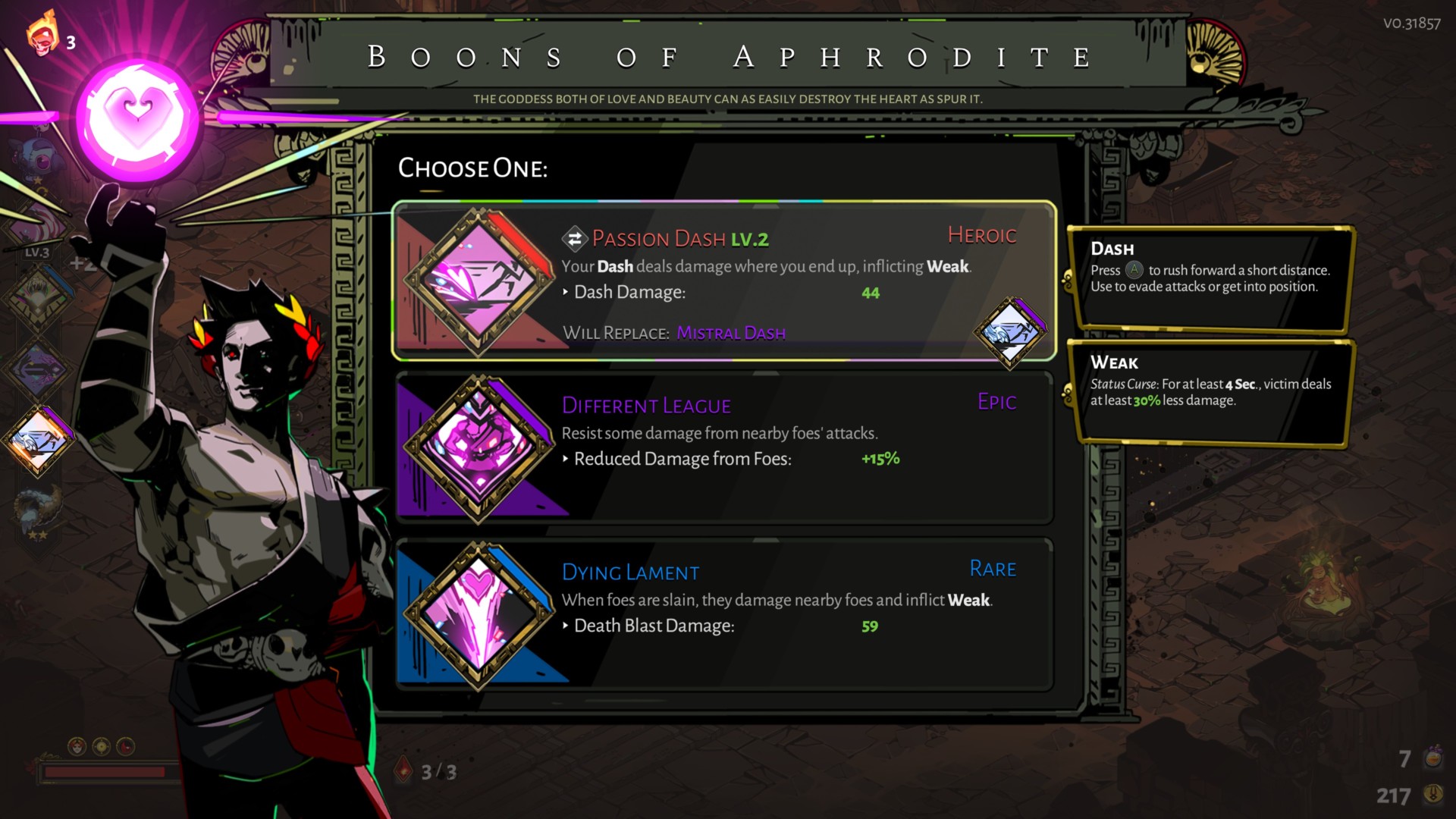
But, there is still so much excitement in getting a rare game-breaking item that lets you stomp over everything in your path.
With little to no pre-luck, a rouge-like game will begin to feel boring. The gameplay needs to feel unique with every additional run you attempt, but controlled enough that you don’t feel cheated if you get too unlucky. Giving the player options and slight control over the items they obtain is what I believe makes these aspects of pre-luck so enjoyable. In TBOI, a lot of skill expression is attributed to how the player can use the resources they are given to survive, thrive, and try to use every game mechanic to get the maximum out of the limited tools available. By doing this, you have many more opportunities to gain additional items and up your chances of getting powerful items. Giving agency to the player can make luck feel more fair and enjoyable.
An example of post-luck in games is accuracy of moves in pokemon. Moves in pokemon can have a chance to miss if the accuracy is below 100%, and the player won’t know if the move will hit until after they have cast it. Typically, moves with lower accuracy will be more powerful than their counterparts that can’t miss. This can be a very useful way that can help tune the power of moves that has powerful effects.

But it feels really bad if a powerful move misses. Once you choose to use an inaccurate move, the outcome is entirely out of your control. If you just need a 95% accurate move to hit your opponent’s pokemon to win the match and it misses, it feels completely unfair. To counteract this, you can always choose to only use moves that never miss. But your opponent can still use these moves, and getting destroyed by moves that could’ve missed also feels unfair. This unfairness lies within you having no control when post-luck is brought into play and whether the post-luck goes your way.
Randomness can feel unfair at times, but with more agency given to the player, luck can feel like skill. If a player can manipulate luck, it grants the player another mechanic that they can hone. Creating a powerful build in Hades requires the player using their resources to their fullest. Without this control, an unpredictable game will feel foul – even if you perform your mechanics perfectly, there is still a chance the ball won’t roll your way.


Having played a lot of TBOI myself, I tend to agree with your points about the game regarding its luck and how it’s directly tied to user experience. But something I really appreciate about the game is how the game is designed in a way such that it kinda promotes players to “break” the game, as in, build themselves to be in a specific scenario, such that the player achieves things that shouldn’t be possible in a normal run. This goes beyond having a strong item synergy or something like that; this is complete and utter exploitation of the game in its entirety. Of course, RNG plays a huge role in whether or not such an opportunity presents itself without anything going wrong and whether or not the player has the skill/knowledge to recognize and react accordingly. Regardless, I still find it interesting and funny that the game is so RNG that sometimes things go a bit beyond what was intentionally designed, then you die and lose your run to something random for no reason.
This may be a large shift away from what you were discussing, but you mentioning how giving the player agency for luck-based encounters makes the game more enjoyable made me think about how gacha games are the exact opposite what you described, yet so many players still enjoy them. Gacha mechanics are what you referred to as post-luck; the player inputs a “pull”, and the game calculates based off of pre-set statistics what the player received. However, the player cannot do anything to change this statistic, for it is always fixed. Gacha games have their own game separate from the gacha mechanic, but players don’t just play the game for the game, but the characters and items they can receive from the game’s gacha system. The enjoyment of the game comes from the unknown factor of receiving the character the player wants. It makes me wonder if gacha mechanics are a more extreme example of the luck-based mechanics of Hades or TBOI; the player doesn’t know what they will receive, but the excitement of getting a good power-up makes for a good play experience as well.