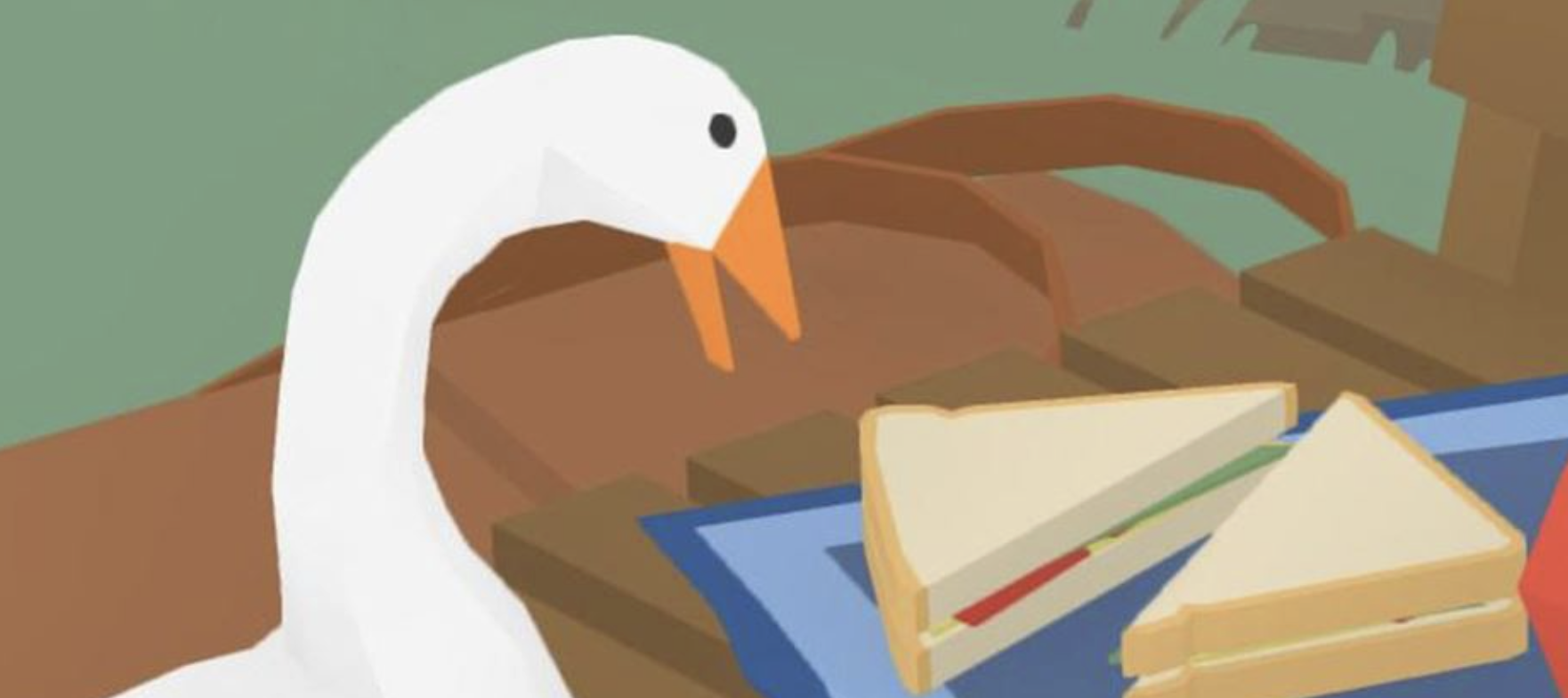
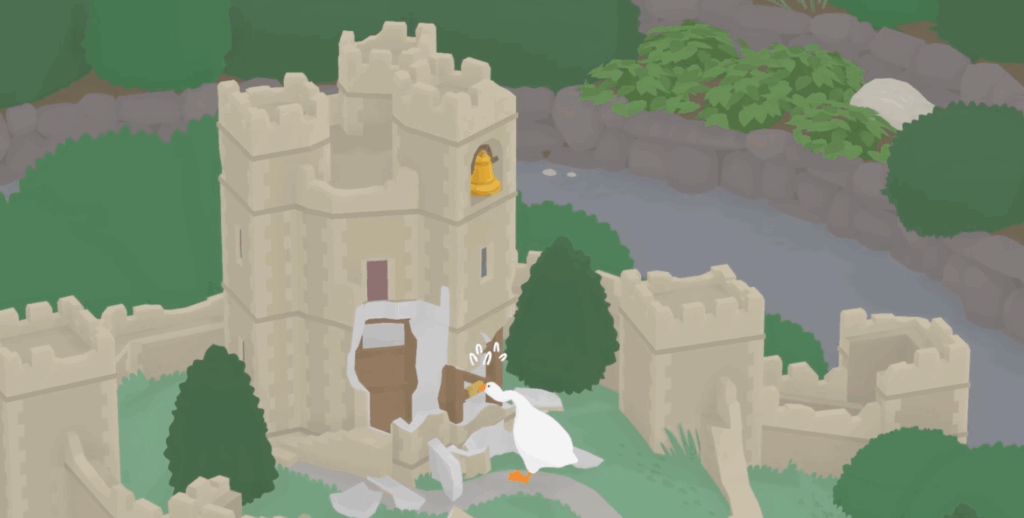
Untitled Goose Game (2019, developed by House House and published by Panic Inc.) opens on the goose’s home being overrun by human litter. The goose then has to travel a little before reaching the main game space which is notably, the world under human influence. This human-run area is neat and well-kept. Interestingly then, the game is almost a revenge game — as the goose goes around the orderly human world causing disarray.
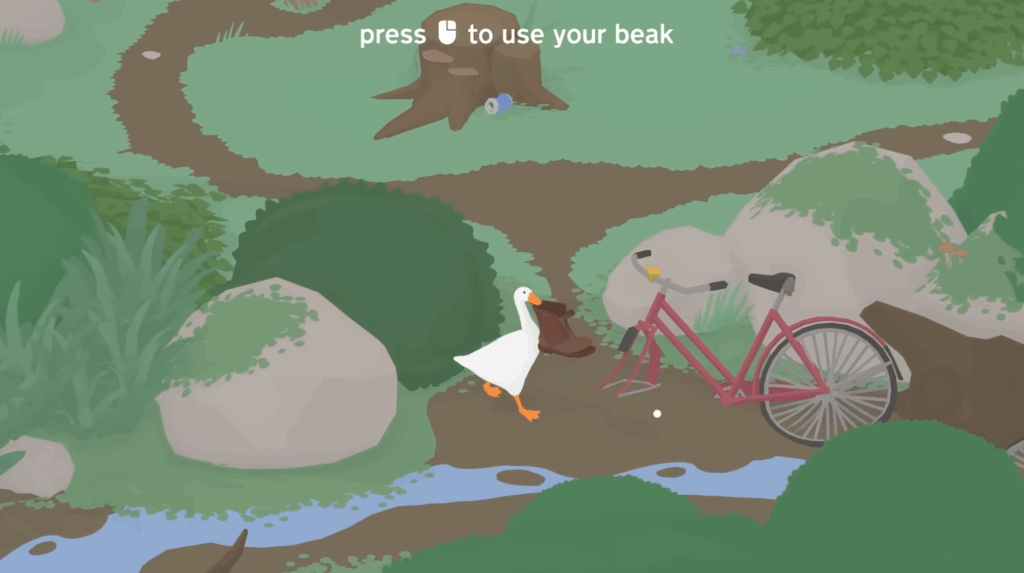
Despite encroaching on the goose’s land, first by claiming the land for their own to build upon and then by ruining what little land the goose was confined to, the people become upset whenever the goose exists in (what they consider to be) their space. Anytime the goose moves an object within the “human world”, the people immediately get upset over the disorder. No matter what the people are doing, if the goose attempts to enact any change in the human world, the people immediately move to intervene. Interestingly, the people have endless time to handle the goose’s antics, but cannot be bothered to care about their destruction. Essentially, the goose uses the inappropriate actions of the humans (that of the disregard of the space of others) against them.
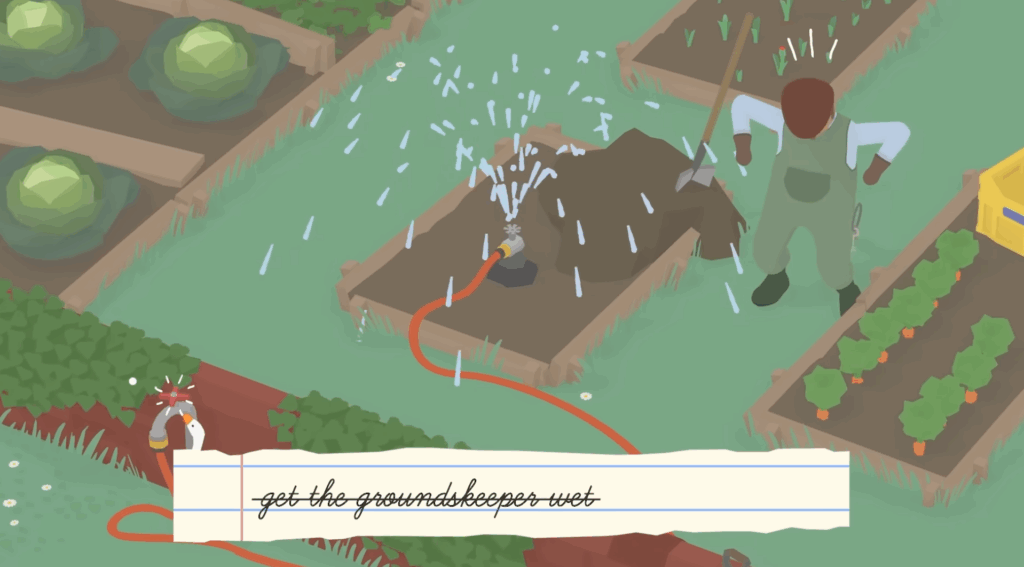
In games, power is proportional to the influence a player has within a game. The power given to the player in Untitled Goose Game is the power of playful disruption. The goose accomplishes this through the mechanization of mischief. The goose’s main moveset consists of being able to walk, run, grab objects to varying degrees, flap its wings, and my personal favorite, honk. All of these actions relate to the gooses’ ability to be roguishly antagonistic. Grabbing objects allows the goose to move the people’s objects around — something that greatly annoys the incredibly orderly people. Flapping the goose’s wings causes people to be intimidated by the goose and become scared. And honking excessively just gives every younger sibling a legitimate reason to be annoying.
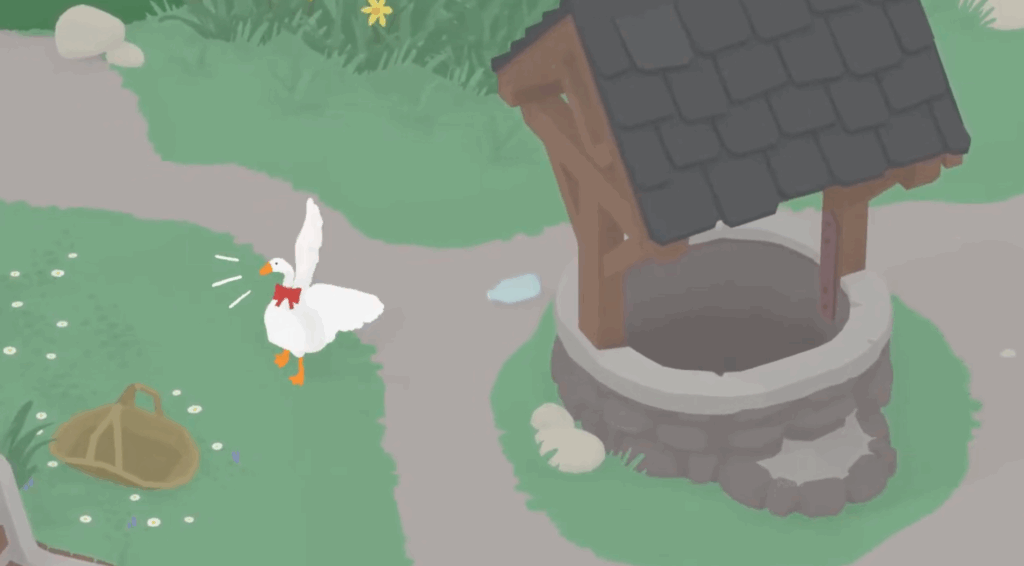
Untitled Goose Game is, simply put, a fun game. It is centered around being disruptive in mostly harmless ways. However, that disruption is not aimless. The marriage between the silly, childish actions of the goose with the purposeful, directed intentions of the goose allows for a player to feel justified in their antagonistic play.
The question then becomes, why do we enjoy causing chaos as the goose? A very serious inquiry, I know.
But to answer it, I find myself going back to the archetypal role of the Trickster. The Trickster is an ancient archetype used across various cultural stories. The Trickster is against any authority — doing what is best for themselves and themselves alone. In doing so, the Tricker questions the fundamental societal assumptions that the world is organized by. Indirectly, the Tricker’s selfishness brings about possibilities of change and transformation. Notably, the Trickster as an archetype is neither good nor evil, but rather embodies elements of both. Finally, a central aspect to the Trickster is that the Trickster always maintains an element of playfulness.
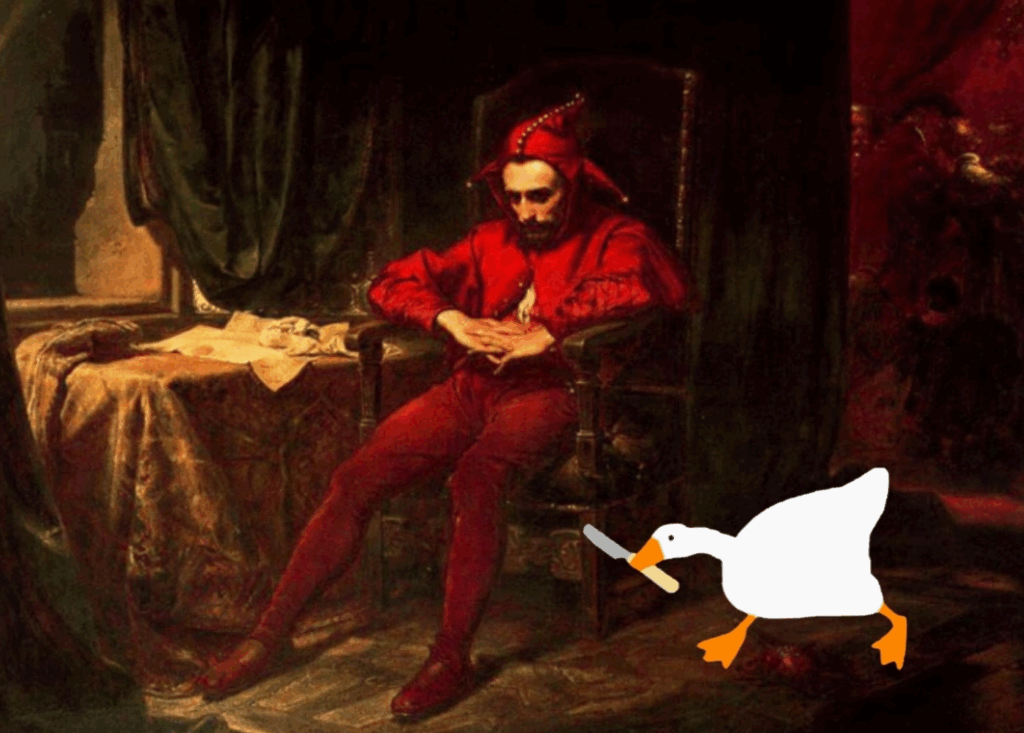
The goose is a Trickster.
By disrupting the conventions of the human world, the goose fulfills the same role as the Trickster in literature. The goose plays tricks on the human world (by taking their things), yet always remains evasive (running away just in time). The goose acts selfishly for the sake of its home, performing good actions (making a picnic) and bad actions (making people buy their own stuff back) as it goes along. However, just like the Trickster, the goose’s humorous activity forces the player to consider what transcendance would be. Untitled Goose Game could be read then, as a posthumanist game — to consider what the decentering of the human subject by dismantling the boundaries between humans, animals, and the environment could mean. Or perhaps, Untitled Goose Game simply argues for a world run by the goose.


Wow! I really loved this post. I haven’t played untitled goose game, but I have watched so many people play it online. It really feels like the goose is emblematic of the trickster archetype because our enjoyment of the goose is not necessarily dependent on taking up its role as “the trickster.” Ultimately whether you are the court jester or simply watching them, you’re going to be on their side instead of the side of the king. I also love your read about the game being a piece of environmentalist work and also something that is posthuman/transcendent. And finally, i really like the image you made of the goose next to the jester. It’s just perfect.
I love this game so much, and your post about how the Goose versus the people in the game as an example of power and its displacement is an excellent reading of the game. Utilizing archetypes in the case is also a brilliant use of how video games tend to combine multiple different characteristics of the world, including the power at hand with a Trickster in stories, who hold power over those that they are playing tricks on, and giving the player the power that archetype/character holds. I as the player can put myself in the shoes of a Trickster, something I would rather not be in real life, and have fun terrorizing these poor people by taking their things, and live in my own little goose world, all because the game lets me.
I’d hang out in a world run by this goose! Thanks for this blog post–I’ve played Untitled Goose Game before, but I’ve never thought about the implications of the power dynamics in play. I really loved your term “mechanization of mischief.” That really resonated with me and helped me think about this game in a new way. It’s made me wonder what other games this playful display of power appears in; I haven’t specifically been able to think of any, so I’d be curious if you had any additional ideas or if anyone else does…I think something specifically unique about this game is the power dynamic is between a creature that implicitly has less power (the goose) than the other creature (the human), yet the goose manages to assert dominance over the human. I really enjoyed this perspective on the game!