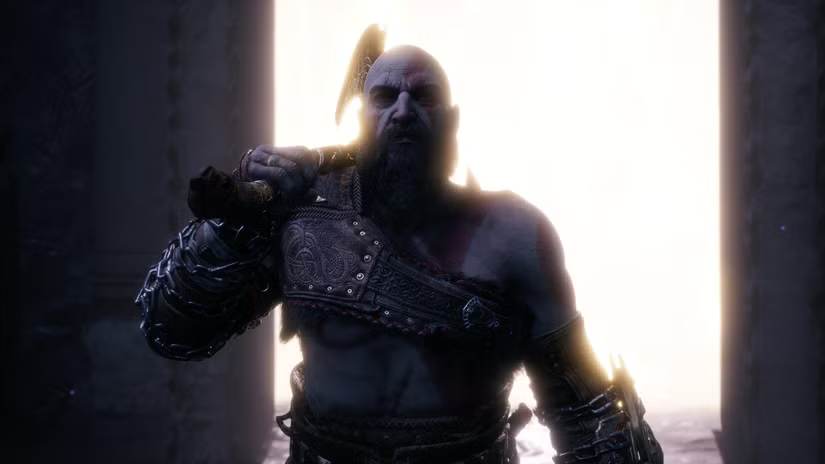
Most conversations about mental health in games focus on story: grief, trauma, survival. That matters. But games have a unique method of tackling these sensitive topics: mechanics. Inputs that create feedback. Systems that teach your hands a rhythm before your mind have words for it. When designed with care, those systems can model real world therapeutic skills—rehearsed safely, repeated often, and owned by the player. In this way, God of War Ragnarök: Valhalla makes great strides in presenting this method of modeling that is not only engaging but also thought provoking for those who have never engaged with this level of behavioral analysis before.
Why mechanics, not just message?
Therapy is procedural. You don’t learn cognitive restructuring by hearing a speech—you practice it: notice a thought, examine it, replace it. You don’t learn exposure by reading a pamphlet, you titrate discomfort in controlled steps. Games are procedural too. They already traffic in loops, thresholds, risk ladders, values trade-offs. The magic happens when those loops rhyme with evidence-based techniques.
God of War Ragnarök: Valhalla plays like a procedural lab. Its roguelite loop, opt-in burdens, build decisions, and reflective interludes create a repeatable practice space where you can observe reactions, test strategies, calibrate difficulty, and integrate what you learned. Crucially, the game explains trade-offs plainly—boons, cooldowns, damage types, and utility are surfaced with clear tooltips—so choices feel informed rather than mysterious. That’s basic psychoeducation in action: label what a tool does, decide when to use it, and understand consequences before you commit.
The loop encourages monitoring and pattern spotting. Because rooms and enemy mixes recur under consistent rules, you quickly notice where you struggle—projectile swarms, tight arenas, elite bosses, etc.—and you can A/B test fixes thanks to meta-progression and persistent unlocks. Hit feedback, parry windows, and stagger states are stable enough that each attempt produces usable data. Over multiple runs, this repetition turns intuition into evidence, which is the foundation for any skills practice.
Regulation comes next, and the game’s inputs make it tactile. Spartan Rage modes ask you to pause, select, and act rather than mash—sometimes the right move is a defensive or restorative mode, sometimes it’s power. Parry- and dodge-centric combat rewards rhythmic timing that naturally steadies attention. Accessibility options in the games menu function as grounding “knobs”; when you widen a dodge window or enable aim assist, you’re not “cheating,” you’re scaling exposure so learning can stick. A regulated body enables a strategic mind, and Valhalla turns that sequence into muscle memory.
Exposure is graded and voluntary. The burden system lets you add one stressor at a time in exchange for better rewards, essentially building your own hierarchy of challenge. Room choices let you pick the flavor of difficulty you’ll face next—combat, puzzle, elite—so you can approach discomfort deliberately. Run length is under your control; you can bail early, take a short rest, and still move forward. That structure builds confidence without becoming frustrating.
Values threaded through the build economy and the epilogue’s tone. Trade-offs between raw power, defense, and utility question player priorities—patience, safety, aggression, control—and optional encounters often reward restraint and observation as much as damage output. The story quietly asks what Kratos wants to keep or release from his past, and the mechanics translate that into tool selection under pressure. When difficulty spikes, those pre-chosen priorities guide action faster than impulse.
The loop also models behavioral activation through small, doable actions that create momentum. Each room offers a brief objective with immediate feedback: survive waves, solve a compact puzzle, defeat a mini-boss. Checklists and unlock tracks in the hub keep progress visible between sessions, and restarts are low-friction, which removes that feeling of pointless gain that often stops us from starting again. Tiny wins compound into agency.
Finally, Valhalla helps integrate the work. Narrative interludes often follow mechanical mastery moments, linking a felt sense of competence to a story beat so the lesson “sticks.” Permanent unlocks convert run-specific success into lasting capacity, which mirrors how practiced skills become part of identity. By the end, the habits you’ve rehearsed—pause, choose, act; titrate challenge; treat effort as information—align with Kratos’ redefined role: not the denial of what came before, and not a return to automatic rage, but ownership and choice.
Taken together, these systems don’t diagnose or prescribe. They offer a neutral, repeatable practice ground where mechanics model useful skills: learn what tools do, watch your patterns, steady your body, try another frame, scale discomfort deliberately, act by chosen values, bank small wins, treat failure as data, and consolidate gains. It’s not therapy, but it’s therapy-shaped practice—and because it lives in your hands, it can become a habit you carry with you long after you put the controller down.