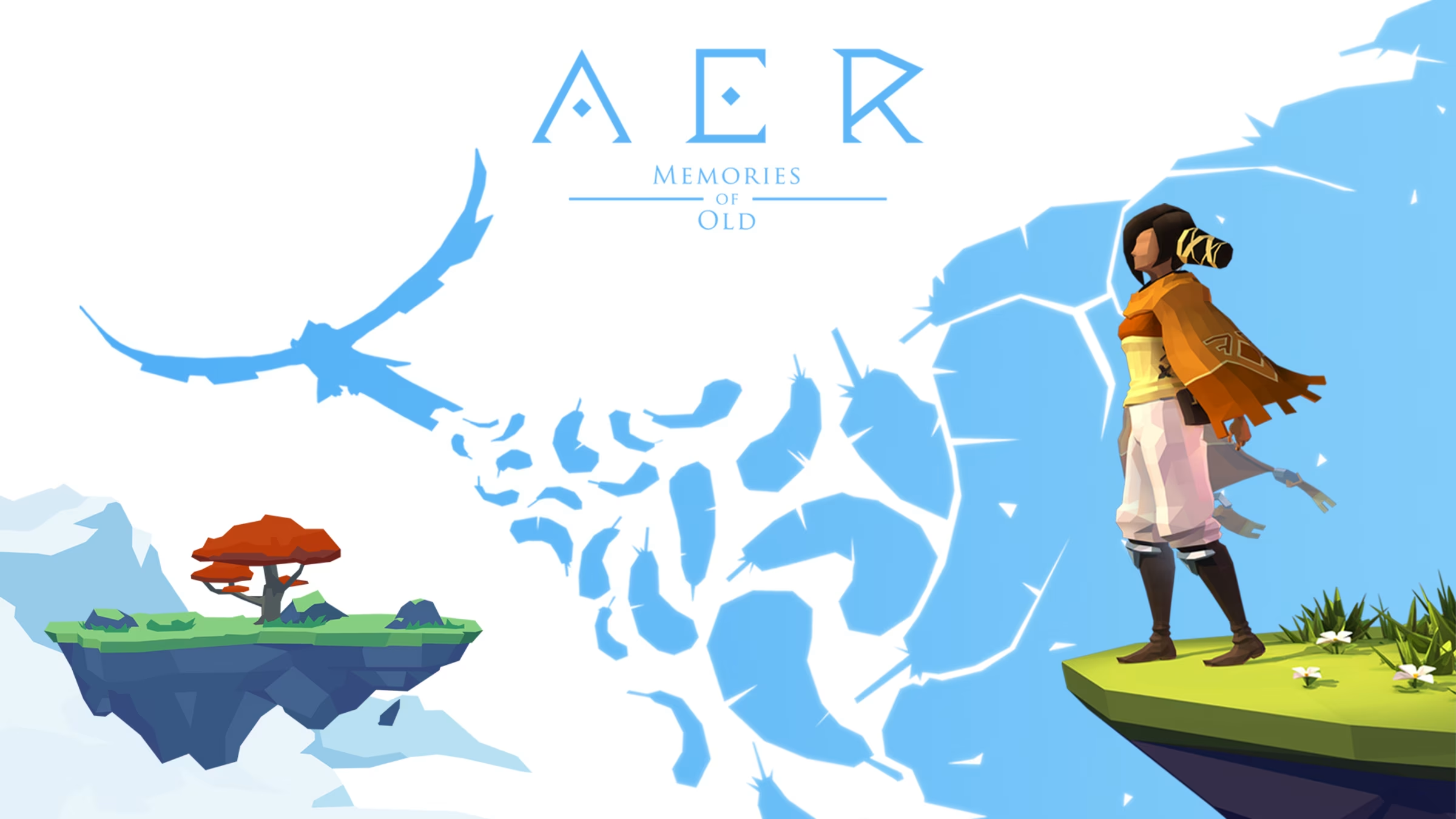
AER- Memories of Old is a game by the (sadly defunct) Forgotten Key dev team. The art style is charming; its colors warm and vibrant and its models simple. The sound design breathes life into the game—which consists of jumping, running, and flying across a series of floating islands to re-discover the events that shaped the world. A history that I—despite my hours of playtime—can’t recall for the life of me.
I’ve played through the game in full at least three times since 2023, but spend most of my time flying through the sky to explore every land mass like some sort of virtual cartographer. In some regards, I feel a bit guilty–Forgotten Key put lots of time and effort into crafting their story, but at the same time, I can’t help that my heart resonates more with flying through their map.
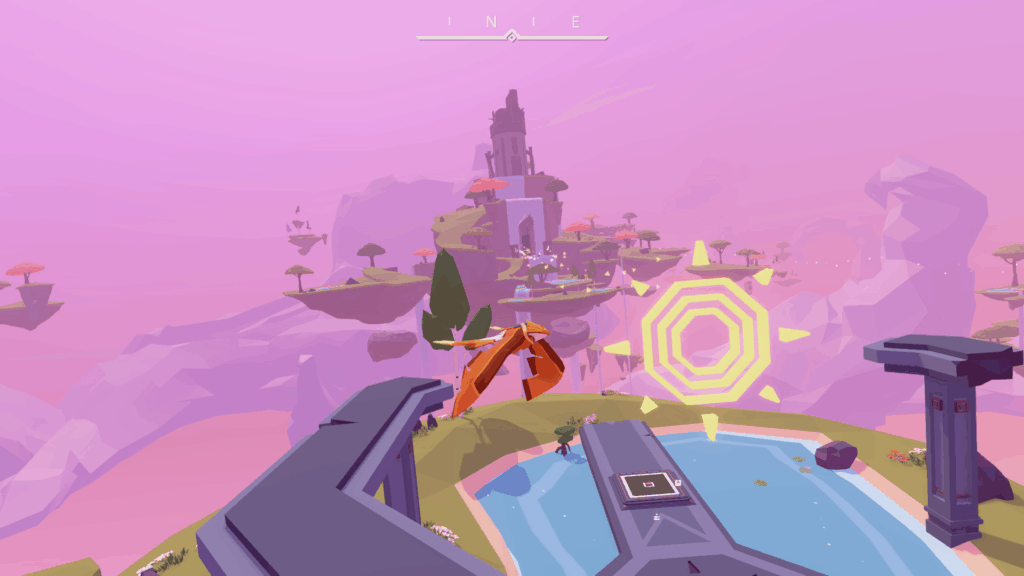
As a result, AER is a prime example for something we covered in class this week: Anti-Proceduralism, or Play-Centric analysis. To steal a quote I was shown in lecture:
“Games structure play, facilitate it by means of rules. This is not to say that rules determine play: they focus it, they frame it, but they are still subject to the very act of play. Play, again, is an act of appropriation of the game by players.” -Miguel Sicart
I have co-opted AER’s flight mechanic, changing it from a tool to complete the game to the subject of the game itself. It lives in my nintendo switch as my personal virtual locomotor playpen, and that’s exactly how I like it.
I have the freedom to do this because there is no way for the game devs to force me to play the “right way.” I bought the game, so it is mine to use however I want. As a consumer, I’m overjoyed, but as a creative? It’s anxiety inducing. I’m not a game dev, I write stories and draw comics, but there’s still the fear of my audience “losing the point” and focusing on select portions of my work rather than the wholes. I have this fear because—as I’ve said before—I do the same thing.
On one hand, it’s freeing. I finish my project, throw it to the world, and that’s it. I’m done, there is no more responsibility on my part, and I can start something new. People can do what they want with my characters and story because I’ve already said my peace. If they don’t like my endings, they can make up their own. It has no effect on what I deem to be “true.” On the other hand, I absolutely loath being misconstrued. While I’ve accepted that not everyone will view my work in the way I intend, it’s still hard. Everyone interprets things differently. Everyone has different preferences. Everyone who interacts with my work will create their own version in their heads that exists outside of the one in my own, and I can’t do anything about it.
I guess thinking about video games in a play-centric way—or better yet, playing video games in a play-centric way—is an exercise in letting my work exist in other people’s brains. I may not play AER in the intended way, but I still play it over and over again. I love it, maybe not the way I’m “supposed to,” but in a way that is personal. In doing so, I must reckon with the fact that I’m doing the very thing that gives me anxiety to someone else. At the same time, it forces me to be ok if someone does the same with my work, because it means they love it too.
This post has gotten away from me a bit, but ironically enough, it feels fitting.
-Ally


I’ve never played this game, but based on the images I’ve seen, I love the art style and would probably play it in the same way you do. I assume that if the game developers felt strongly about people playing AER in the “right” way, then exploring the landscapes wouldn’t be an option, or at least wouldn’t be an option that is so satisfying that it competes with the main story. That aspect demonstrates how comprehensive and thoughtful the game’s design is.
I really like your point about creators letting go of control of their work. Part of the beauty of art lies in the way audiences interpret it differently and form personal connections with it. To have these powerful connections, you will likely have people miss “the point,” but I think that’s worth it.
I really like this analysis of this game that you’ve spent a lot of time with. I feel a really similar way about Breath of the Wild; the story fell to the wayside and I treated the game as a very straightforward “running around doing random stuff” game. For me that game stopped being about Link The Hero of Time and more became about fighting whatever lynel I found that day. I’m also in CRWR, and I have the same fear that my work will be misinterpreted or the time I put in will be forgotten. That may also be how some game devs feel about speedrunners, who push the “anti-proceduralism” method to its limit by treating every game as a challenge to be beaten in as little time as possible. However, after watching loads of “game devs react to speedrun” videos, I think I would say that any way to play a game is a “correct” way. I think you fully appreciating the movement system and platforming that the devs spent time crafting is just as valid a playstyle as reading through all of the flavor text/lore
I really like how you come to terms with the possibility of someone interpreting your work not as intended because of how you “misinterpret” the purpose of AER. I think having people be able to come up with so many different interpretations of something, whether it’s what the creator intended or not, is something beautiful, because it’s a result of everyone having different, unique experiences and translating it into their interpretations or experiences with art.
Connecting proceduralism and play-centrism with something seen as more “restrictive”, like literature, is also an interesting idea. People likely see literature as something defined by the rules and language that the author has put in place, but what would it look like for literature and creative writing to focus on the reader’s experience over their intended message/experience? For example, I’ve never read Finnegans Wake, but after hearing it mentioned in class, I took a look at some preview pages online; it’s literally unreadable and incomprehensible. Can a book like that, which so clearly defies the preexisting rules of writing, be seen as a form of play-centrism in literature? Since it throws all rules to the wind, I think the experience of reading a book like that really depends on the reader’s individual experience and interpretation.
This is an interesting analysis of a game that I also enjoyed playing back when it came out. I was coming from mostly playing FPS games, and I’d never played a game where flying is the main mechanic for getting around. I found this to be a very novel concept, and I also spent the first few hours flying around the map without heeding any of the objectives or paying attention to progression, because the game never made me feel like I had to. I would agree with you that Aer adheres to the playcentric design philosophy because it encourages players to experience all that the game has to offer without directing them towards in-game objectives or arguing for a position. While there is an overarching story and a way to complete it, I believe that the game puts more power in the hands of players by allowing them freedom to build their own unique experience to enjoy it at their own pace.