Some notes:
- All opinions expressed are my own. I do not speak for all otome game players; this essay is simply based on my own personal experience playing games of this nature
- I will be using Love and Deepspace (LADS) as a case study & example for many of my talking points, as this is the otome game I have the most experience playing
“Otome Game (Japanese: 乙女ゲーム, Romanized: otome gēmu; lit. “maiden game“) is a story-based romance video game targeted towards women with a female protagonist as the player character. Generally one of the goals, besides the main story goal, is to develop a romantic relationship between the female main player character and one of the secondary lead characters, who are usually male.” —Wikipedia
I have been playing otome games for around 6 years now. I have played the classics (Mystic Messenger, Obey Me, Ikémen Sengoku etc.) and the latest hits (Love and Deepspace, Tears of Themis etc.). I have witnessed what are, in my opinion, the most boring Main Characters—MCs—and the most entertaining MCs. However, one thing has remained consistent throughout these games: there are many guys, and they all love you.
So what does this actually mean, and how the heck does it tie to any of our readings?
“Queer Female of Color: The Highest Difficulty Setting There Is? Gaming Rhetoric as Gender Capital” (Nakamura)
“What does become noticeable are deviations from this norm—when a quest is “too hard” the player may become aware of the difficulty setting that they chose, but otherwise that decision as a decision fades into the background. This is, indeed, how privilege works in ‘real life.’” —Nakamura
Most otome games are aimed at straight, light-skinned cisgender women. Nevertheless, many dark-skinned, queer people play otome games. Why? I cannot speak for others, but as someone who identifies as queer, there is a special kind of escapism that I associate with otome games. Do all the games allow me to express myself with the pronouns I use in real life? No. Does my MC always look like me? No. However, do I hold the power and autonomy? Yes. And for many queer and/or POC people, that is sometimes not the case in day-to-day life.
In an otome game, the love interest has one goal: to make you as happy as possible. You never have to concern yourself with political disagreements, religious differences or the other issues that real relationships throw at you; all you need to worry about is what dress you’re going to put on your avatar, and whether you have enough in-game money to pull for the latest banner in the gacha card pull.
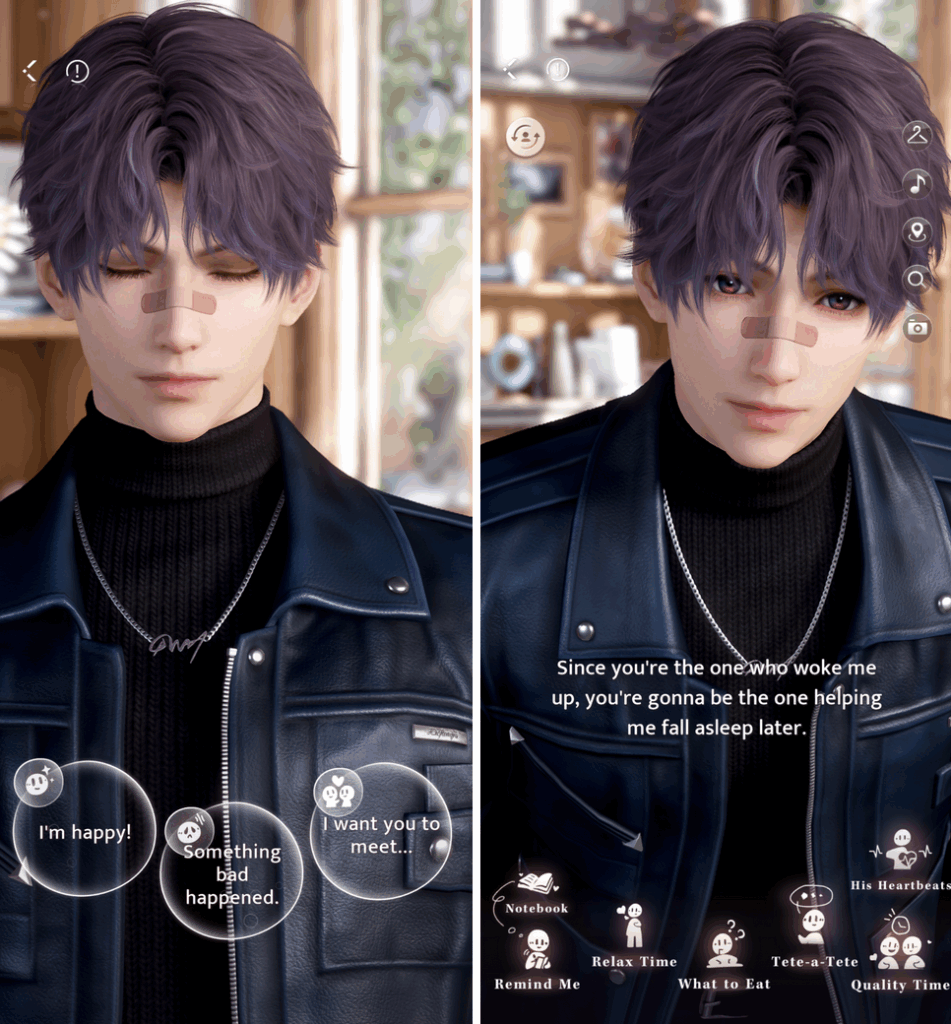
Pictured left: the ‘Tete-a-Tete’ function, where you can tell a love interest (in this case, Rafayel) how you’re feeling.
Pictured right: the ‘Destiny Cafe’ screen, where you can engage in a number of activities with the love interest. These activities include: deciding what to eat, listening to his heartbeat, spending time together sleeping/studying/working out, and even getting reminders about your menstruation cycle.
Adding to this is the element of otome games as a playground for the ‘perfect’ relationship. I recall being stuck on one of the romance paths in Ikémen Sengoku. A couple Google searches later, I had located a detailed walkthrough with instructions on which dialogue options I should choose in order to maximise my stats with the character I was trying to romance. This relates to Nakamura’s notion of a “difficulty setting”; with these fictional ‘relationships’, when things get too tough, otome game players have the ability to play the role of an all-knowing being and always pick the ‘correct’ choice. This is simply impossible for real-life relationships. In this way, otome games provide a safe space for the players to make ‘mistakes’ if they wish, or play with a perfect score-rate.
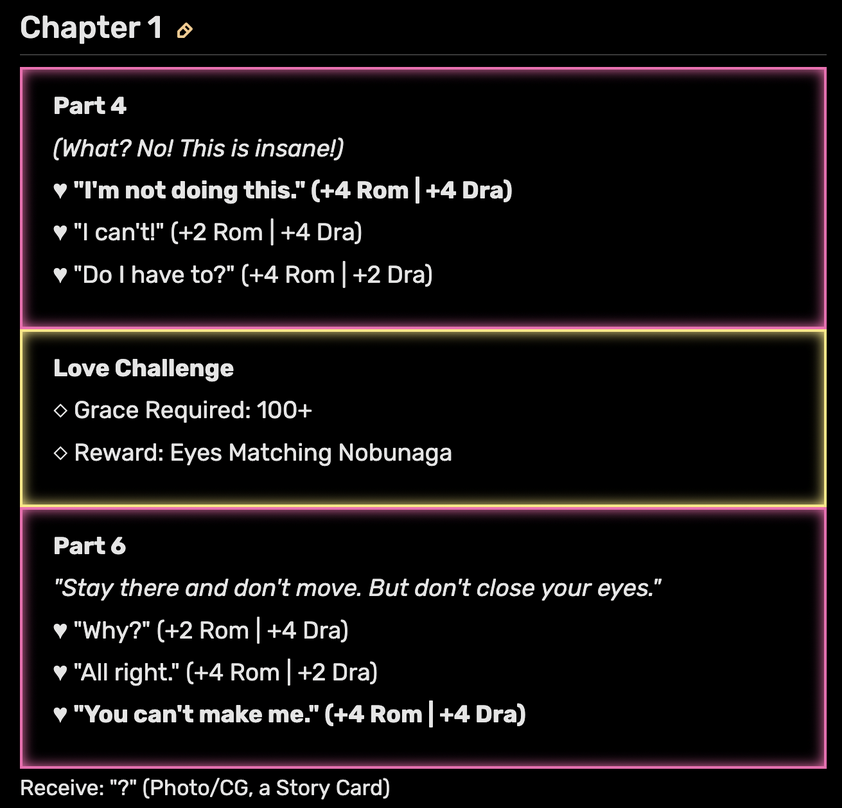
Walkthrough for romancing Nobunaga Oda, one of the love interests in Ikémen Sengoku.
Gameplay
One key aspect that differentiates old-generation otome games from new-generation otome games is the gameplay. Previously, otome games tended to follow a similar format: a main storyline, a special “banner” storyline, mini-games (such as match 4, spot the difference etc.) and—of course—the gacha pull.
New-gen games, however, have gone above and beyond to develop interesting gameplay and mechanics. In LADS, you can fight monsters alongside your favourite love interest—they even take hits for you (occasionally). Romance—or at least, the idealised version of it—permeates the entire game.
Like how Braid references Mario, LADS references earlier otome games—or at least has mechanics reminiscent of those games.
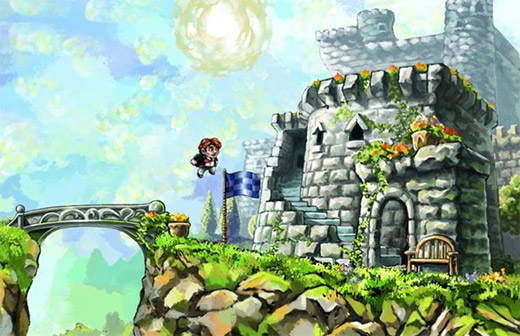
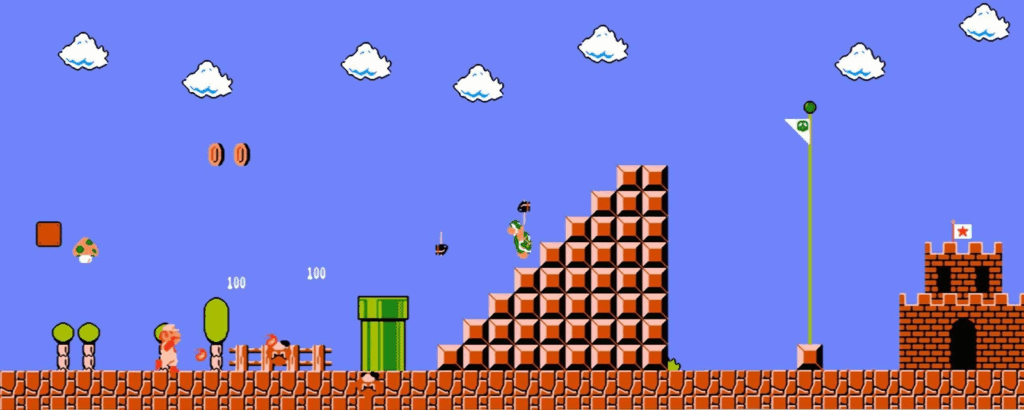
Braid: maritime flag meaning “NO” or “NEGATIVE” as a callback to (or even a mockery of) the Mario checkpoint flags
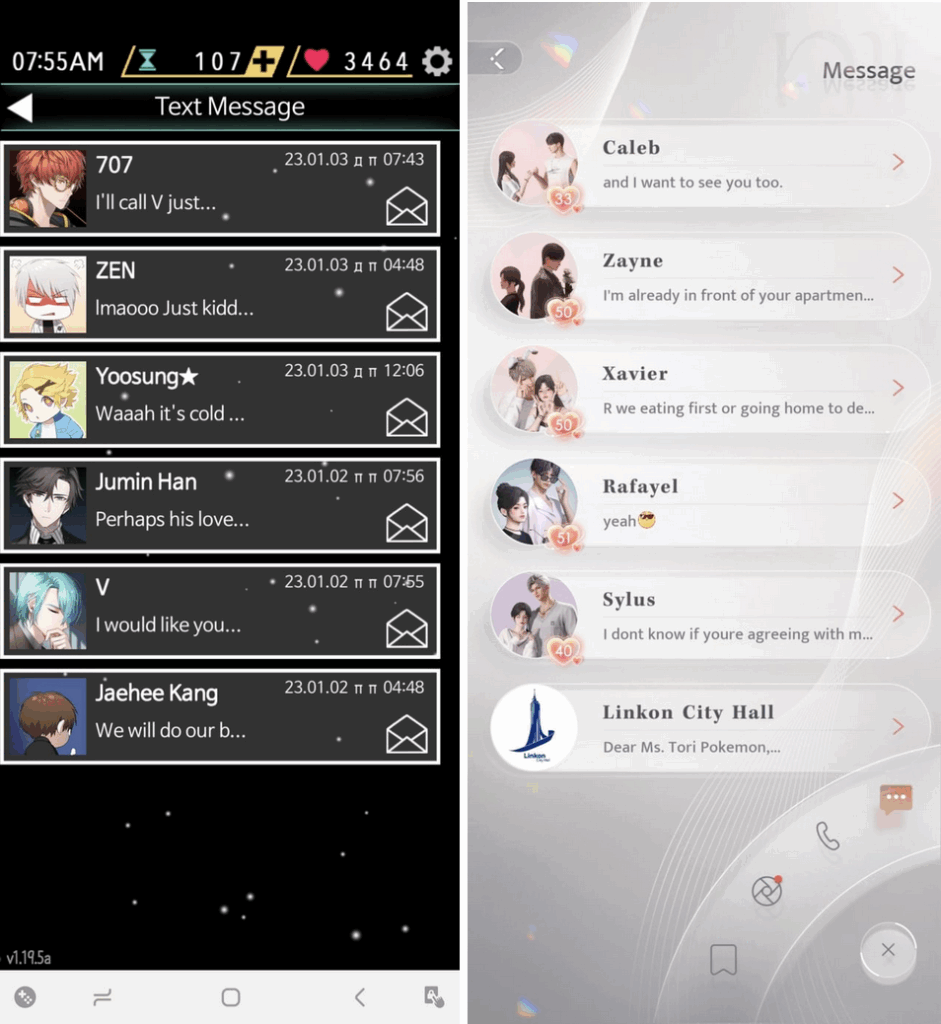
Pictured left: Mystic Messenger message screen
Pictured right: LADS message screen
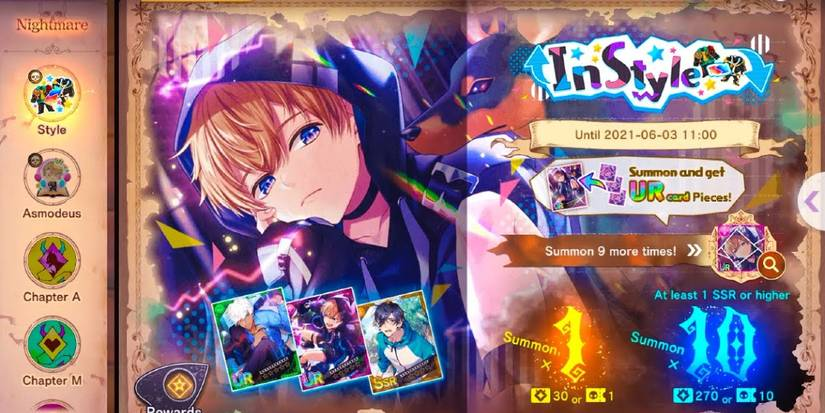
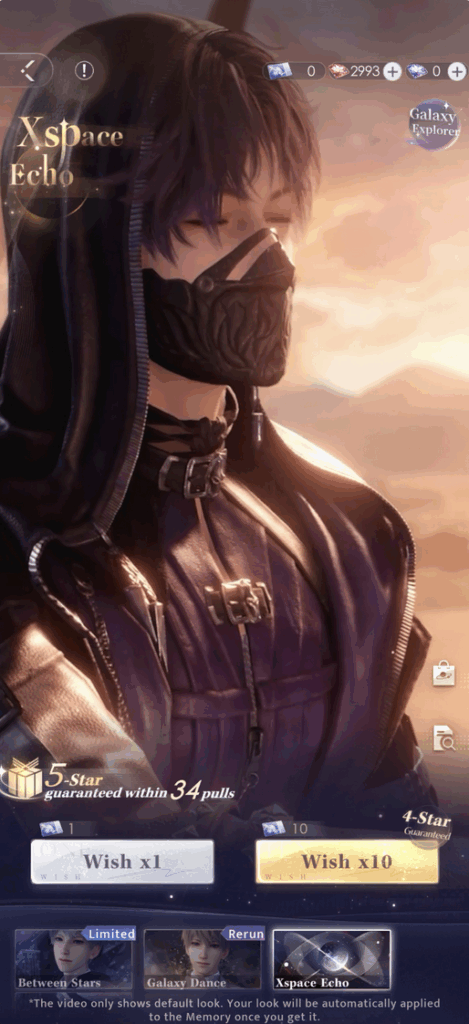
Pictured top: Obey Me card pull screen
Pictured below: LADS card pull screen
Self-Perception
As mentioned previously, otome games are notorious for poorly-designed customizability. What do I mean by this? Take a look at the avatar creation screen for LADS:
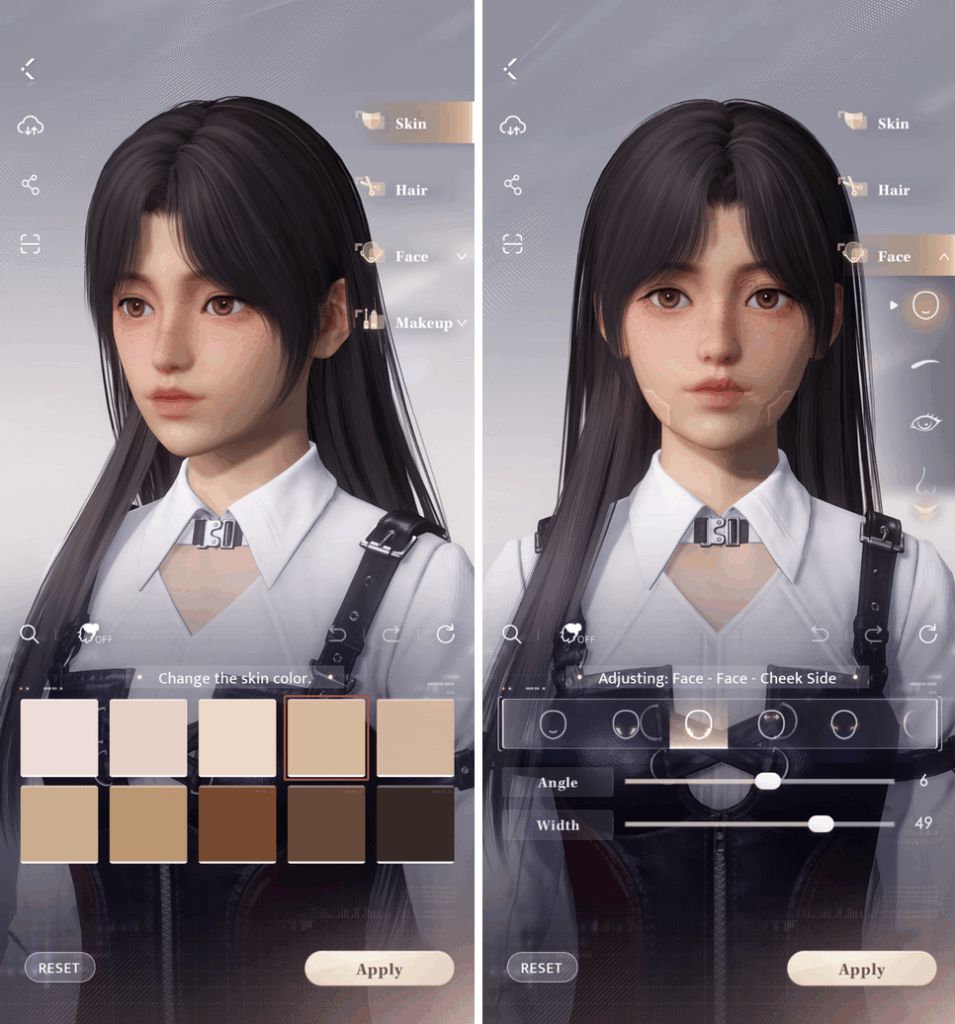
Pictured left: skin colour selection screen
Pictured right: facial feature adjustment screen
This avatar is supposed to represent me. In real life, my skin has visible pores, my nose has a bump in it and I have eye bags. In the game, I look like I just stepped off a runway—literally; my avatar is FAR taller than I am in real life. For me, this avatar reminds me of the uncanny valley concept. She looks like me, but not enough like me to be completely comfortable calling her me. As such, she has a different name to me. On top of that, her personality isn’t quite the same as mine. She doesn’t swear, she doesn’t tease her friends enough, and she’s not a scaredy cat (evidently, since her job is to shoot monsters—Wanderers—for a living). I can’t identify with her as much as I’d like to.
On the other hand, we have games like Tears of Themis where the MC is not customizable at all, bar her name. What does that mean for players that look nothing like the ToT MC? Is it exclusive, or inclusive? In many ways, the ToT MC might be far more favourable to play for otome game players than the LADS MC due to degree of separation. An avatar that looks somewhat like you, but not close enough (and that ‘enough’ is a metric determined by the player) might be more discomfiting to play as than one whose appearance is set for you from the get-go. ToT’s MC can act as a puppet that the player can manipulate; not in a negative sense, but more so that the ToT MC acts as a figurehead—a role—for the user to play as.
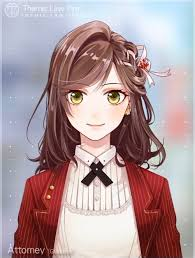
The MC of Tears of Themis. Her physical appearance is set and cannot be customised.
Otome games create an interesting place for the debate on ludology versus narratology. In the case of LADS, a ludological approach is certainly possible: there are fantastic gameplay mechanics, especially within the ‘battle’ mode of the game. However, a key part of otome games is the narrative. It is impossible to divorce the gameplay from the narrative, because you are reminded of narrative points throughout the gameplay.
For example, Rafayel (one of the five love interests in LADS) has special card sets that allow you to fight with him in a ‘special’ state. In the example below, Rafayel is dressed in his ‘Sea God’ attire—a direct reference to one of the key plot points of his character: he is a Lemurian; a fantastical sea creature akin to a merman.
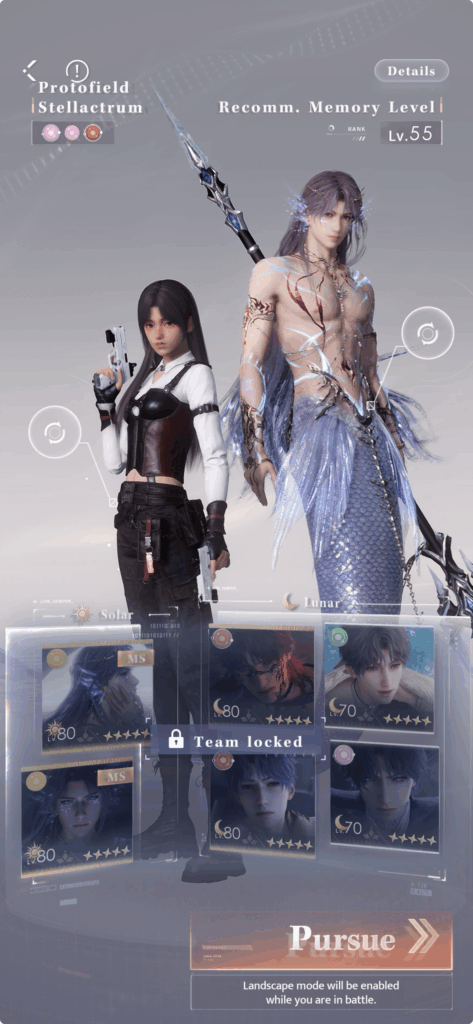
Rafayel and MC pictured before entering a battle. Rafayel dons his ‘Sea God’ attire and uses special attacks only available once the player has unlocked this set of cards.
Beyond just his attire, Rafayel utilises burst attacks that are specific to the ‘Sea God’ card pair. A solely ludological approach doesn’t work because embedded in the mechanics of the game is the narrative told through the main storyline. Even the way the characters speak during battle gameplay changes if you use different pairs of cards. Rafayel’s ‘Abyss Walker’ card pair is far more playful than his ‘Sea God’ card pair, which has a more regal air to its combat dialogue.
Conclusion
“The gameplay experience is what happens when a player encounters the logic through the game state and whatever interaction methods are available. This is where the game’s creators hope the communicative role will be fulfilled, and also where players may discover possibilities never intended by the creators.” — Wardrip-Fruin, How Pac Man Eats, p14
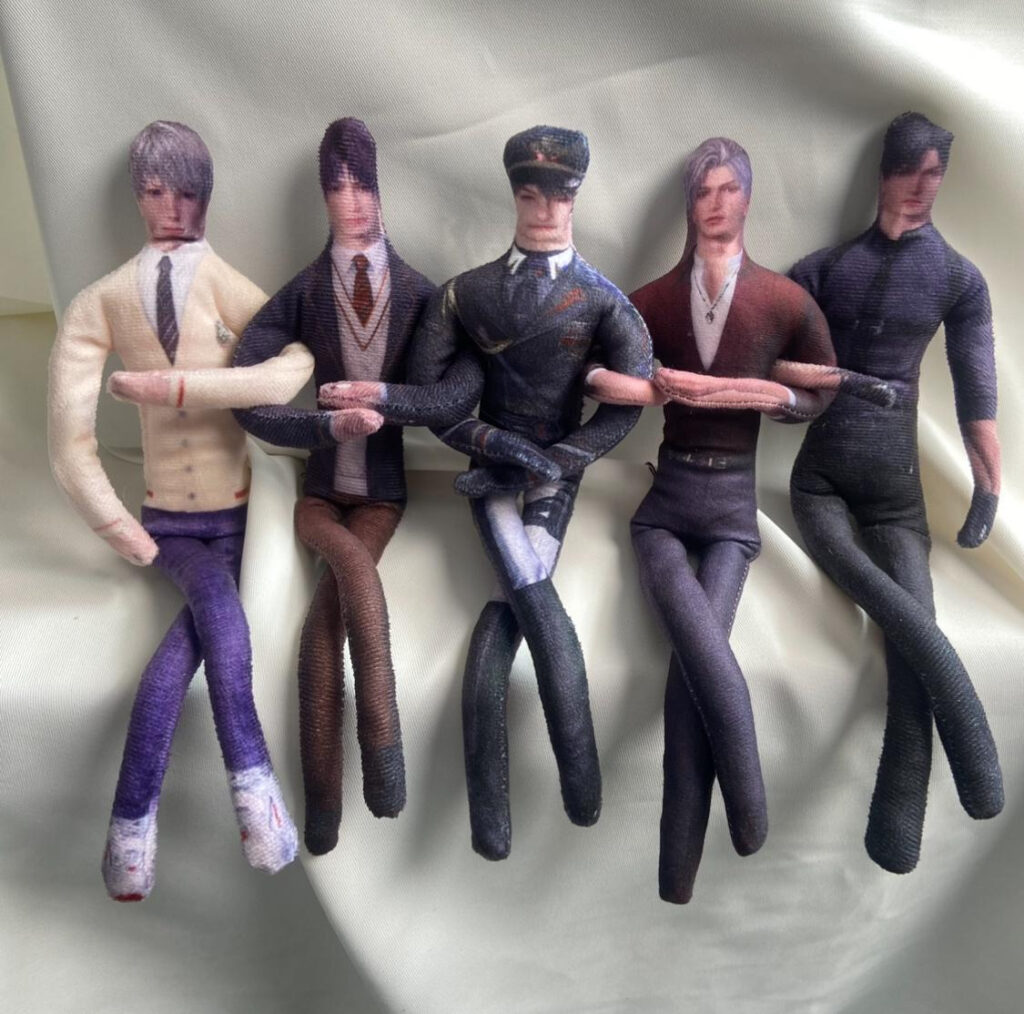
Many may view otome games as a restrictive space where women are forced into certain gender roles. In some instances, that may be the sentiment of some women that play these games. However, the latter part of this quote is really important: “players may discover possibilities never intended by the creators.” When INFOLD set out to create Love and Deepspace, their creators likely never imagined that fans of the game would manufacture creepy, uncanny-valley-esque dolls of the love interests:
Nor did they expect fans to ship the male love interests together:
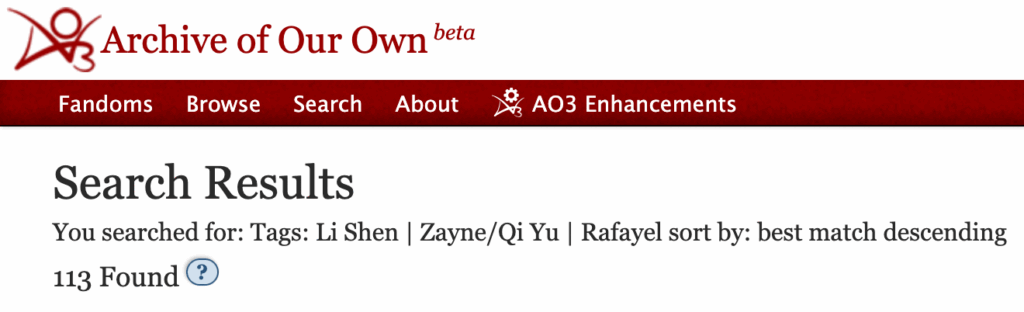
Overall, I see otome games as a playground for players to express themselves. Despite restrictions that some otome games may have (only using she/her pronouns, having limited avatar customiseability, dialogue options that don’t mesh with a player’s personality), players constantly find ways to subvert the expectations of creators and play the game in a creative way.


I’ve never engaged with this type of game, so this post was very interesting! I would have expected these games to be also entirely focused on narratology, like Doki Doki Literature Club and Dream Daddy (the two dating sims that I’ve played). The ludological perspective is thus a refreshing surprise and allows for significantly increased simping for the player character from the non-player characters (I am assuming that this is the primary goal of otome games), though actions and game mechanics. I wonder how else new otome games can expand on this, going beyond taking hits for the player character and perhaps taking on some new buffing roles or other protection based roles for non-player characters. Given that real life affection (platonic or romantic, but especially romantic) is increased by shared peril, I wonder if an otome game that focused around bringing about its desired effect ludologically would be highly effective. Perhaps increasing the difficulty of combat and increasing the reliance on non-player characters to survive. There are, of course, moral complications with taking this to an extreme.
I did not think about the effects of shared peril but that’s a really interesting point. I literally took a class on this (Social Psychology) a couple quarters ago and we talked about this exact topic; this almost certainly feeds into LADS’s popularity.
While it’s true that players can interpret the game in a different way than the creators intended, such as the example you provided of queer POC playing otome games mostly meant for white cisgender women, I think it’s also important to think about how endorsing these games affects the otome atmosphere. If an otome game reinforces gender roles or maybe even toxic relationships, the player is fully free to interpret them and gain control over these relationships as they see fit, but in the end playing the game still serves the developer’s narrative and purposes of patriarchy (I haven’t played otome games before, so I don’t know if any of what I’m saying is applicable). It reminds me of a question I think about a lot: can something really be empowering if it still serves and benefits the systems it’s trying to defy? Either way, I think this is a really interesting post, especially about the specific gameplay mechanics that improve upon previous games and also play into the game’s story.
I have not got a decent answer to the notion you raise but this is an excellent point that I will now be thinking about for rather a long time HAHA
Having never played these games, and quite frankly being scared of the fact that they reach you outside of when you’re playing the game, I had never considered how unrealistic these games actually are in terms of POV and positionality. This illuminated the fact that you are aware of yourself in these games, how your avatar looks and how the options may not be representative of the player. I am interested in your take of why different people play the game, and it formed some questions. For someone who feels represented by their avatar and can fully immerse themselves in the game, does that immersion become dangerous? On the topic of parasocial relationships and uncanny valley, have there been cases where otome players create unhealthy attachment to these games? Are there any queer centered otome games? What comes to mind is the game Date Everything, which does some… questionable but present queer representation. This is a very cool analysis!
Thanks for your comment! Yes, to your question about parasocial relationships – I cannot find the article I wanted to share, unfortunately, but there was an article I read a while ago that detailed how Chinese fans of the game Tears of Themis were hiring cosplayers to dress up as the love interests from the game and act as their boyfriend for a set period of time. The parasocial relationship between the women hiring the cosplayers and their perceived ‘boyfriends’ got so bad that some of the cosplayers reported receiving death threats from their ’employers’ if they were found out to be in contact with other potential ’employers’. Parasocial relationships are a real problem within the otome game industry and unfortunately most otome game developers usually see these relationships as revenue generators.